
[Fudan University 2026] Beyond Execution: AI Can Now Learn "Scientific Taste" via Community Feedback
AI Can Learn Scientific Taste
The paper introduces Reinforcement Learning from Community Feedback (RLCF), a novel paradigm to cultivate "scientific taste"—the ability to judge and propose high-impact research. By training on 700K field-matched paper pairs from arXiv, they developed Scientific Judge (for evaluation) and Scientific Thinker (for ideation), which outperform SOTA models like GPT-5.2 and Gemini 3 Pro.
TL;DR
While we have been preoccupied with making AI "smarter" at coding or searching, Fudan University researchers have addressed a more profound gap: Scientific Taste. They introduce RLCF (Reinforcement Learning from Community Feedback), using 700,000 pairs of arXiv papers to teach models how to identify and generate high-impact research. Their models, Scientific Judge and Scientific Thinker, now outperform GPT-5.2 in predicting and proposing the next "big idea."
The "Taste" Gap in AI Science
The hallmark of a great scientist isn't just the ability to run experiments—it's the intuition for which experiments are worth running. Current AI agents are excellent lab assistants (executors) but poor principal investigators (strategists).
The authors argue that "taste" is not purely subjective; rather, it is a "sensus communis"—a shared sense of value. In academia, this collective verdict is encoded in citations. Unlike Reinforcement Learning from Human Feedback (RLHF), which relies on a few annotators, RLCF taps into the historical behavior of millions of scientists to define what the community deems impactful.
Methodology: From Citations to Silicon intuition
The authors formulated taste as a combined problem of Judgement and Ideation.
1. SciJudgeBench & Scientific Judge
To mitigate the noise in citation counts (e.g., older papers naturally having more citations), the team created SciJudgeBench. They paired 2.1 million papers from the same subfield and publication window. The model's task: Which of these two will have 30% more citations?
Using GRPO (Group Relative Policy Optimization), they trained a series of "Judges" (up to 32B parameters) to reason through these comparisons.
2. Scientific Thinker & Comparison-Based GRPO
Learning to judge is passive; proposing is active. The authors used the Scientific Judge as a Reward Model to train the Scientific Thinker.
Since scoring an idea in a vacuum is difficult, they introduced Comparison-Based GRPO. For every seed paper, the model generates multiple follow-up ideas, which then undergo a "round-robin tournament" judged by the Reward Model to determine the winners.
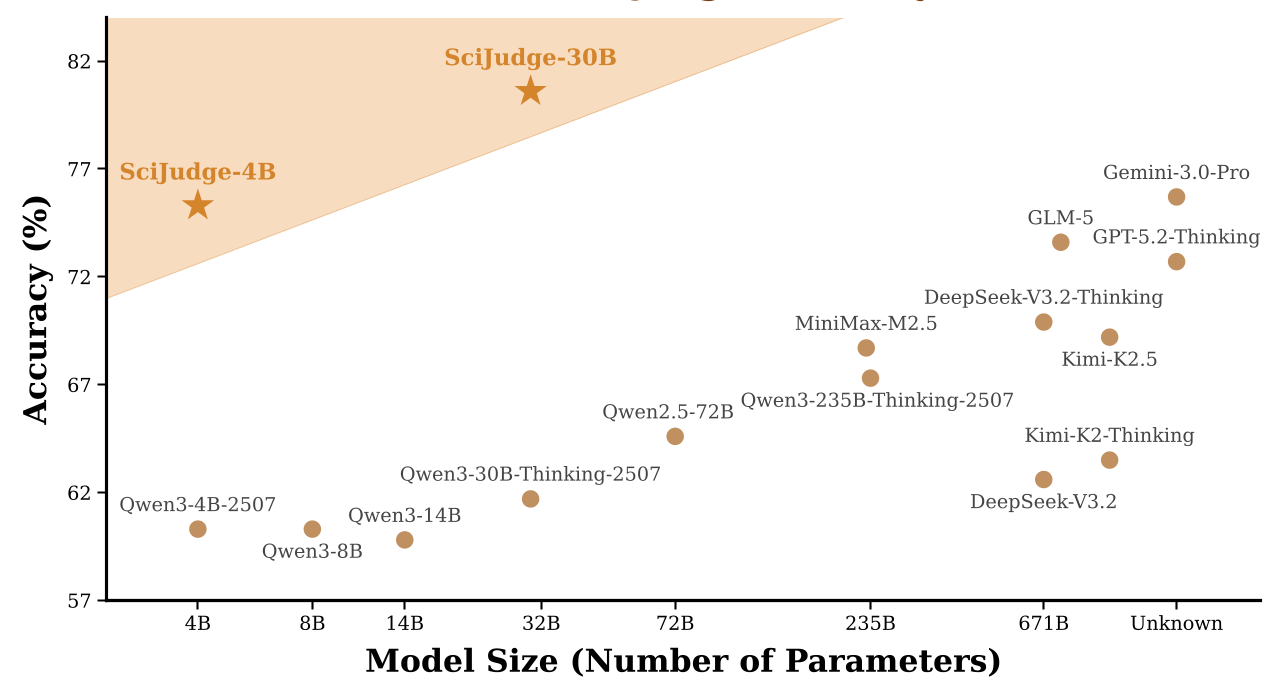 Figure 1: Comparison of Scientific Thinker win rates against base internal policies.
Generalization: It's Not Just Memorizing Metrics
One of the most striking findings is that the models didn't just "overfit" to citation counts. The researchers tested Scientific Judge on:
- Temporal OOD: Papers published in 2025 (post-training).
- Metric OOD: Predicting ICLR peer-review scores instead of citations.
- Field OOD: Generalizing from Computer Science to Biology (bioRxiv).
In all cases, the models outperformed the strongest commercial baselines, suggesting they had captured a universal "latent space" of scientific value.
 Table: Scientific Judge accuracy across disciplines compared to GPT-5.2 and Gemini 3 Pro.
Critical Analysis: A Step Toward the AI PI
This work represents a pivot from How to Research to What to Research. However, certain limitations remain:
- The Citation Bias: Citations often reward "trendy" topics over truly disruptive but slow-to-start ideas.
- The Hallucination of Feasibility: While an idea may look high-impact on paper, the model cannot yet assess the experimental feasibility or the cost of the hardware required to execute it.
Conclusion: A New Paradigm for Alignment
By moving beyond individual "Helpful/Harmless" labels to "Community Feedback," Fudan University has provided a scalable blueprint for aligning AI with high-level professional standards. The "Invisible Leash" of base-model bias is being cut, allowing AI to not just follow, but lead the scientific frontier.
Takeaway: AI is no longer just a calculator; it is beginning to develop the "foresight" required to navigate the complex landscape of human knowledge.