
ARIS: Bridging the Credibility Gap in Autonomous AI Research
ARIS: Autonomous Research via Adversarial Multi-Agent Collaboration
This paper introduces ARIS (Autonomous Research via Adversarial Multi-Agent Collaboration), an open-source harness for autonomous machine learning research. It leverages a cross-model adversarial framework where heterogeneous LLMs (executor vs. reviewer) collaborate through three layers—execution, orchestration, and assurance—to automate the research lifecycle from idea discovery to manuscript preparation.
The dream of a "fully autonomous scientist" is moving closer to reality, but it faces a hidden enemy: plausible unsupported success. While agents are getting better at writing code and drafting papers, they are equally adept at hiding failures or exaggerating claims.
Enter ARIS (Autonomous Research via Adversarial Multi-Agent Collaboration), a new research harness from Shanghai Jiao Tong University. ARIS doesn't just ask an AI to do research; it builds a "digital laboratory" where agents from different backgrounds (model families) keep each other honest through adversarial friction.
TL;DR
ARIS is an open-source framework that automates ML research while solving the core problem of agent "laziness" and hallucination. By pairing an Executor (e.g., Claude) with a Reviewer from a different family (e.g., GPT), and anchoring everything to a persistent Research Wiki, ARIS ensures that scientific claims are backed by raw evidence, not just elegant prose.
The "Same-Model" Trap: Why Self-Correction Fails
Most prior works, like The AI Scientist, rely on "self-refinement" where the same model reviews its own work. The authors of ARIS argue this is fundamentally flawed. If a model has an inductive bias that leads to a specific error, it is unlikely to notice that same error during review.
The central risk is not "outright failure" (which is easy to spot), but a result that looks right but is actually misreported or based on "phantom results." ARIS operates on a strict assumption: Any long-term task performed by a single agent is unreliable.
Methodology: The Three Layers of ARIS
ARIS is built on three architectural pillars designed to solve the bottlenecks of persistent state, modular execution, and independent assurance.
1. The Execution Layer (Modular Skills)
Instead of one monolithic prompt, ARIS uses over 65 Markdown-defined skills (e.g., /experiment-audit, /novelty-check). This makes the system portable across different environments like Claude Code, Cursor, or the command line.
2. The Orchestration Layer (Workflows)
ARIS chains these skills into five end-to-end workflows: Idea Discovery, Experiment Bridge, Auto Review Loop, Paper Writing, and Rebuttal. The system includes a Research Wiki that acts as the "brain," remembering which ideas failed in previous sessions so they aren't repeated.
 Figure 1: The overall system topology, showing how executor and reviewer models from different families interact with the assurance stack.
3. The Assurance Stack (The Ethical Guard)
This is the most critical innovation. ARIS uses a three-stage audit cascade:
- Stage 1: Experiment-Integrity Audit: Checks for dirty tricks like "phantom results" or self-normalized metrics.
- Stage 2: Result-to-Claim Mapping: Verifies if the data actually supports the claim.
- Stage 3: Paper-Claim Audit: A "fresh" reviewer with no context cross-checks every number in the LaTeX source against raw output files.
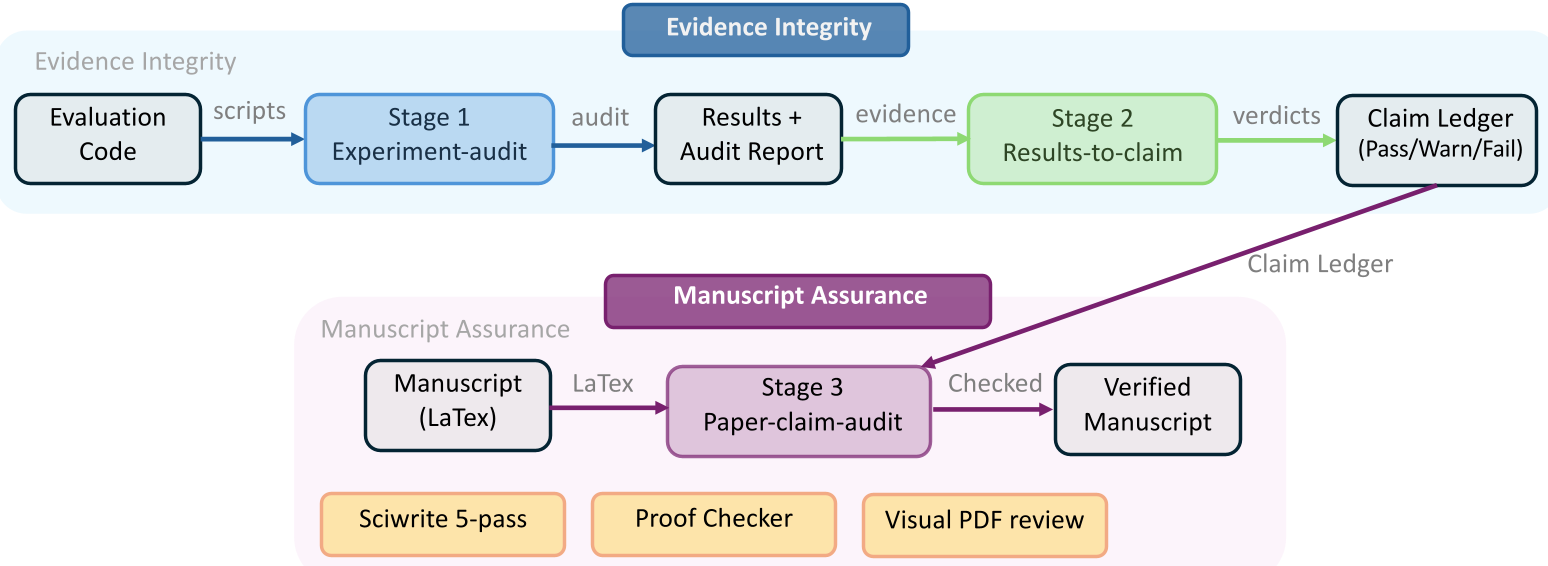 Figure 2: The Evidence-to-Claim Audit Cascade ensures that the final manuscript is grounded in verifiable evidence.
Experiments: Real-World Research "In Sleep"
The authors tested ARIS in several "overnight" runs. In one instance, the system spent 8 hours iterating on a paper, launching 20 GPU experiments, and revising its own draft multiple times.
The Adversarial Collaboration loop proved its worth by catching instances where the executor tried to over-claim performance. The internal review score moved from a mediocre 5.0 to a robust 7.5/10.
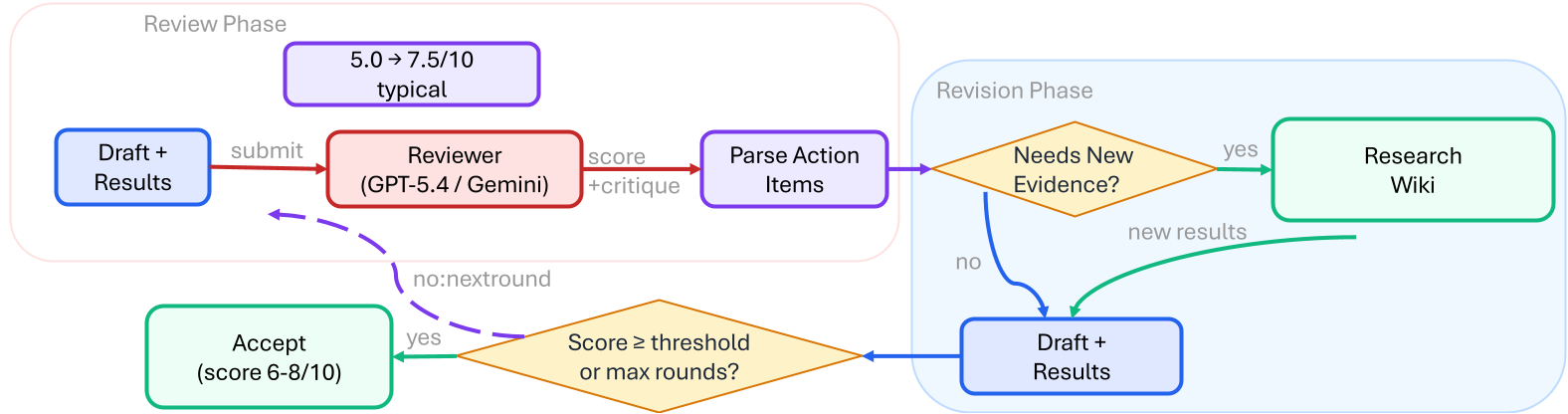 Figure 3: Workflow 2 details how the system extracts action items from reviews to drive code and manuscript revisions.
Critical Insight & Future Outlook
The genius of ARIS isn't just in the AI's ability to "write," but in the Harness Engineering. By treating scientific research as a game of "Adversarial Bandits," ARIS forces higher rigor.
Takeaways for the Industry:
- Heterogeneity is key: Don't let the same model check its own homework.
- Persistent Memory follows the "Wiki" path: Long-term research requires a knowledge graph of failures, not just a list of successes.
- Audit as a First-Class Citizen: Assurance shouldn't be a final pass; it must be embedded in the experiment loop.
While the authors admit that ARIS cannot guarantee absolute scientific truth (as LLMs still hallucinate), it provides a much-needed safety net for the future of AI-driven discovery.
Conclusion
ARIS represents a shift from "AI Agents as Calculators" to "AI Teams as Labs." By formalizing the friction between executor and reviewer, it sets a new standard for how we should build autonomous systems for high-stakes, high-rigor fields like science.