
Audio-Visual Intelligence: The Great Convergence of Sight and Sound in Foundation Models
Audio-Visual Intelligence in Large Foundation Models
This survey provides the first comprehensive review of Audio-Visual Intelligence (AVI) within the era of large foundation models, establishing a unified taxonomy across perception, generation, and interaction. It synthesizes core methodologies such as cross-modal tokenization, diffusion-based synthesis, and LLM-centric reasoning, highlighting state-of-the-art achievements in multimodal world modeling and real-time "omni" systems.
TL;DR
The boundary between hearing and seeing is dissolving. This landmark survey (May 2026) provides a foundational map for Audio-Visual Intelligence (AVI). It tracks the evolution from simple "lip-sync" models to "Omni" systems that can perceive, reason, and act in a multisensory world. The core takeaway? We are moving from correlation (this sound usually goes with this image) to causality (this physical event caused this sound and this visual change).
The Evolution Toward a Unified Senses
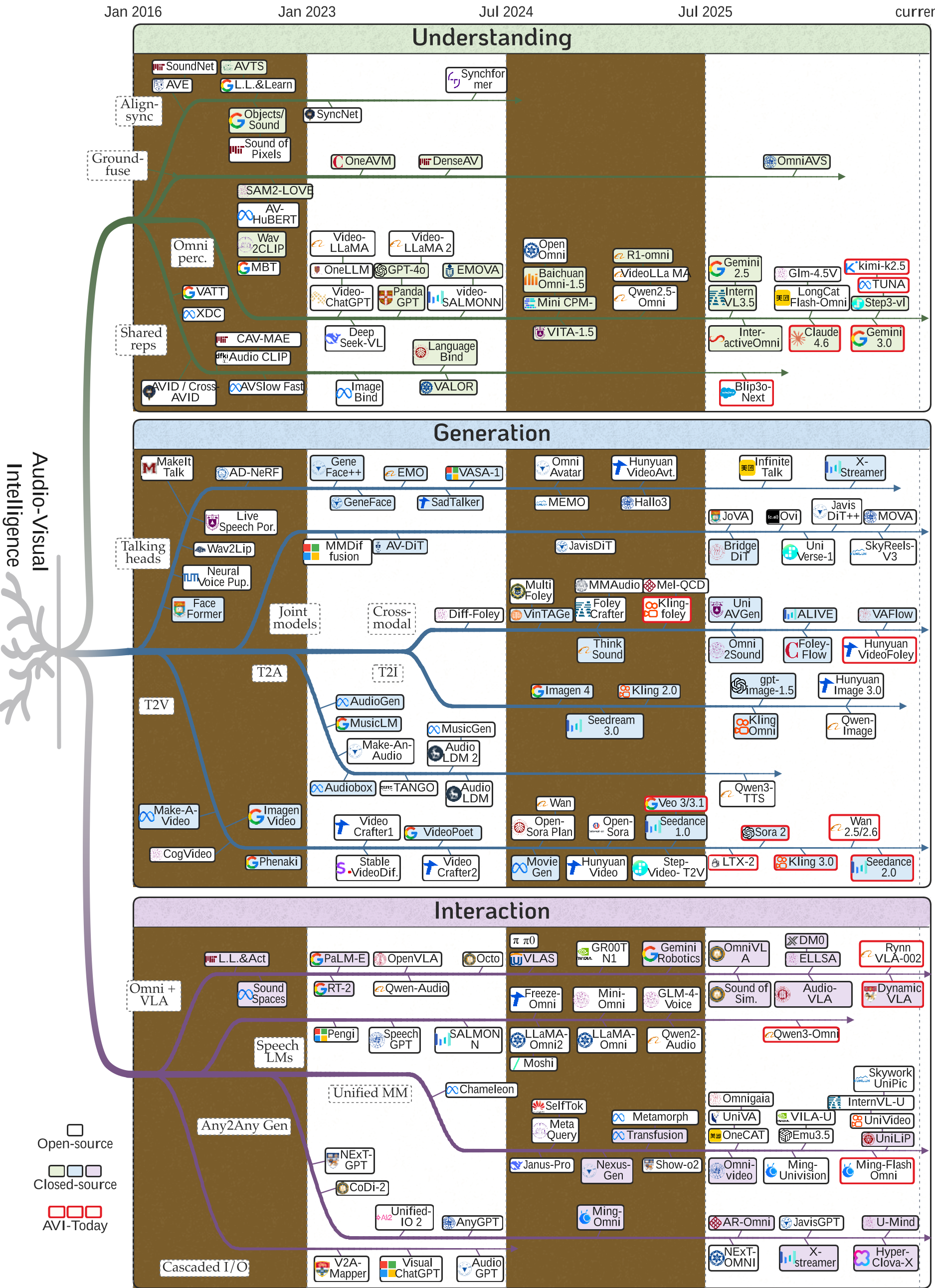
For decades, Computer Vision and Audio Processing were separate silos. The "Large Model Era" has forced a marriage between them. As humans, we don't just see a dog; we hear the bark and instinctively know the dog’s spatial position even if it's behind us. The survey introduces a meticulous taxonomy shown in the evolutionary tree below.
Why "Synchronization" Isn't Enough: The Causal Gap
The deepest insight of this survey is the critique of correlation. Most current models are trained on paired clips—a guitar image with guitar audio. But what happens when the guitar is off-screen? Or when the sound is muffled by a wall?
Current SOTA methods often fail because they lack a World Model. The authors argue that the next frontier is Causal Event-Source Grounding. Instead of just matching embeddings, models must infer the "Why" and "How" of sound production.
Key Pillars of the Methodology:
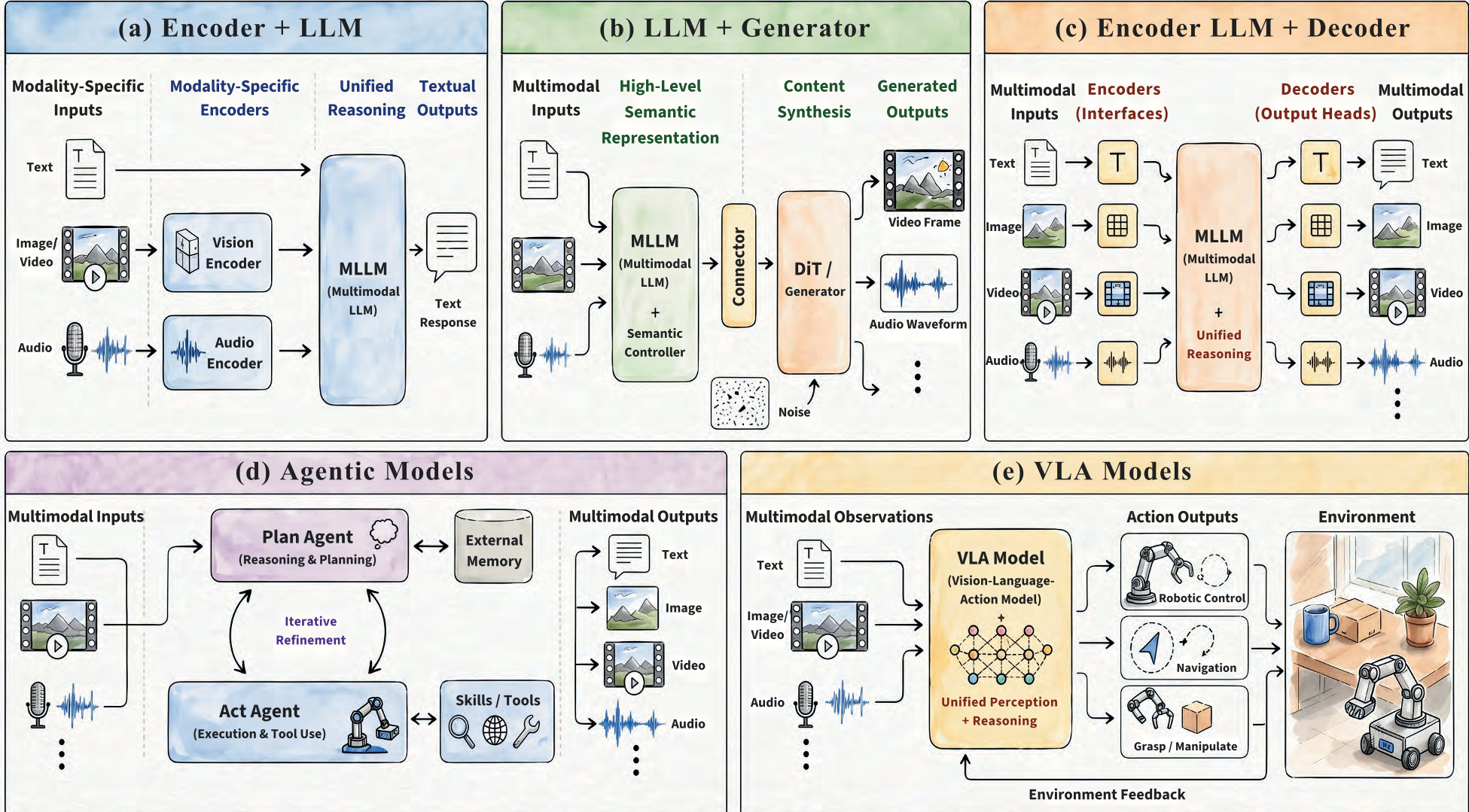
- Representation Centric: Using VQ-VAEs and discrete tokenization (like EnCodec or Magvit-2) to turn sound and sight into a shared "language."
- Generation Centric: Moving from GANs to Diffusion Transformers (DiT) and Flow Matching for high-fidelity, synchronized output.
- LLM Centric: Using the reasoning power of Large Language Models to act as the "brain," while encoders act as the "eyes and ears."
Benchmarking the "Omni" Revolution
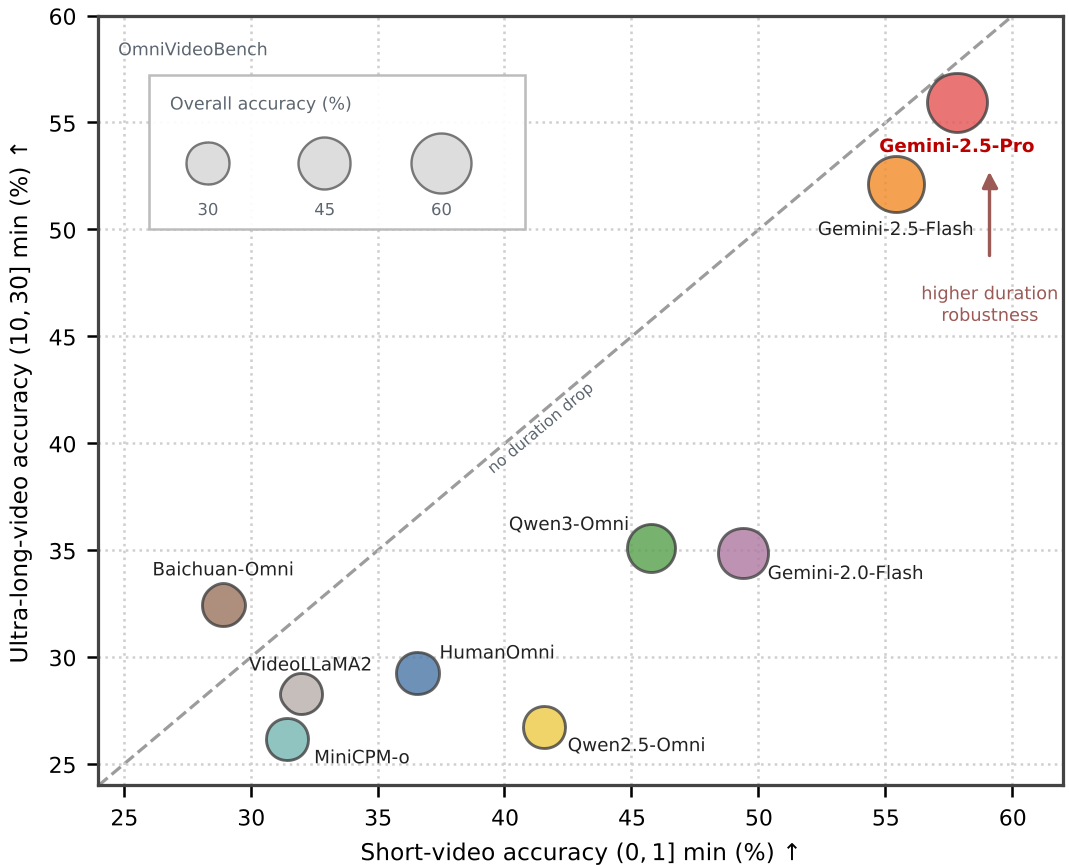
The data shows a clear trend: unified architectures are beginning to outperform modular "cascaded" systems (where you slap a speech-to-text model on top of an LLM).
- Performance Leap: Newer models like Qwen3-Omni and Gemini 2.5 Flash are demonstrating that "Thinking" models—those that perform internal chain-of-thought before speaking—vastly improve performance on complex reasoning tasks (Multi-step Reasoning +20% improvement).
- The Bottleneck: Long-context memory remains the Achilles' heel. As video length grows, accuracy drops exponentially because models struggle to maintain "Audio-Visual Context Memory."
From Chatbots to Embodied Agents
The most exciting application discussed isn't just "talking heads"—it's Robotics. In the physical world, sound is a proxy for touch. A robot can hear a glass slip before it sees it. By integrating Audio-Visual-Action (VLA) models, we are creating agents that can navigate complex 3D environments using "Acoustic Maps" and "Echo-location" primitives.
Future Directions & Open Challenges
The survey concludes with a strategic roadmap. We are currently at the "Interactive Stage," but the goal is the "Verifiable Agentic State."
- Causal Intervention: Being able to remove a specific sound from a video and having the model understand how that changes the physical scene.
- Verifier Ecosystems: Moving away from "vibes-based" evaluation to rigorous physical and causal verification.
Conclusion: A Foundation for the Future
This survey is more than a list of papers; it's a manifesto for Unified Multimodal Intelligence. For researchers and developers, the message is clear: if you are only looking at pixels, you are missing half the world. The future belongs to models that can hear the silent details and see the source of the noise.