
ByteDance's Multi-Agent E-Commerce Search: From Manual Tuning to Autonomous Relevance Ecosystems
A Case-Driven Multi-Agent Framework for E-Commerce Search Relevance
ByteDance's Global E-Commerce team introduced a case-driven multi-agent framework that automates the search relevance optimization loop. By instantiating specialized Annotator, Optimizer, and User agents, the system replaces manual work and achieves state-of-the-art results, including a cumulative 13% SBS win-rate gain in certain markets.
TL;DR
Relevance optimization in e-commerce is traditionally a "human-heavy" loop. ByteDance has reimagined this by replacing human roles with a coordinated team of AI agents. Their new framework automates the entire lifecycle—from identifying "bad cases" to diagnosing root causes and deploying model fixes—resulting in a 13% win-rate gain and a 75% reduction in labeling costs.
Moving Beyond the "Model-Only" Trap
In industrial search, the bottleneck isn't usually the lack of a bigger Transformer; it's the feedback loop. When a user finds an irrelevant product (a "bad case"), the fix involves updating standards, re-labeling data, retraining models, and evaluating at a multi-day cadence.
ByteDance’s insight is that relevance is better viewed as a closed-loop ecosystem rather than a static prediction task. By formulating this as a multi-agent coordination problem, they've turned a manual engineering effort into a self-evolving system.
The Multi-Agent Architecture
The framework instantiates three specialized agents to simulate the traditional human ecosystem:
- The User Agent: Acts as an "intent proxy," judging results based on shopping intuition without looking at formal rules.
- The Annotator Agent: Acts as the "authority," judging products based on strict, evolving company standards.
- The Optimizer Agent: Acts as the "algorithm engineer," diagnosing why the model failed and refining the training data.
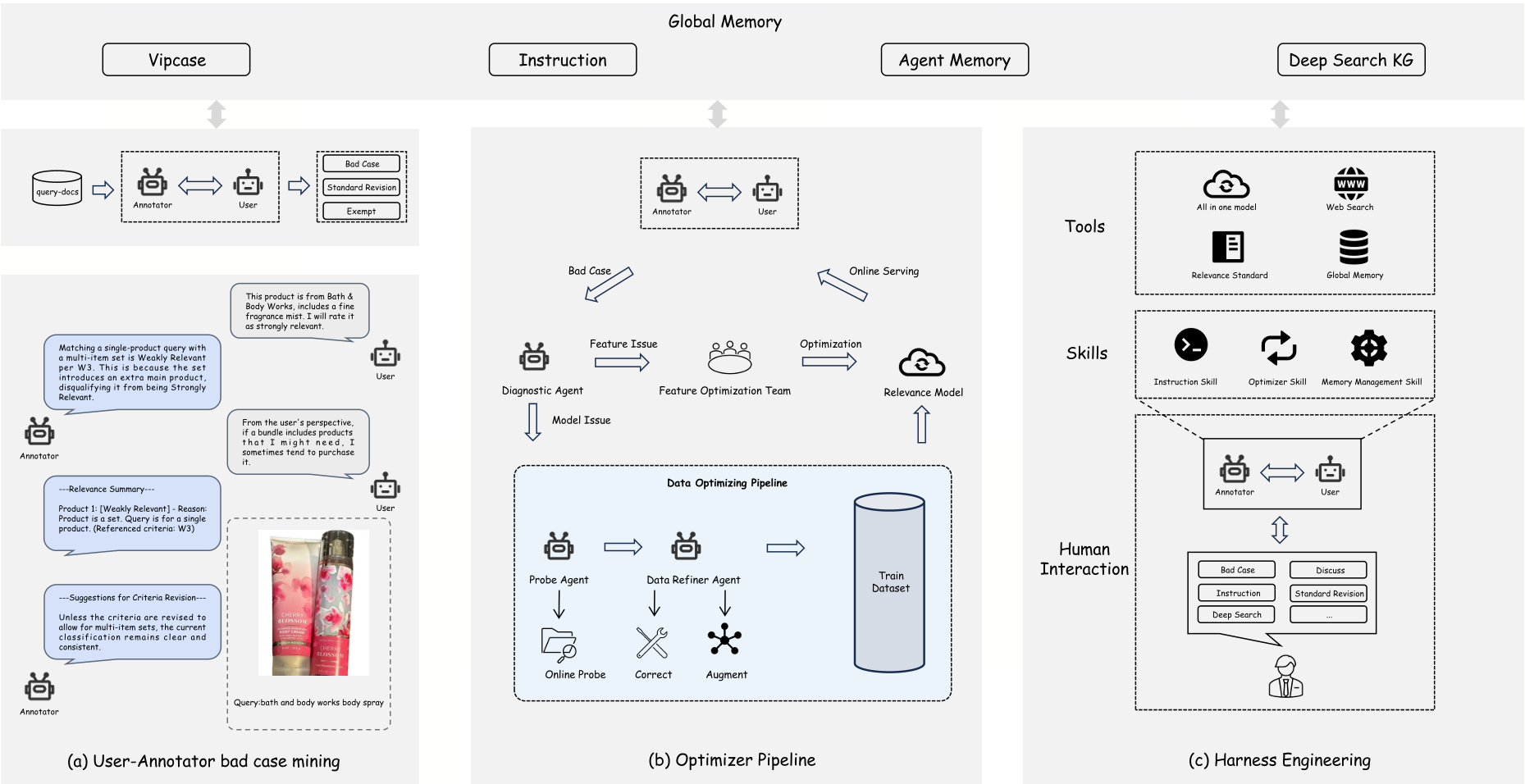
A standout feature is the User-Annotator Dialectic. The two agents debate ambiguous cases. If they can’t agree, it signals that the standards need to evolve. If they agree but the model is wrong, it’s a clear signal for the Optimizer to repair the model.
Harness Engineering: Making Agents Practical
To make these agents work at production scale, ByteDance implemented several "Harness" extensions:
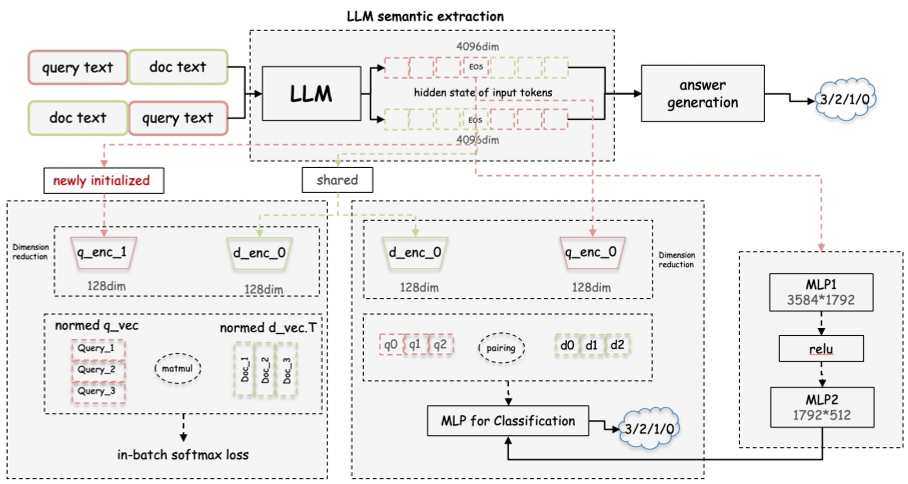
1. All-In-One Relevance Model
Instead of separate models for retrieval, coarse ranking, and fine ranking, they use a single backbone LLM with multi-task heads. This ensures representation consistency and allows a single tool to serve all agents.
2. Instruction-Following Interventions
Retraining takes time. For emergency fixes (e.g., promotional filters), the system uses an instruction-following paradigm. Engineers can inject natural language rules (e.g., "Don't show Women's Tanks for Blouse queries") that the model follows in real-time without parameter updates.
3. Global Memory
To prevent agents from "forgetting" past decisions, a shared memory layer stores resolved precedents. This reduces decision oscillation on ambiguous "edge cases" that often plague search systems.
Experimental Proof
The results across ByteDance's global markets show the power of automation:
- Labeling Precision: The LLM Annotator outperformed human crowdsourcing by 2.4% while being drastically cheaper.
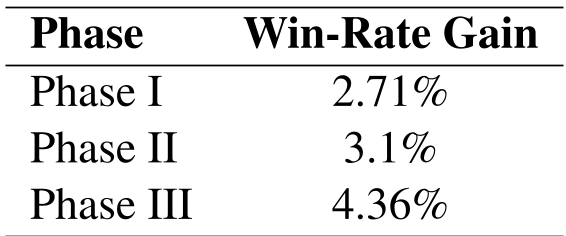
- Search Performance: The automated iteration pipeline (Phase III) yielded a 4.36% online win-rate gain on major markets.
- Computational Efficiency: "Joint coarse-fine inference" routing easy queries to cheaper paths reduced GPU load by 16% to 21%.
Critical Insight: The "Deep Search" Edge
One of the framework's most effective tools is the Deep Search Agent. For long-tail queries where traditional retrieval fails (e.g., "Lorax costume"), the agent runs an iterative "retrieve-reason-act" loop. It uses external web search and image search to build a hypothesis of what the user wants, effectively solving queries where the current catalog data is sparse.
Conclusion & Future Outlook
This work demonstrates that the future of search relevance lies in Autonomous Operations. The shift from "tuning the model" to "designing the agent loop" allows for a system that gets smarter every day with minimal human intervention. While the complexity of multi-agent orchestration is high, the efficiency gains and the ability to transfer knowledge across global markets make this the new gold standard for industrial AI.