
[Phys. Rev. B] Chiral Spin Liquid in Rydberg Arrays: Breaking Time-Reversal Symmetry via Geometry
Chiral Spin Liquid in Rydberg Atom Arrays
This paper predicts the emergence of a Chiral Spin Liquid (CSL) in a Rydberg atom array simulating a dipolar XY model on a breathing kagome lattice. Using iDMRG, the authors demonstrate that lattice deformation triggers a phase transition from a Dirac spin liquid to a CSL, achieving a topologically ordered state with a fractional Chern number of 1/2.
TL;DR
Researchers have discovered that by simply "deforming" the arrangement of Rydberg atoms in a kagome lattice—creating a breathing kagome lattice—the system naturally transitions from a gapless Dirac spin liquid into the long-sought Chiral Spin Liquid (CSL). This transition is achieved in a standard dipolar XY model, offering a direct path to experimental observation using current quantum simulation hardware.
Background: In the landscape of frustrated magnetism, the CSL is the "Holy Grail"—a phase that exhibits topological order and fractionalized excitations (semions) but breaks time-reversal symmetry (TRS) without any local magnetic order.
The "Breathing" Insight: Why Geometry Matters
The primary challenge in previous studies was that the isotropic kagome lattice (where all triangles are equal) tends to favor a U(1) Dirac spin liquid. While interesting, the Dirac spin liquid is gapless and preserves TRS.
The authors' core insight is that by introducing a breathing parameter , they split the nearest-neighbor interactions into two scales:
- (Intra-unit-cell): Stronger interactions.
- (Inter-unit-cell): Weaker interactions.
This structural "breathing" modifies the competition between long-range dipolar interactions, providing the necessary inductive bias to gap the Dirac points and trigger spontaneous TRS breaking.
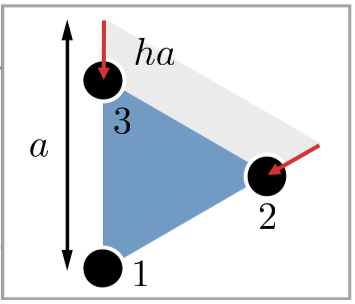 Fig 1: (a) The breathing kagome lattice setup. (d) The phase diagram showing the transition from Dirac to Chiral Spin Liquid as h increases.
Proving Topology: The Numerical Smoking Gun
To confirm the state is indeed a CSL, the team employed iDMRG, the gold standard for 1D/2D quantum systems. They found four key pillars of evidence:
- Scalar Chiral Order (): A non-zero value of appeared spontaneously, signaling TRS breaking.
- Entanglement Spectrum: The "edge-bulk" correspondence. The spectrum showed a level counting of , the unmistakable signature of a chiral conformal field theory (CFT) at the boundary.
- Spin Pumping: By threading a synthetic flux through the cylinder, they observed the transfer of exactly spin per cycle, confirming a Fractional Chern Number .
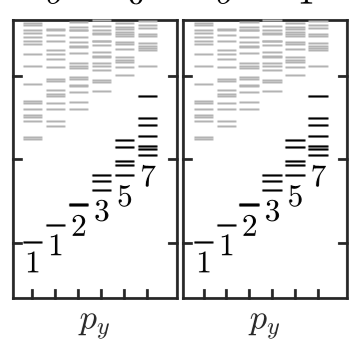 Fig 2: (d) Quantized spin pumping results. (e-f) Entanglement spectra showing chiral counting.
The Path to Experiment: Adiabatic Preparation
One of the paper's most valuable contributions is the quasi-adiabatic preparation protocol. Real-world Rydberg simulators cannot simply "drop" into the ground state. Instead, the authors propose:
- Starting with a staggered magnetic field (via AC Stark shifts) to freeze the atoms into a predictable product state.
- Slowly ramping down the field ().
The TDVP (Time-Dependent Variational Principle) simulations show that even with finite-time effects, the system retains strong chiral order in the bulk, making this highly feasible for machines like those at Harvard or QuEra.
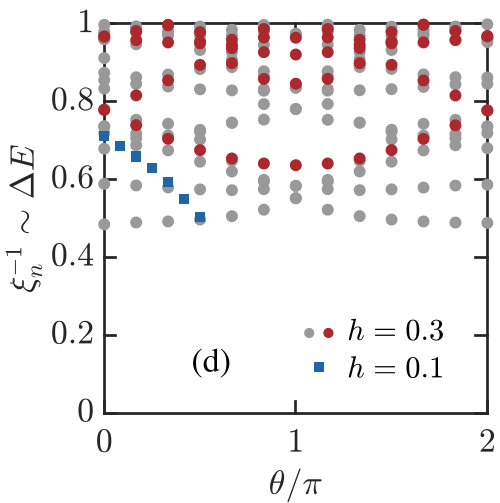 Fig 3: The continuous phase transition. Note the peak in correlation length (b) at the critical point .
Critical Analysis & Future Outlook
The beauty of this work lies in its simplicity. It doesn't require "Floquet Engineering" (periodic driving), which often introduces unwanted heating in Rydberg systems. By using static geometric tuning, the experimental complexity is significantly reduced.
Limitations: The exact transition point is sensitive to the cylinder width (finite-size effects), meaning experimentalists might need to search the neighborhood of to to find the CSL.
Takeaway: If confirmed, this would be the first experimental observation of a chiral spin liquid, potentially opening the door to utilizing semionic statistics for topological quantum computation.