
ODP-Net: Mastering the Art of Decoupling for Universal AI Forgery Detection
Decoupling Semantics and Fingerprints: A Universal Representation for AI-Generated Image Detection
The paper introduces ODP-Net (Orthogonal Decomposition and Purification Network), a novel framework for universal AI-generated image detection. By leveraging the physical insight of spectral orthogonality, it successfully decouples universal forgery traces from generator-specific fingerprints and semantic content, achieving state-of-the-art results on unseen architectures like Stable Diffusion 3 (99.37% accuracy).
Executive Summary
TL;DR: The rapid evolution of generative AI makes it nearly impossible for traditional detectors to keep up. ODP-Net addresses this by realizing that forgery signals from different generators don't actually "mix"—they stack like independent radio channels. By structurally decomposing image features into universal traces, specific fingerprints, and semantic content, ODP-Net achieves unprecedented generalization on unseen models like Stable Diffusion 3 and Midjourney.
Background: This work moves beyond simple "classification" and enters the realm of structural representation learning. It is a SOTA-redefining paper that shifts the focus from learning artifacts to learning the invariant manifold of forgery.
Problem & Motivation: The Entanglement Trap
Why do current detectors fail on new models? The authors argue the culprit is Feature Entanglement. When a model sees a fake image, it doesn't just see "fake"; it sees "GAN-generated cat." The detector learns a combined representation where the forgery trace is glued to the generator's specific hardware noise (fingerprints) and the image's subject matter (semantics).
Through Spectral Analysis, the authors discovered a critical "physical orthogonality": artifacts from a GAN (vertical stripes) and a Diffusion Model (aliasing spots) occupy disjoint frequency subspaces. They exist in independent superpositions.
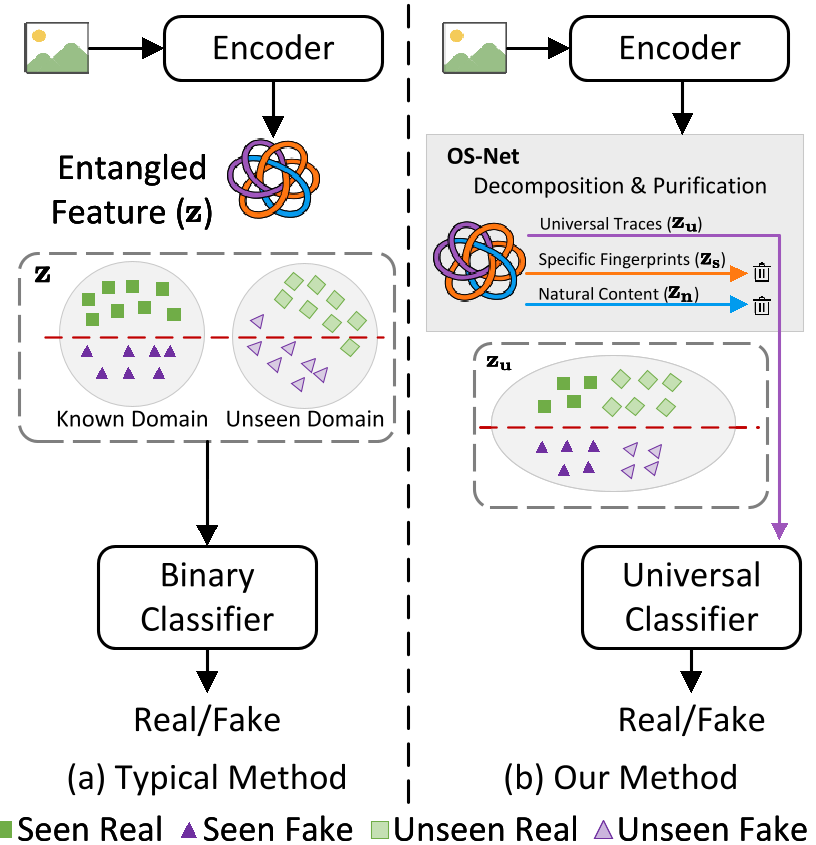 Figure 1: Spectral analysis showing how different generator artifacts occupy non-overlapping channels.
Methodology: The Three Pillars of ODP-Net
The core philosophy of ODP-Net is to model the latent feature as: Where is universal, is specific, and is nuisance (semantics).
1. Instance-aware Orthogonal Decomposition
Instead of using soft attention (which allows "leakage"), ODP-Net uses Hard Masking via a Gating Network and the Straight-Through Estimator (STE). This forces the model to physically partition dimensions of the feature vector into mutually exclusive subspaces.
2. Perturbation-based Purification
Even after decomposition, semantic bias can remain. The authors introduce a "cross-sample injection" trick. They take the "nuisance" component from a different image in the batch and inject it into the current sample's "universal" trace. By forcing the classifier to ignore these injected conflicts, the model learns to be truly invariant to content.
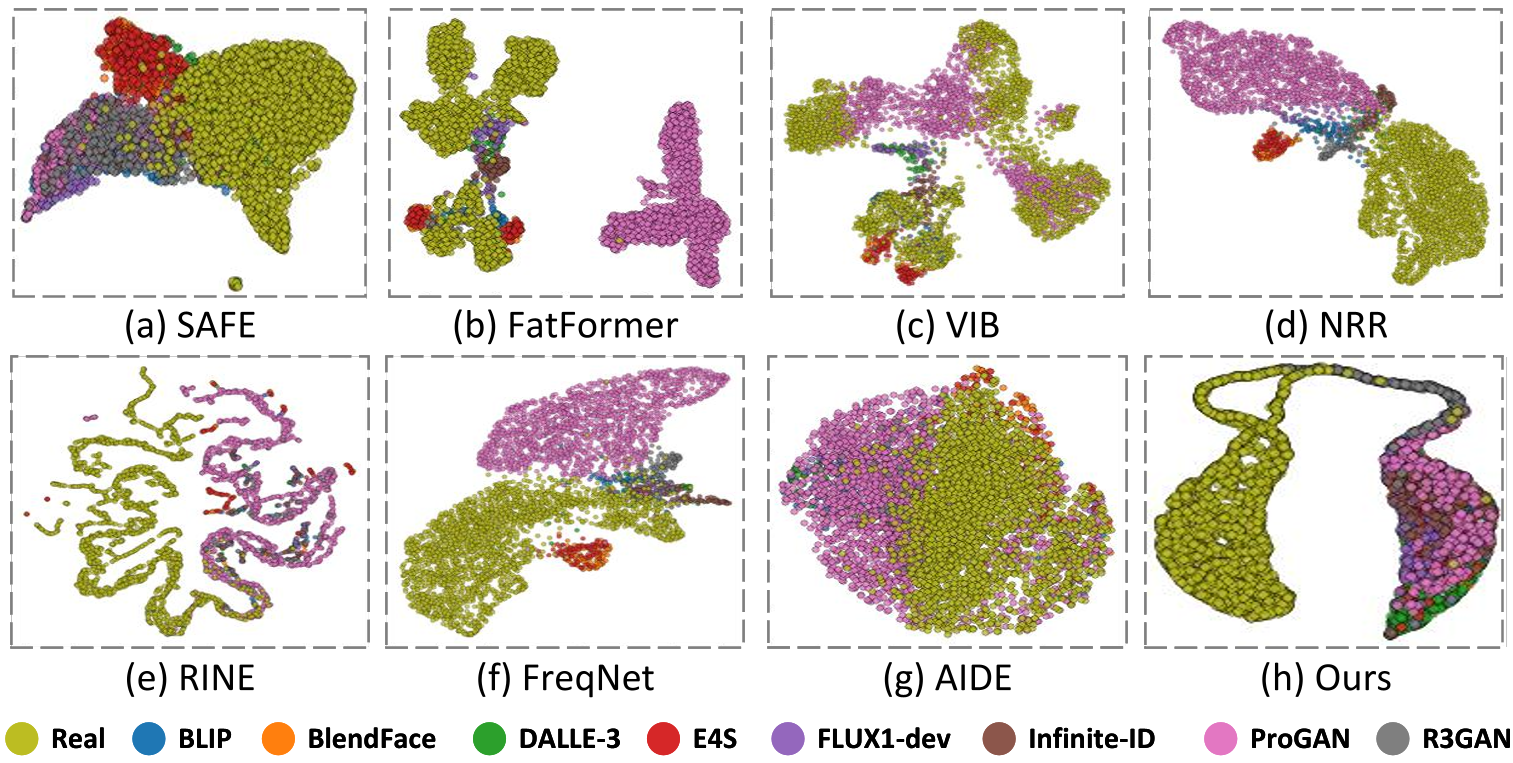 Figure 2: The ODP-Net framework featuring decomposition, purification, and alignment.
3. Manifold Alignment
Finally, to bridge the gap between different generator families, the model regularizes the latent space. It pulls "local centroids" of different fake images toward a "global fake prototype," ensuring a compact and unified decision boundary.
Experiments & Results: Dominating the "Unseen"
ODP-Net was tested against 7 SOTA baselines across a massive range of generators (ProGAN, SD3, Midjourney, etc.).
- Architecture Generalization: On the "WFIR" dataset (where high-frequency artifacts are suppressed), traditional methods like RINE drop to 50% (random guess). ODP-Net maintains 95.40%.
- Real-world Robustness: In "In-the-Wild" community datasets, it outperforms CLIP-based models like FatFormer, which often overfit to textures.
- Calibration: ODP-Net provides the most "honest" probabilities, with the lowest Negative Log Likelihood (NLL).
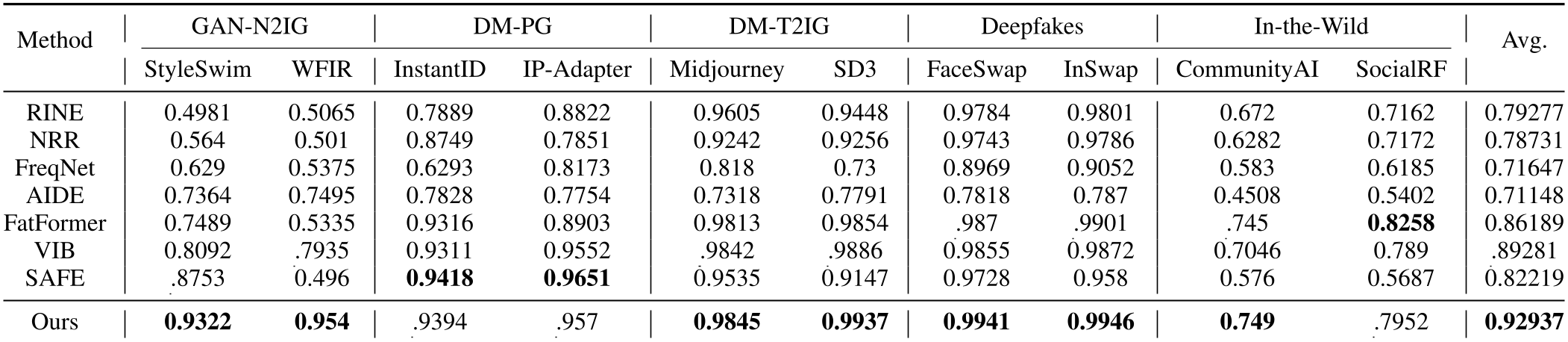 Table 1: Cross-domain generalization performance across various generative architectures.
Critical Insight & Conclusion
The genius of ODP-Net lies in its physically-grounded design. By recognizing that frequency artifacts are additive and orthogonal, the authors justified a mathematical constraint in the latent space that actually works in the real world.
Limitations: While powerful, the reliance on a frozen CLIP backbone means the model still inherits CLIP’s inherent perceptual biases. Future work might explore end-to-end training of the backbone specifically for forgery-nuisance separation.
Final Takeaway: ODP-Net proves that to catch a fake, you must forget everything about the image except the "how it was made." Disentanglement isn't just a technical trick; it's the future of forensic robustness.