
Find, Fix, Reason (FFR): Breaking the Performance Ceiling in Video AI via Context Repair
Find, Fix, Reason: Context Repair for Video Reasoning
The paper introduces Find, Fix, Reason (FFR), a novel reinforcement learning framework that enhances video reasoning in Multi-modal Large Language Models (MLLMs). It employs a frozen, tool-integrated teacher to identify spatiotemporal dependencies and provide minimal, non-leaky "evidence patches" to rectify failed student rollouts within a Group Relative Policy Optimization (GRPO) loop.
TL;DR
Reinforcement Learning (RL) has fundamentally changed how we train AI to reason, but in the realm of video, models often get stuck in a "knowledge loop." Find, Fix, Reason (FFR) breaks this loop by introducing a "frozen teacher" into the training process. When the student fails to answer a video question, the teacher points to the specific frames or regions they missed. Crucially, the teacher never gives the answer—it only provides the "missing evidence" so the student can figure it out themselves.
The "Self-Doubt" Problem in Video RL
Current video models trained via popular RL methods like DeepSeek's GRPO rely on self-exploration. While this works for math (where logic is internal), video reasoning requires external grounding in dynamic pixels. If a model doesn't "see" a key action at frame 45, no amount of self-reflection will help it guess what happened.
Previous attempts to solve this involved:
- Hybrid Replay: Mixing teacher data with student data (often leads to the student just mimicking the teacher's style).
- Tool-Use: Letting the model search the video (often results in "self-doubt" loops where the model keeps searching the wrong areas).
FFR argues that we need a causal intervention—a way to force the model to look at the right place at the right time.
Methodology: The "Find, Fix, Reason" Loop
The FFR framework operates within the GRPO pipeline but adds a diagnostic layer:
- Find: The student model generates multiple reasoning paths (rollouts). A verifier checks the final answers.
- Fix: For failed rollouts, a Frozen Teacher (a larger model like GLM-4.5V) analyzes the failure. It identifies if the error was Temporal (missed the sequence), Spatial (missed the object), or a Misconception (misunderstood the question).
- Evidence Patching: The teacher provides a "Minimal Evidence Patch"—for example, "Re-examine frames 13-17." It uses negative prompting to ensure it never leaks the actual answer.
- Reason: The student attempts the question again with the added context. Training updates are then calculated based on these "rectified" trajectories.
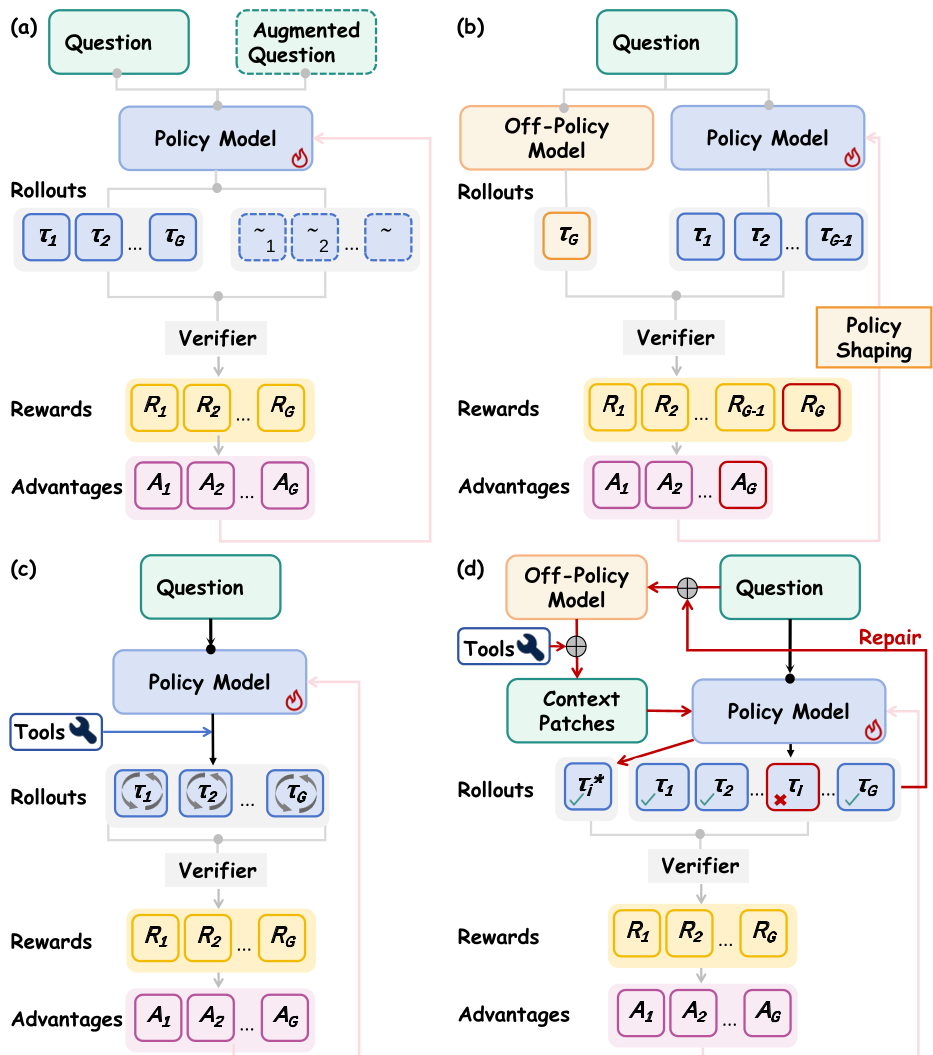 Figure 1: Comparison showing how FFR repairs failed rollouts with minimal patches compared to standard on-policy or tool-use regimes.
The Robust Improvement Reward (RIR)
To ensure the model doesn't become a "teacher's pet," the authors introduced a Patch Tax (κ). If the student only gets the answer right after the teacher's help, the reward is penalized. This incentivizes the model to internalize the reasoning process so it can eventually perform without the patch.
Extraordinary Results
The most striking result is the surpass effect. In many benchmarks, a 7B or 8B student model trained via FFR eventually outperformed the 32B teacher that was helping it.
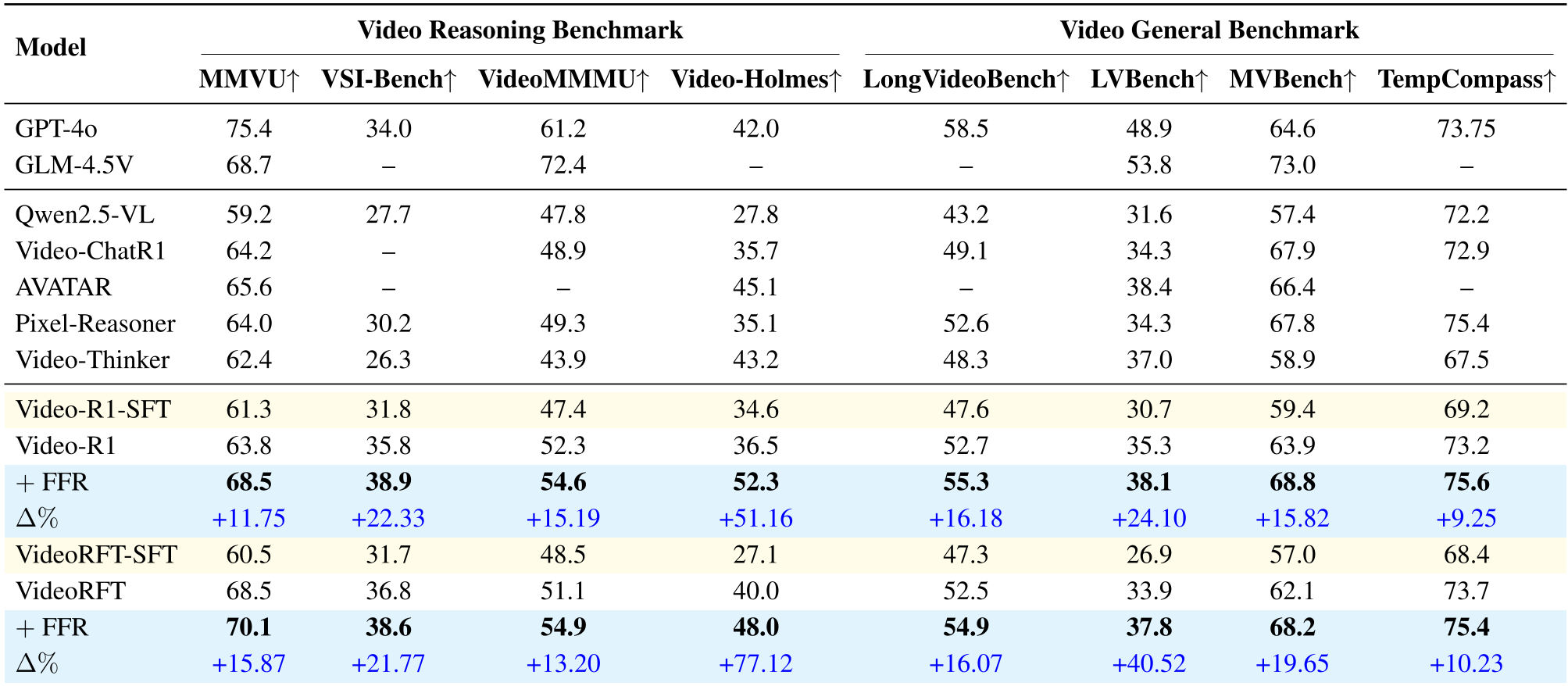 Table 1: FFR shows massive gains (e.g., +51.16% on Video-Holmes) across multiple reasoning benchmarks.
Why does it work?
- Internalization: The student isn't just copying text; it's learning the relationship between specific spatiotemporal cues and logical conclusions.
- Guidance without Leakage: By forbidding the teacher from naming colors, counts, or terminal states, the student is forced to do the heavy lifting of visual perception.
- Efficiency: The intervention ratio drops by nearly 50% over the course of training, proving that the student is actually "learning to see" on its own.
Case Study: The "Put Down" Action
In a sample from the STAR dataset, a student model originally thought a person put down "clothes" because clothes were visible in the scene. The teacher intervened, pointing to frames 13-15 where the hand release actually happens. Looking at those specific frames, the student realized the object was actually a book. By reinforcing this specific correction, the model learns that "put down" actions require tracking hand-object contact, not just naming prominent items in the scene.
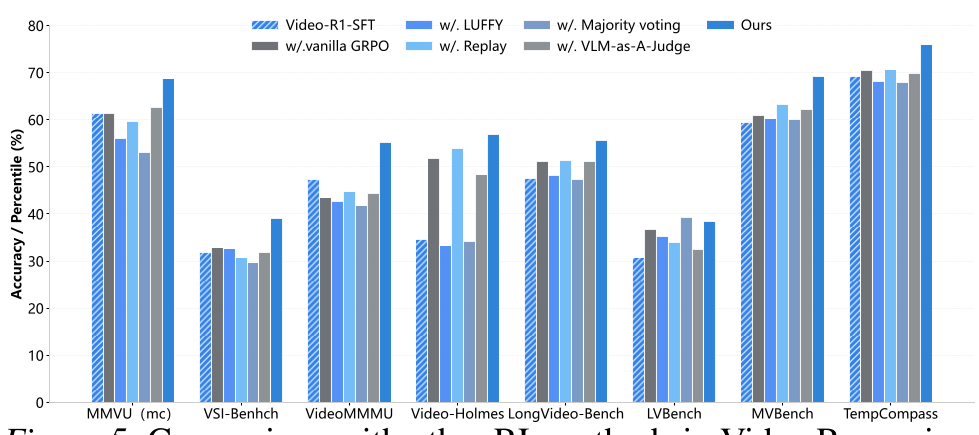 Figure 2: Real-world example of the FFR pipeline correcting a student's temporal misconception.
Critical Insight & Conclusion
FFR proves that the quality of the learning signal matters more than the quantity of data. Instead of feeding a model millions of videos, we can achieve SFT-beating performance by carefully diagnosing why a model failed and providing a "nudge" in the right direction.
Future Outlook: This framework could be the blueprint for "agentic training," where models learn to use tools not just by trial and error, but by being coached on exactly which spatiotemporal context they overlooked.