
[ArXiv 2026] F-ACIL: Breaking the Curse of Dimensionality in Robotic Data Flywheels
Towards Generalizable Robotic Data Flywheel: High-Dimensional Factorization and Composition
The paper introduces F-ACIL (Factor-Aware Compositional Iterative Learning), a framework designed to build a "robotic data flywheel" by factorizing high-dimensional robotic data into structured spaces: Object, Action, and Environment. By leveraging compositional generalization, it achieves state-of-the-art efficiency, outperforming Gaussian-sampled baselines by over 45% in success rate while requiring 5–10× fewer demonstrations.
TL;DR
The "Data Flywheel" is the holy grail of robotics—a self-sustaining cycle where models get better as they collect more data. However, the high-dimensional nature of the real world makes uniform data coverage impossible. F-ACIL (Factor-Aware Compositional Iterative Learning) solves this by factorizing the world into Object, Action, and Environment dimensions. It uses a smart iterative search to find the "skeleton" of the data space, achieving 45% better performance with 1/10th of the data required by traditional methods.
The Problem: The Gaussian Trap and the Curse of Dimensionality
Most robotic datasets are "Gaussian-like"—they are dense in common scenarios but empty in the "long tail" (e.g., a specific object in a weird lighting condition). If we try to fix this by collecting data for every possible combination (Quasi-uniform distribution), we hit the curse of dimensionality. If you have 10 objects, 10 actions, and 10 environments, you need 1,000 datasets. Add one more factor, and the requirement explodes.
The authors argue that the ideal distribution is a sparse mixture of Gaussian modes. We don't need to see every combination; we need the model to infer the combinations through Compositional Generalization.
Methodology: Factorize, Search, and Compose
F-ACIL treats the robotic state space as a factored system:
1. Factorized Representation
- F-ACIL-Object: Breaks objects down by Texture (Transparent, Specular, etc.), Geometry (Cylindrical, Dish-like), and Size.
- F-ACIL-Action: Parameterizes the initial scene configuration (6-D spatial distribution).
- F-ACIL-Environment: Distinguishes between Macro (Lighting, Shadow) and Micro (Surface material, Clutter) factors.
2. Sequential Factor Expansion
Instead of exploring the whole cube at once, F-ACIL expands step-by-step: . By stabilizing the model on object variations first, it can then generalize actions across those objects more efficiently.
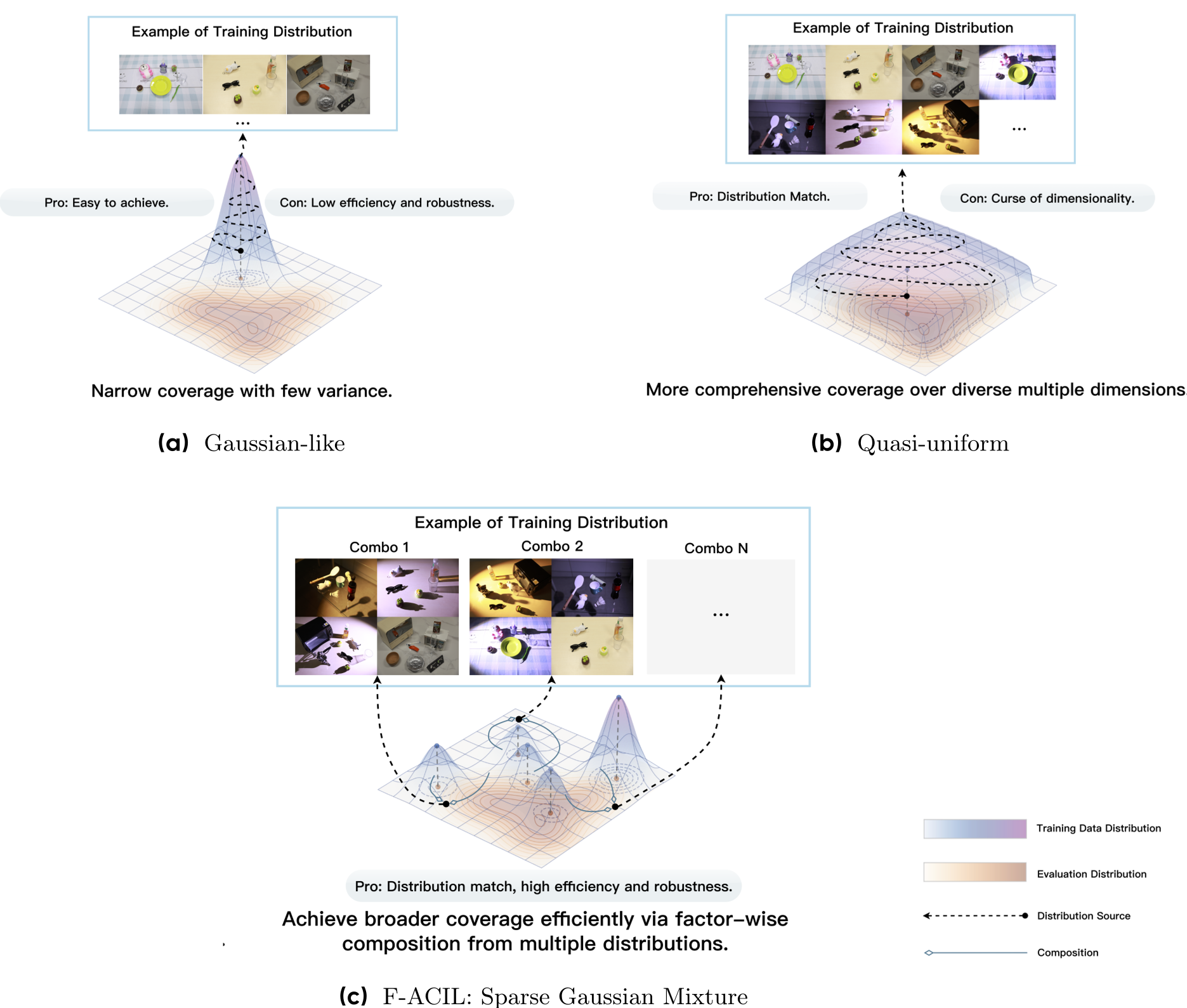 Figure 1: Comparison of data distributions: (a) Gaussian-like, (b) Quasi-uniform, and (c) F-ACIL's sparse compositional approach.
3. Iterative Subset Search (The Flywheel)
The framework evaluates the model, identifies "blind spots" in the factor tensor, and specifically collects demonstrations for those failing compositions. This turns data collection from a passive "grab everything" approach into an active "fill the gaps" strategy.
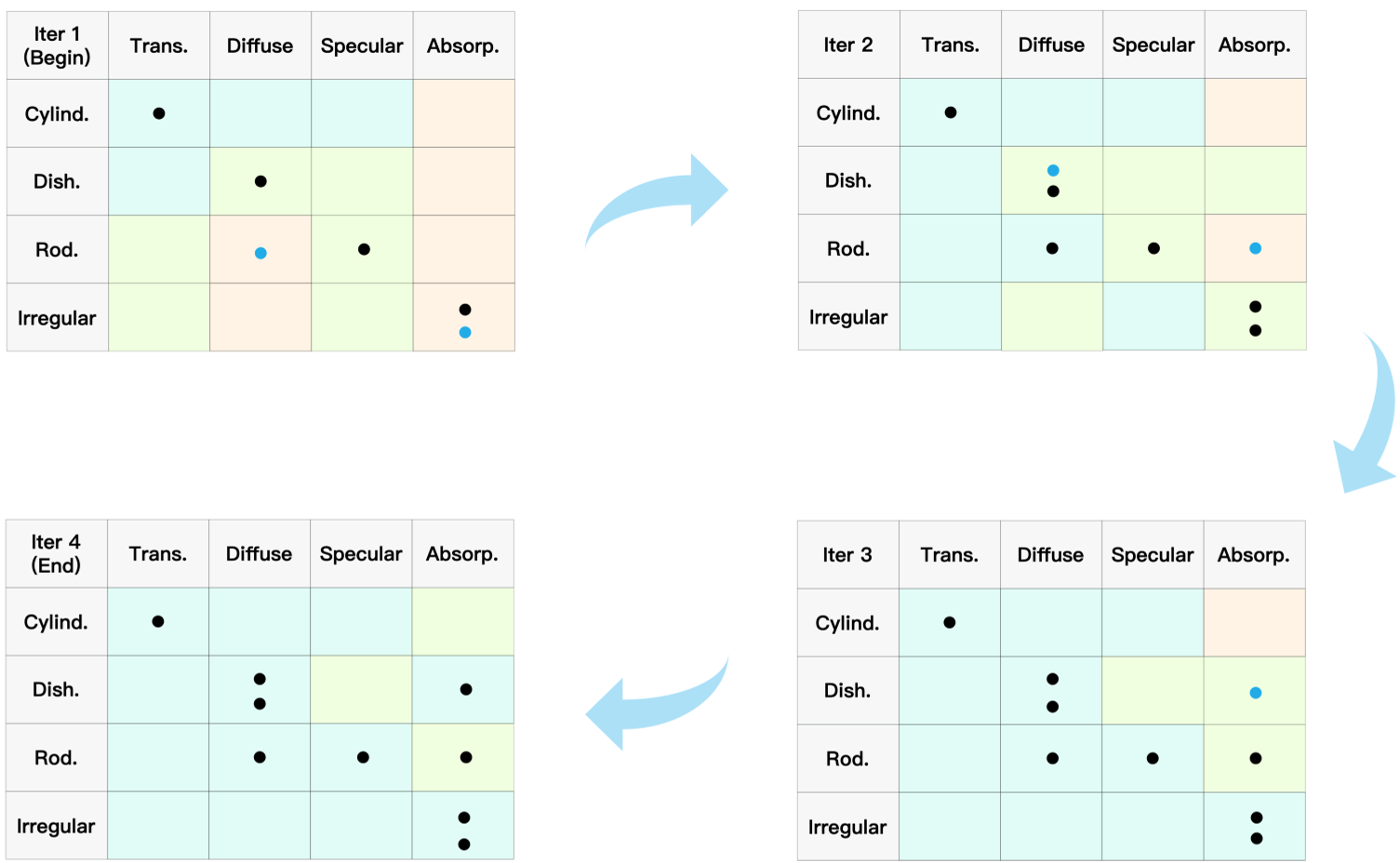 Figure 2: The Iterative Search Procedure in Object Space—identifying and augmenting poorly performing factor regions.
Experimental Mastery: 10x Efficiency
The researchers tested F-ACIL on complex tasks like Open-and-Close (ovens, microwaves) and Pick-and-Place. The results are a wake-up call for "big data" proponents:
- Efficiency: F-ACIL reached a ~90% success rate with ~4k trajectories. The standard Gaussian baseline couldn't reach that performance even with 32k trajectories.
- The 16x Speedup: By evaluating on a reduced, factorized benchmark rather than every possible scene, the authors accelerated the simulated/real-world evaluation cycle by 16 times.
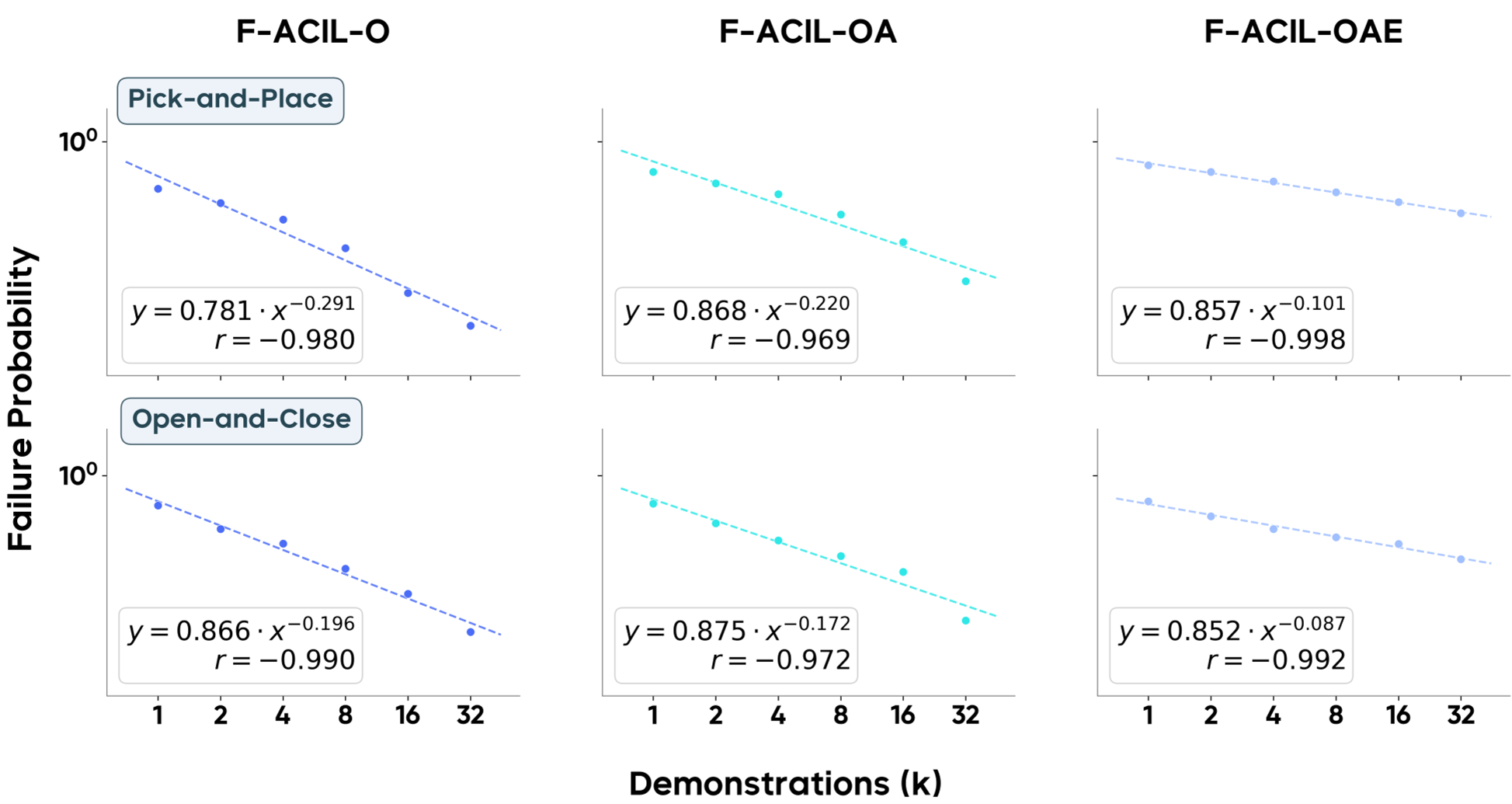 Figure 3: Scaling patterns. Notice how the scaling exponent improves (gets steeper) when using factor-aware strategies compared to random scaling.
Critical Insight: Why Does This Work?
The core "magic" here is Inductive Bias. By forcing the model to learn in a factorized way, we are teaching it that "how to grasp" is somewhat independent of "what the background looks like." When the model sees a Transparent object and a Dish-like object, and it knows how to handle Specular objects in Cluttered environments, it can "compose" these learned primitives to handle a Transparent Dish in a Cluttered environment without ever seeing that specific combination in training.
Limitations & Future Outlook
While F-ACIL is a massive step forward, the authors note:
- Factor Definition: Defining factors (what counts as a "texture" vs "geometry") is still a manual heuristic.
- Independence Assumption: In the real world, factors can be entangled (e.g., a heavy object might change the required action trajectory).
The future of the robotic data flywheel lies in Sim-to-Real. Using F-ACIL in simulation to identify the most valuable data points before ever touching a real robot will be the next frontier in achieving truly generalist agents.
Conclusion
F-ACIL proves that in the era of VLA models, better data beats more data. By structuring our approach to the high-dimensional chaos of the real world, we can build robots that learn faster, generalize further, and operate more robustly.