
Beyond Prediction: Reconstructing Intelligence Through the Unified World Model
Human Cognition in Machines: A Unified Perspective of World Models
This comprehensive report from Northeastern University proposes a unified perspective on World Models (WMs) grounded in Cognitive Architecture Theory (CAT). It systematically classifies Video, Embodied, and the newly defined "Epistemic" World Models by the cognitive functions they emulate (e.g., memory, reasoning, meta-cognition), identifying critical research gaps in intrinsic motivation and self-monitoring.
TL;DR
The artificial intelligence community has long used the term "World Model" to describe everything from simple predictors to complex simulators like OpenAI's Sora. However, a report from the Physical AI Research (PAIR) Center at Northeastern University argues that we are missing the "Human" in the machine. By grounding World Models in Cognitive Architecture Theory (CAT), the authors reveal that current SOTAs are essentially blind to Motivation and Meta-cognition. They propose a path forward using Epistemic World Models—systems that don't just see the world, but understand the structured knowledge within it.
The "Anthropomorphic Gap": Why Current Models Aren't "Human-Like"
We often hear that LLMs or video generators are reaching "human-level" understanding. The authors argue this is a category error. Most current models operate on a coarse dichotomy: they either represent (Memory/Perception) or they predict (Reasoning/Imagining).
The fundamental pain point is that these models are reactive rather than agentic. They lack:
- Intrinsic Motivation: They only chase hand-coded reward signals.
- Meta-cognition: They cannot monitor their own reasoning or catch their own "hallucinations" before they happen.
Methodology: The Seven Pillars of Machine Cognition
To fix this, the authors propose a Unified World Model framework. Instead of just scaling parameters, they suggest functional integration based on how the human brain actually works.
1. The Core Architecture
The framework suggests that a true World Model must sense via multi-modal perception, store via latent state-space memory, and communicate via symbolic language.
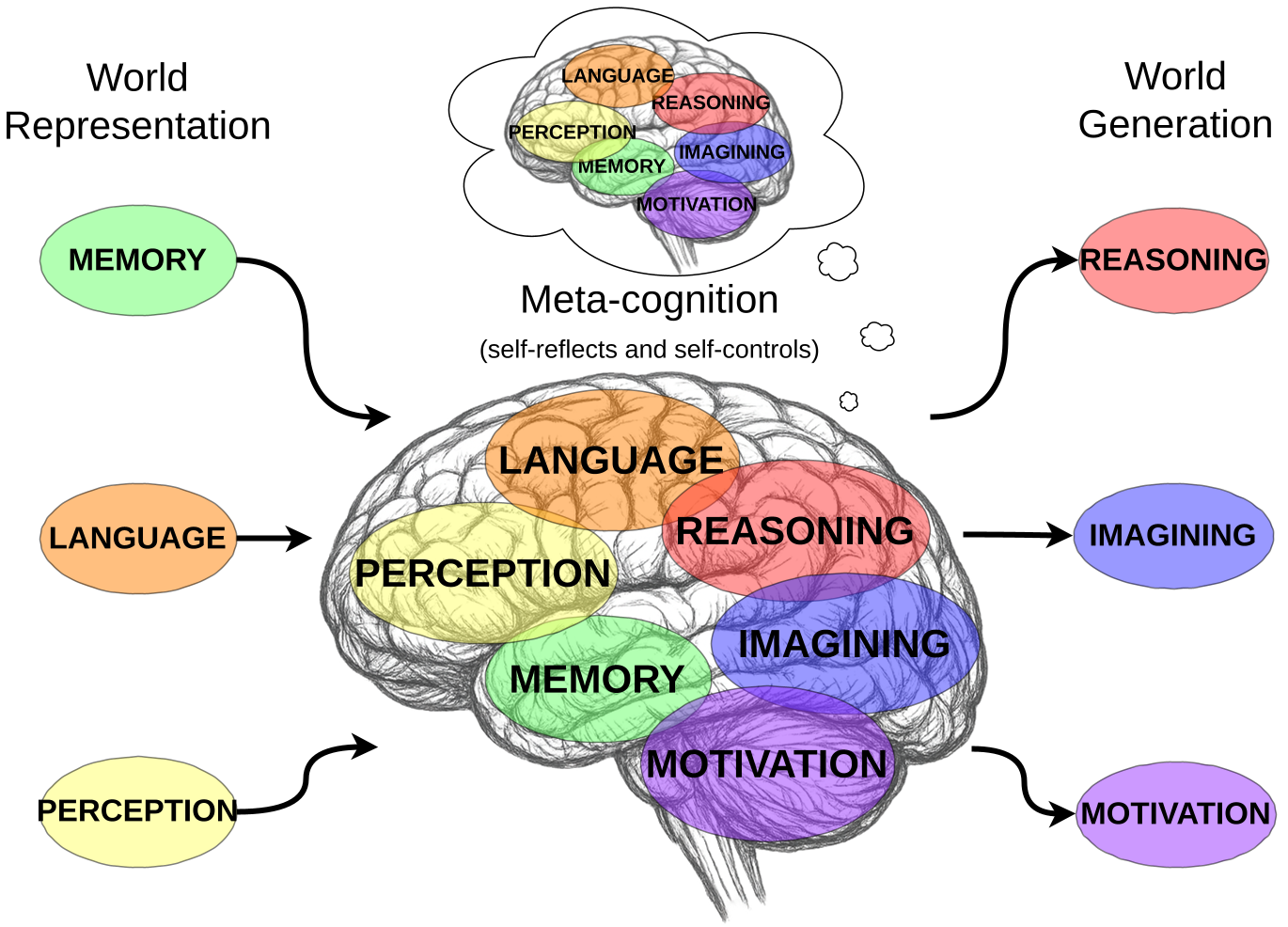 Fig 1: The proposed Unified World Model integrating all cognitive functions from CAT.
2. Solving the Motivation Gap with Active Inference
Instead of simple Reinforcement Learning (RL), the paper advocates for Active Inference. Based on the physics of Free Energy, this allows a model to "minimize surprise." Effectively, the model becomes intrinsically curious, moving toward states that reduce its own uncertainty about the world.
3. Epistemic World Models: The Scientific Breakthrough
Perhaps the most novel contribution is the definition of Epistemic World Models. In this domain, the "world" isn't a physical room; it's the totality of scientific literature and experimental data.
- State Space: Structured Knowledge.
- Actions: Tool use, RAG queries, and hypothesis generation.
- Advantage: This framework naturally supports meta-cognition because the agent can "evaluate" its reasoning steps against a global workspace (like a research log).
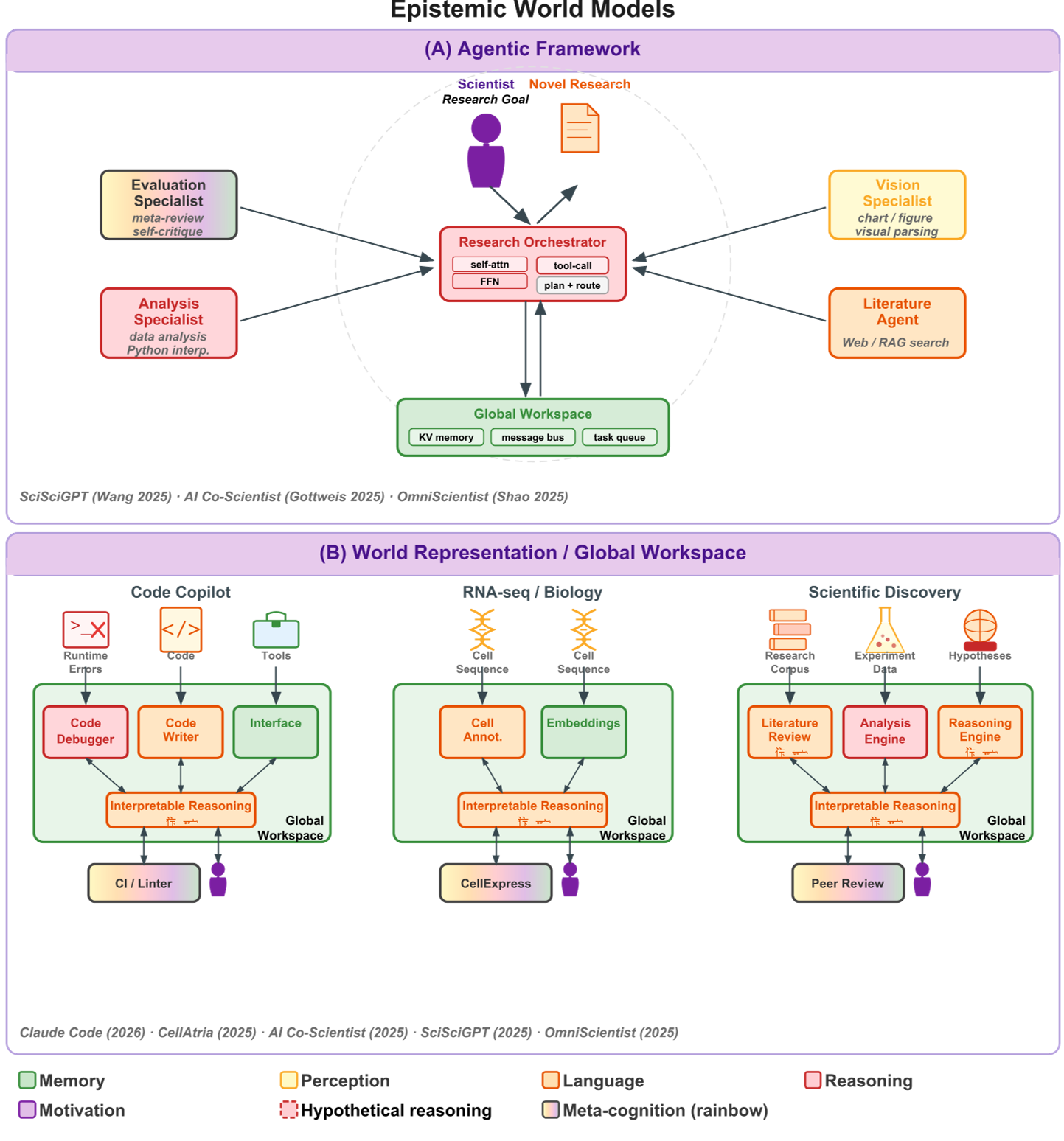 Fig 2: Epistemic World Models for scientific discovery, showcasing the Global Workspace for human-AI collaboration.
Domain Analysis: Video vs. Embodied vs. Epistemic
The paper provides an exhaustive mapping of existing SOTA models:
- Video WMs (e.g., Sora, Wan): High marks in Imagination and Perception, but zero Meta-cognition. They struggle with "temporal drifting" (losing the plot over time).
- Embodied WMs (e.g., π0, Cosmos): Strong in Reasoning about physical contact and kinetics, but often fail to transfer from simulation to reality (the "Sim-to-Real" gap) due to lack of Memory depth.
- Epistemic WMs (e.g., Gemini Co-scientist): Leading the charge in Meta-cognition and Reasoning, but lacking the "physical intuition" of the other two.
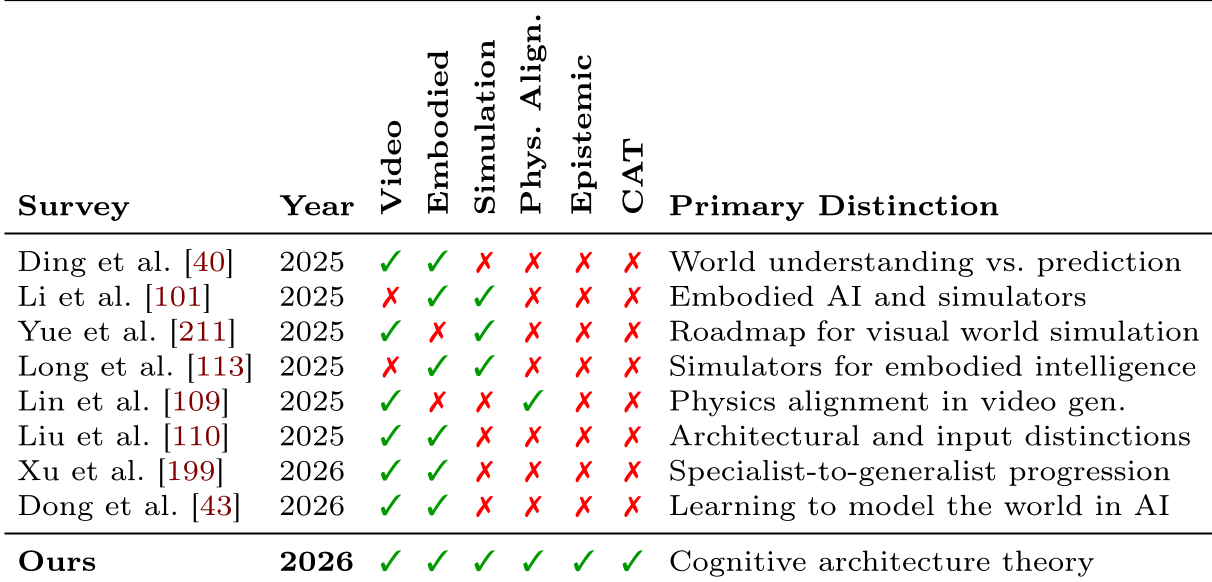 Table 1: A comparison of recent World Model surveys vs. the CAT-based approach.
Critical Insight: The "Global Workspace" Solution
To solve the "hallucination" and "drift" issues in current models, the authors point toward Global Workspace Theory (GWT). By creating a shared space where different "specialist" modules (e.g., a physics checker, a logic verifier, and a vision encoder) can broadcast their results, we create a rudimentary form of consciousness. This "broadcast" allows for Self-Evaluation, allowing the model to say, "The video I just imagined violates gravity—let me re-reason."
Conclusion and Future Outlook
This report is a wake-up call for AI researchers. Scaling is not enough. To move from "Stochastic Parrots" to "Machine Scientists," we must:
- Stop Hard-coding Rewards: Adopt Active Inference for intrinsic curiosity.
- Externalize Memory: Use Global Workspaces (like chat histories or knowledge graphs) to allow models to "think about their thinking."
- Bridge the Domains: Combine the physical intuition of Video models with the structured reasoning of Epistemic models.
The unified World Model is not just a simulator—it is the foundation for an agent that understands its own limitations.