
Information-Geometric Signatures: Detecting the Ghost of Nonconservative Driving
Information-Geometric Signatures of Nonconservative Driving
The paper introduces an information-geometric signature to detect violations of detailed balance in stochastic systems. By comparing the acceleration of the Kullback–Leibler (KL) divergence with the Fisher information (intrinsic speed), the authors identify a "relaxation gap" that uniquely identifies nonconservative driving and provides a lower bound for the steady-state entropy production rate (NESS-EPR).
TL;DR
Researchers have discovered a "relaxation gap" in the geometry of probability distributions that acts as a tell-tale sign of nonequilibrium behavior. By comparing how fast a system's "surprise" (KL divergence) accelerates versus its "intrinsic speed" (Fisher information), we can now calculate a lower bound for energy dissipation (entropy production) without ever knowing what the system's equilibrium state looks like.
Background: The Hidden Cost of Being Out of Equilibrium
In classical thermodynamics, a system at equilibrium obeys detailed balance: every transition between states is perfectly balanced by its reverse. However, living systems and driven physical machines operate in Nonequilibrium Steady States (NESS). They look "static" on average but are actually driven by hidden currents that consume energy and produce entropy.
The challenge has always been: How do we measure this "cost of living" (entropy production) if we only observe the system's relaxation toward its steady state? Historically, this required comparing the system to a hypothetical equilibrium version, which is often unavailable in complex real-world networks.
The Insight: The Relaxation Gap
The authors, Andrea Auconi and Sosuke Ito, turn to Information Geometry. They treat probability distributions as points on a manifold and measure the distance between them using the Kullback–Leibler (KL) divergence.
Their breakthrough is a simple yet profound identity. For a system near equilibrium (satisfying detailed balance): Where is the KL divergence and is the intrinsic speed (related to Fisher Information).
In non-equilibrium systems, this identity breaks. The difference between these two terms is what they call the Relaxation Gap. This gap is a direct signature of nonconservative driving.
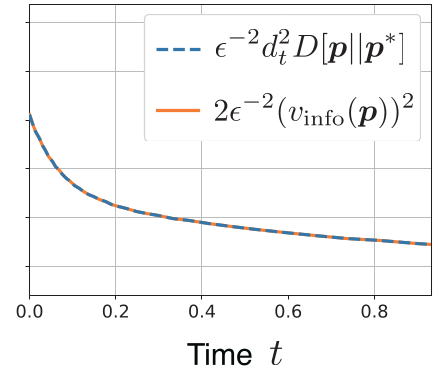 Fig 1: Panels (b) and (c) contrast the relaxation behavior. In (c), a system under detailed balance shows no gap, whereas (b) shows a clear discrepancy (the relaxation gap) due to non-equilibrium currents.
Methodology: From Geometry to Heat
The authors expand this geometric intuition into a rigorous thermodynamic bound. By applying the Cauchy-Schwarz inequality to the relaxation gap, they derive a lower bound for the steady-state entropy production rate ():
Here, represents the "fastest mixing rate" of the network. This formula allows researchers to quantify the energy dissipation of a NESS simply by watching how the system recovers from a small perturbation.

Experimental Validation: Cycles and Random Networks
To prove the utility of this bound, the team tested it on two fronts:
- Uniform Biased Cycles: In simple ring-like networks (common in molecular motors), the bound is remarkably tight—exactly capturing the dissipation in the limit of weak driving.
- Random Markov Networks: By simulating thousands of random transition matrices, they demonstrated that the relaxation gap consistently provides a reliable lower bound for entropy production across different network sizes (n=3 to n=7).
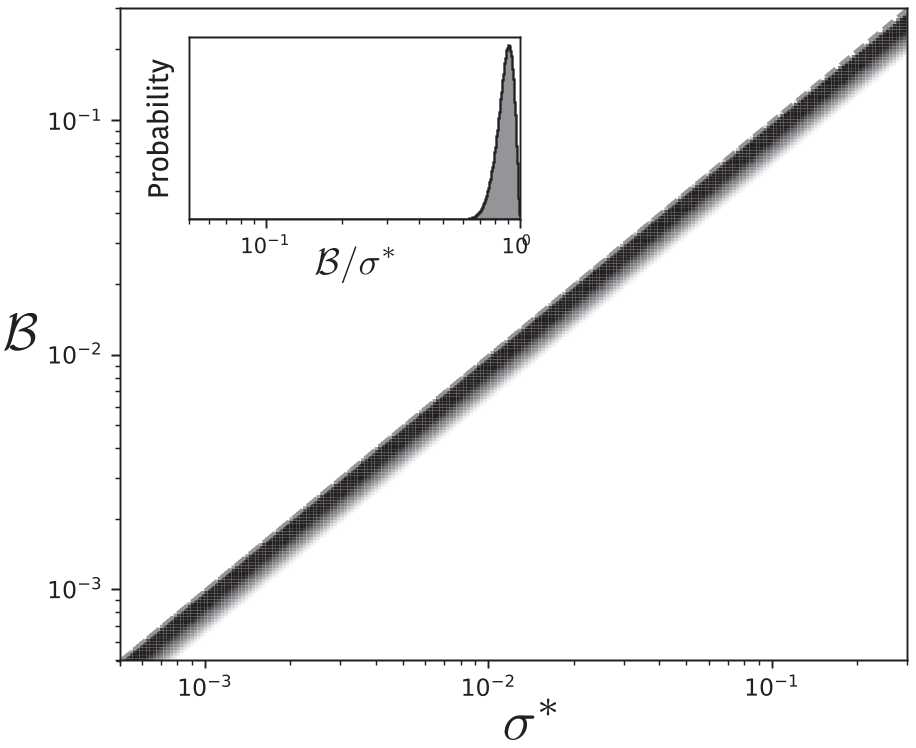 Fig 2: Numerical results showing the tightness of the bound across various network dimensions. The bound remains a valid "refinement of the second law."
Deep Insight: Why Does This Matter?
The beauty of this approach is its observational independence. You don't need to know the temperature of the environment or the exact microscopic forces. If you can track the probability distribution of a system's states over time (e.g., via high-resolution microscopy of a cell), you can use the relaxation gap to estimate the underlying energy consumption.
Furthermore, this applies to both discrete jumps (like chemical reactions) and continuous movement (Fokker-Planck dynamics), making it a versatile tool for the "Nonequilibrium Toolkit."
Critical Analysis & Future Outlook
Takeaway: This paper successfully links the "curvature" of information space to physical dissipation. It moves information geometry from a purely descriptive tool to a predictive thermodynamic engine.
Limitations: The bound depends on accessibility to (the maximum mixing rate), which might be hard to estimate in infinite-dimensional or extremely large-scale systems. As the authors admit, the bound becomes less tight in high-dimensional systems because it assumes a "worst-case" relaxation channel.
Future Work: Incorporating local network topology instead of a global mixing rate could be the key to making these bounds "ultra-tight" for complex neural or social networks. This research opens the door to diagnosing the "health" (metabolic activity) of microscopic systems purely through their geometric signatures.