
IntentGrasp: Decoding the "Why" Behind the "What" in LLM Reasoning
IntentGrasp: A Comprehensive Benchmark for Intent Understanding
The paper introduces IntentGrasp, a large-scale benchmark for evaluating the Intent Understanding (IU) capabilities of LLMs across 12 domains. It features over 262k training instances and identifies a significant performance gap in current frontier models, which is then addressed via a new training paradigm called Intentional Fine-Tuning (IFT).
TL;DR
Understanding intent—the goal or plan in a user's mind—is the bedrock of helpful AI. While LLMs are excellent at generating text, they are surprisingly bad at understanding why a user is speaking. IntentGrasp is a new, massive benchmark (262k+ training samples, 12 domains) that reveals even "frontier" models like GPT-5 struggle to outperform random guessing on complex intent tasks. The good news? A new method called Intentional Fine-Tuning (IFT) can boost model performance by over 30 points, making AI assistants significantly more "intentional" and safer.
Context: Why "Intent" is Not Just "Classification"
In traditional NLP, "intent classification" was a narrow task: mapping a query like "Find me a flight" to a label like flight_search. However, in the era of sophisticated AI agents, intent is much deeper. It spans across toxic speech detection, academic citation analysis, and empathetic response.
The authors argue that current models face a semantic disconnect. Most training data uses terse, one-word labels that mean nothing without the original annotation guidelines. If a model doesn't understand the contextual nuance of the intent, it cannot safely navigate high-stakes fields like healthcare or legal advice, where misunderstood intent leads to catastrophe.
Methodology: Building a Gold Standard for Intent
To solve the fragmentation of existing data, the authors executed a three-stage pipeline to create IntentGrasp:
- Curation: Gathering 49 high-quality datasets across 12 domains (E-commerce, News, Policy, etc.).
- Contextualization: This is the "secret sauce." Instead of a vague label like "uses," they re-wrote labels into full statements: "To use data, methods, etc., from the cited paper."
- Unification: Converting everything into a Multiple-Choice QA format, which is more natural for LLM evaluation.
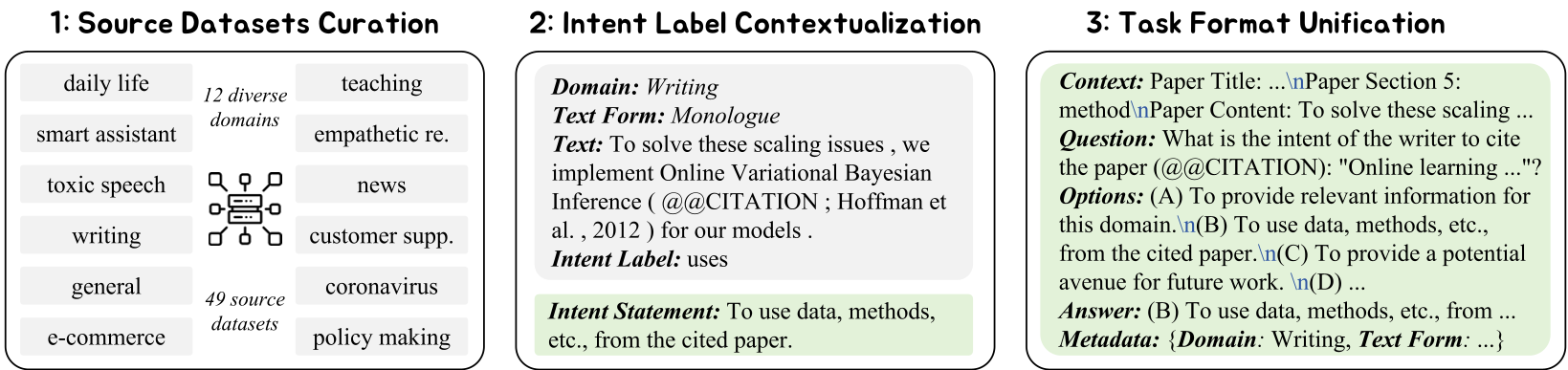 Figure 1: The three-stage process for transitioning from fragmented datasets to a unified, contextualized benchmark.
The "Gem Set" Reveal: LLMs are Lost at Sea
The results from 20 frontier LLMs were sobering. The authors created a "Gem Set"—a subset of the hardest test cases where most open-source models failed.
- The Shocking Statistic: 17 out of 20 tested models (including some from the GPT and Claude families) performed worse than random guessing on the Gem Set.
- Human-AI Gap: While humans score ~81.1%, the best models hovered around 21-25% in the most challenging scenarios.
- Domain Variation: Models performed best on simple "Daily Life" queries but failed miserably in "News" (detecting misinformation intent) and "Policy Making."
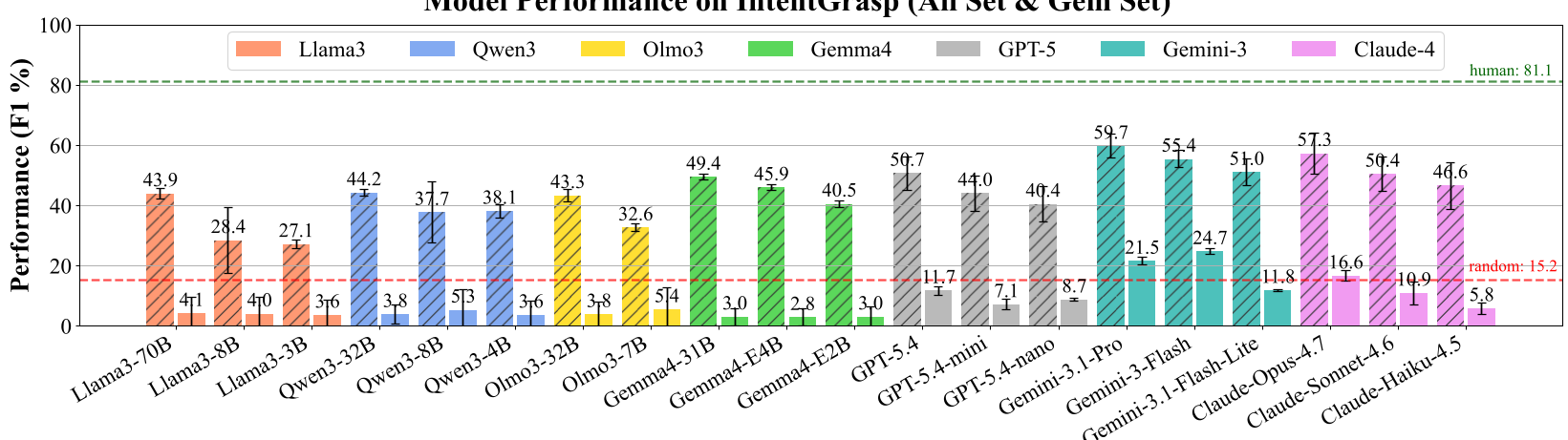 Figure 2: Performance distribution across All Set and Gem Set. Note how most models struggle to reach even the 60% mark on the easier set.
Intentional Fine-Tuning (IFT): A Path Forward
Instead of just prompting models to "think step-by-step" (Chain-of-Thought), the authors propose Intentional Fine-Tuning (IFT). By training models directly on the 262k IntentGrasp samples, they achieved a total breakthrough.
- Scale Matters: Even using just 10% of the training data, models saw immediate jumps in accuracy.
- Cross-Domain Mastery: The most impressive finding was from the Lodo (Leave-one-domain-out) experiments. When a model was trained on 11 domains and tested on a completely new 12th domain, it still showed improved performance. This proves that intent understanding is a generalizable skill—once a model learns to look for "goals" and "plans," it can apply that lens to new contexts.
 Table 1: The impact of IFT. By fine-tuning, smaller models (4B/8B) were able to leapfrog proprietary giants in intent accuracy.
Critical Insight & Future Outlook
The IntentGrasp benchmark exposes a fundamental "blind spot" in the current scaling laws of LLMs: Complexity does not equal Intentionality. A larger model isn't necessarily better at understanding why you are asking a question; it's just better at predicting the next word.
Limitations to Watch:
- Static Nature: Like all open benchmarks, it risks data contamination over time.
- Text-Only: Human intent is often expressed through tone and gesture, which this text-only benchmark cannot capture.
The Takeaway: If we want AI to move from "calculators that talk" to "agents that help," we must prioritize intent. IntentGrasp provides the first comprehensive map for that journey.