
Manifold Steering: Why the Geometry of Thought is the Key to Controlling AI
Manifold Steering Reveals the Shared Geometry of Neural Network Representation and Behavior
This paper introduces "Manifold Steering," a novel intervention framework that aligns internal neural representations with external model behavior. By fitting manifolds to both activation space (Mh) and behavior space (My), the authors demonstrate that steering along the activation manifold preserves behavioral naturalness across language models and visual world models.
TL;DR
Current AI steering methods treat neural activations like a flat map, but "Manifold Steering" reveals they are actually a curved landscape. By respecting the intrinsic geometry of both hidden layers and output probabilities, we can intervene in models more precisely—enabling smooth, natural transitions in behavior and multi-dimensional control that standard linear methods simply cannot achieve.
Academic Positioning: This work marks a significant shift from "Linear Interpretability" to "Geometric Interpretability," challenging the ubiquity of the Linear Representation Hypothesis (LRH) and providing a causal bridge between internal states and external outputs.
The Mirage of Linearity
For years, the field has leaned on the Linear Representation Hypothesis (LRH): the idea that concepts like "honesty" or "time" live along straight vectors in a model's high-dimensional space. To change a model, you simply add or subtract these vectors.
However, this paper exposes a fundamental flaw: linear steering is "off-manifold." When you push a model in a straight line, you often end up in "dead zones" where the model has never been during training.
The result?
- Teleportation: Instead of moving from "Monday" to "Tuesday," the model's probability distribution suddenly jumps from "Monday" to "Thursday."
- Incoherence: The model produces "gibberish" or low-entropy outputs because it is lost in high-dimensional space.
The Core Insight: Isometry between Logic and Behavior
The authors discovered that the geometry of internal activations () and the geometry of output behaviors () are nearly identical—an approximate isometry.
If you plot the days of the week in a hidden layer, they form a circle. If you plot the model's output probabilities for those days, they also form a circle. The distances match. This discovery implies that the "mental map" the model builds internally is exactly what dictates how it expresses itself.
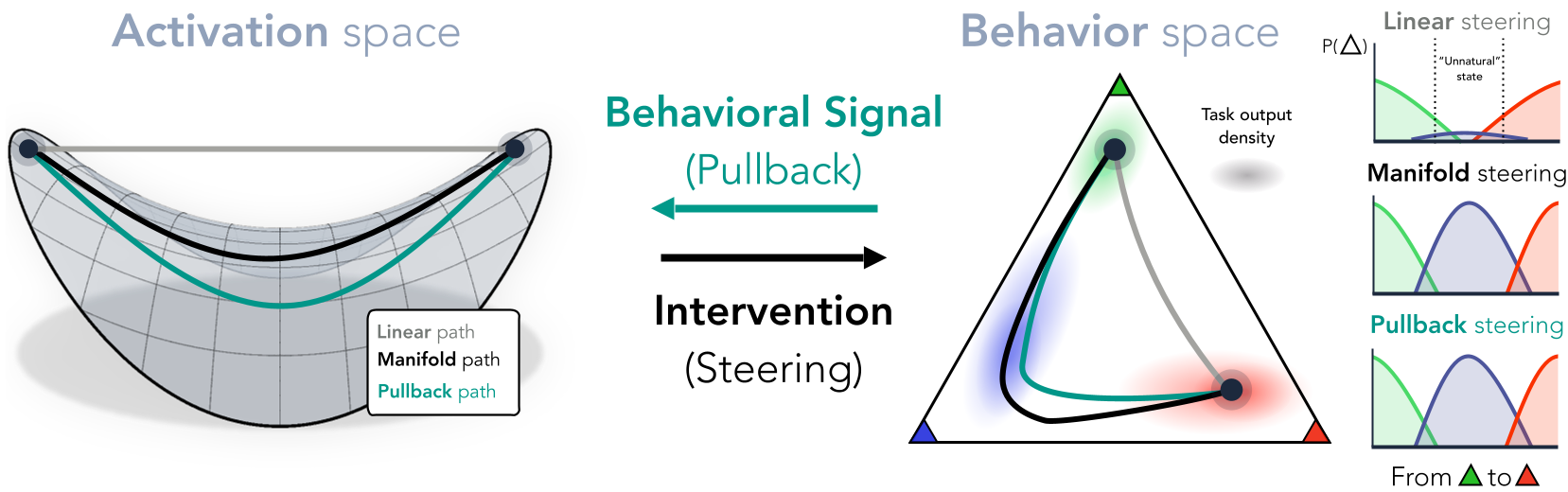 Figure 1: Comparison between Euclidean (Linear), Density, and Pullback steering. Note how the linear path "short-cuts" across the manifold, leading to unnatural states.
Methodology: Steering Along the Curve
The researchers tested three main ways to move from point A to point B in activation space:
- Linear Steering: A straight chord (the baseline).
- Manifold Steering (Density): Moving along the high-density "shell" of natural activations.
- Pullback Steering: Moving in a way that forces the output to follow a smooth path on the probability simplex.
Experimental Evidence: Language and Vision
In tasks involving cyclic (weekdays) and sequential (ages) data, manifold steering produced smooth "analog" transitions. Even more impressive was the Factored Control in multi-dimensional grids. By identifying the intrinsic coordinates of the manifold, researchers could move a model's "internal cursor" horizontally without affecting its vertical position—something nearly impossible with linear vectors.
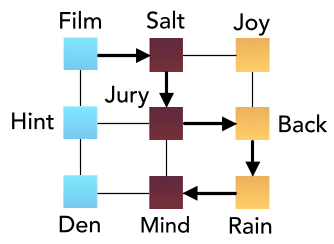 Figure 2: Manifold steering enables independent control of grid dimensions, whereas linear steering causes "warped" behavioral shifts.
They even extended this to Visual World Models (Mountain Car). The encoder's representations of a car's physical position were found to be a 1D loop. Steering along this loop perfectly animated a car moving across the screen, whereas linear steering created "blurring" and "teleportation" effects.
Results: The Power of Geometry
The quantitative shift is undeniable:
- Naturalness: Manifold steering stays 2.8x closer to natural model outputs.
- Recovery: When optimizing for smooth behavior, the activations automatically gravitate back to the manifold .
- Robustness: It works even for concepts learned "in-context" (ICL), proving that models dynamically build these geometries on the fly.
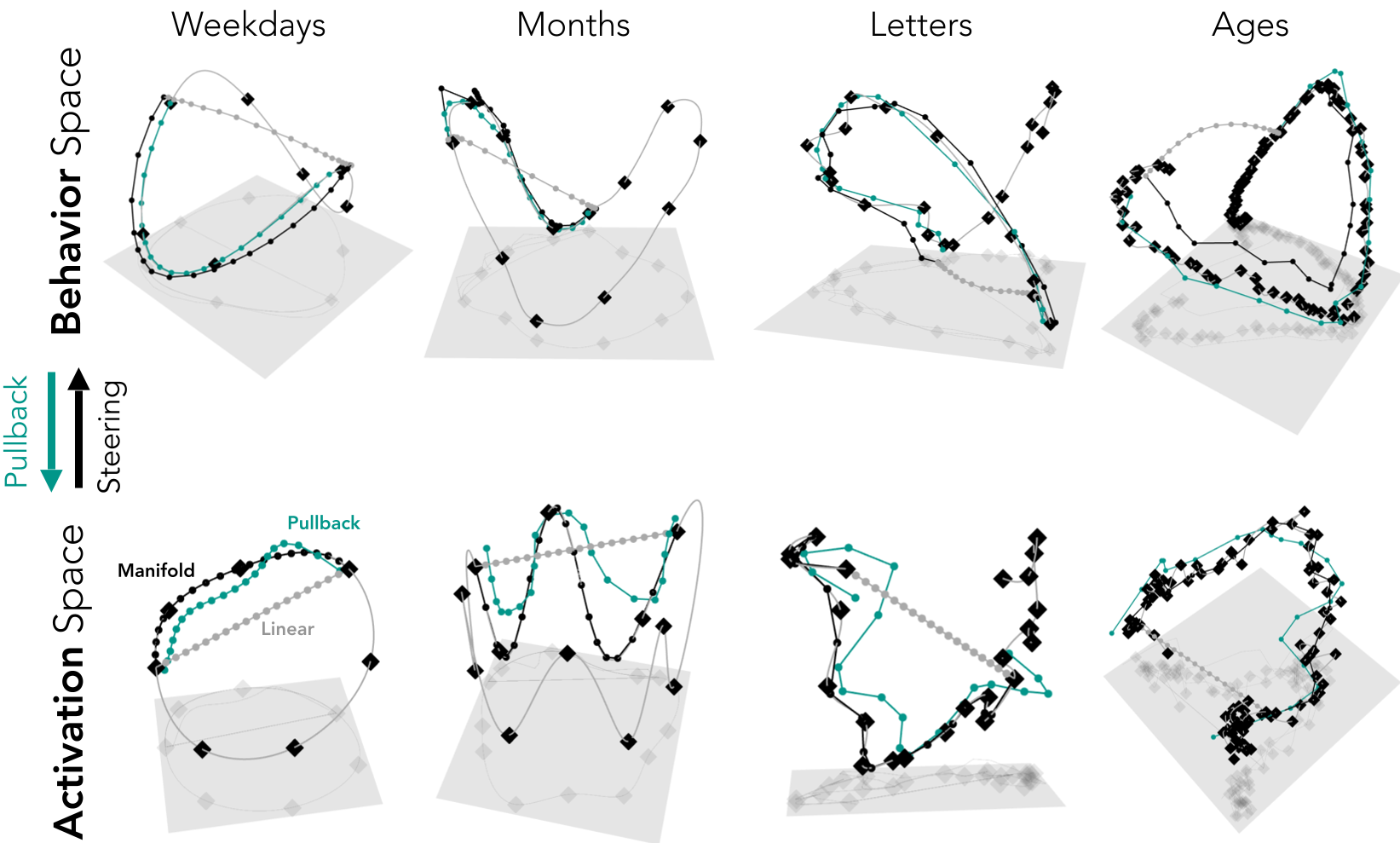 Figure 3: Bidirectional support showing that behavior-targeted interventions recover the hidden activation manifold.
Critical Analysis & Future Outlook
Conclusion: This paper effectively kills the "straight line" assumption for complex reasoning. It suggests that if we want to build safer or more controllable AI, we need to treat their internal states as Riemannian manifolds, not Euclidean vectors.
Limitations:
- Complexity of Mapping: Fitting these manifolds currently requires knowing the "ground truth" labels (e.g., knowing Monday comes after Sunday). Finding these manifolds in an "unsupervised" way for abstract concepts like "sycophancy" is the next big hurdle.
- Computation: Geodesic math is more expensive than vector addition.
The Road Ahead: The shift from "Finding Directions" to "Finding Geometry" allows us to treat AI as a structured, navigable conceptual space. This may lead to "Internal Control Panels" for LLMs where we can dial up specific traits (like uncertainty or reasoning depth) by simply sliding along the manifold's intrinsic coordinates.