
Deciphering the Black Box: How Sim-and-Real Co-Training Actually Works
A Mechanistic Analysis of Sim-and-Real Co-Training in Generative Robot Policies
This paper provides a mechanistic analysis of sim-and-real co-training for generative robot policies (specifically Diffusion Policies). It identifies two key drivers of performance: Structured Representation Alignment (SRA) and the Importance Reweighting Effect, introducing a unified "CFG-ADDA" method that outperforms current baselines.
TL;DR
Robot data is scarce, but simulation is infinite. While "co-training" on both sounds simple, it often fails due to the domain gap. This paper reveals that the "secret sauce" isn't just mixing data, but achieving Structured Representation Alignment (SRA)—a delicate balance where a model aligns shared task logic across domains while remaining "aware" of specific environmental differences for adaptation.
The Motivation: Why Does Co-Training Often Fail?
Modern robot policies, specifically Diffusion Policies, thrive on large datasets. However, real-world data is expensive to collect. The community has turned to surrogate data (simulated or cross-embodiment), but this introduces a "distribution shift."
Prior works have treated co-training as a black box, usually adjusting only the data mixing ratio (). If is too high, the model ignores the rich sim data (Data Scarcity); if is too low, the model's actions get "poisoned" by simulation physics that don't exist in reality (Negative Transfer).
The Core Theory: Two Intrinsic Effects
The researchers use a theoretical analysis of the optimal score function in diffusion models to identify two primary mechanisms:
- Structured Representation Alignment (SRA): This is the "Primary Effect." It requires the model to find a sweet spot between being Disjoint (ignoring sim data) and Overlapping (confusing sim and real actions).
- Importance Reweighting: This is the "Secondary Effect." It suggests the data mixing ratio acts as a local modulator, controlling how much each domain contributes to the action decision at different timesteps of the diffusion process.
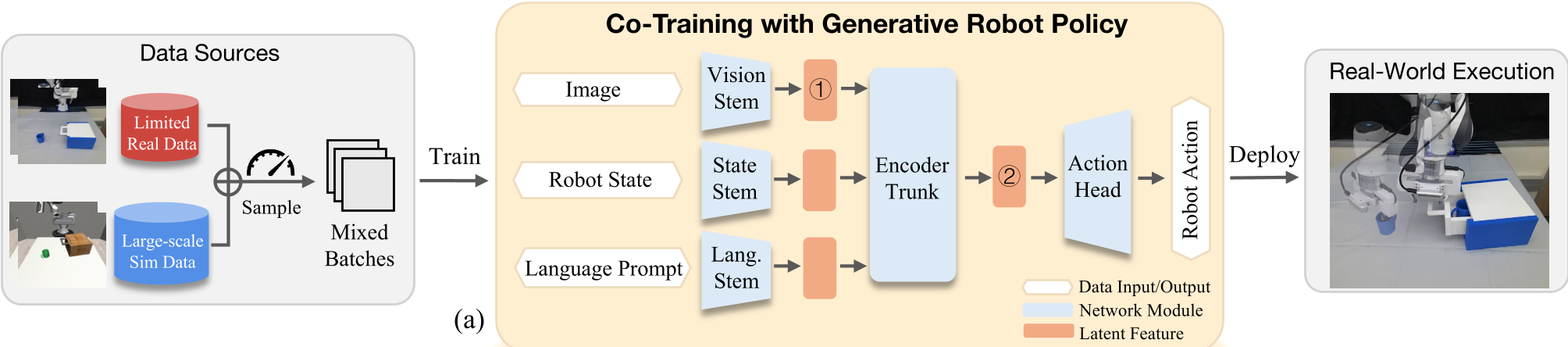 Fig 1: SRA ensures the model learns a domain-invariant subspace for transfer while keeping domain-specific details for adaptation.
Methodology: The CFG-ADDA Approach
Having identified that we need both Alignment and Discernibility, the authors propose CFG-ADDA.
- ADDA (Adversarial Discriminative Domain Adaptation): Uses a discriminator to force the vision encoder to learn features that "look the same" for sim and real.
- CFG (Classifier-Free Guidance): Provides a "label" (Sim vs. Real) during training. At inference, you can "guide" the model toward the Real domain behavior.
By combining these, the model is forced to align its logic (transferring "how to pick up a nut" from sim) while remaining perfectly aware of the visual/physical differences (knowing it is currently in a "Real" environment).
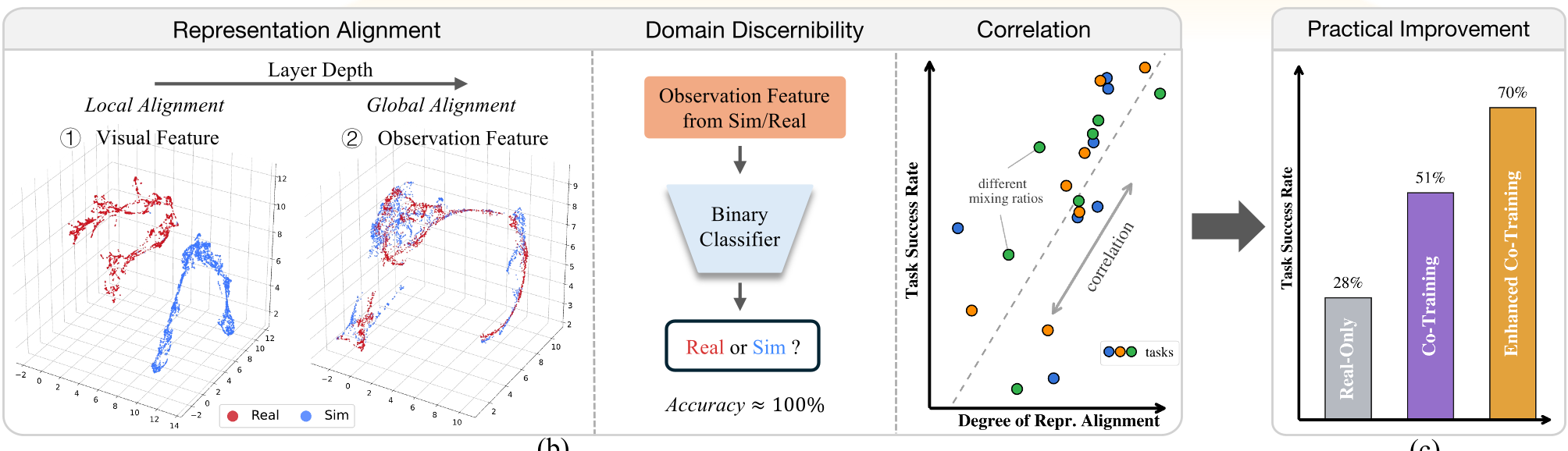 Fig 2: The workflow showing how latent features are aligned globally while maintaining the ability to discern the specific domain.
Experiments & Results: Robust Success
The team tested this on complex tasks like MugHang (precise rotation) and MugCleanup (long-horizon reasoning).
- Implicit Alignment: They found that even without explicit loss functions, an "appropriate" mixing ratio naturally causes representation alignment to emerge.
- The 20% Boost: CFG-ADDA consistently outperformed standard co-training and solitary techniques like Optimal Transport (OT).
- Guidance Scale (): Interestingly, they found that setting a negative guidance scale () during inference actually helped "actively transfer" knowledge from surrogate domains more effectively than traditional positive scaling.
 Table 1: CFG-ADDA (λ = -0.5) achieved the highest success rates, particularly in challenging real-world scenarios.
Critical Analysis & Takeaways
This work moves robot learning from "trial-and-error mixing" to a principled understanding of why some data helps and some hurts.
Main Takeaway: Don't just mask the differences between Simulation and Reality. Instead, align the "task-relevant" representations while making sure the model still knows exactly which world it's currently operating in.
Limitations: The study focuses heavily on imitation learning with Diffusion Policies. Whether these same "SRA" principles hold for Reinforcement Learning (RL) or World Models remains a frontier for future research.