
The Missing Dimension: Why Pedagogy Isn't Enough for AI Tutors
The Missing Evaluation Axis: What 10,000 Student Submissions Reveal About AI Tutor Effectiveness
The paper introduces a two-dimensional evaluation framework for AI tutors, combining traditional pedagogical rubrics with a novel behavioral axis based on student interaction data. It validates this framework on 10,235 code submissions from a large-scale Python course, demonstrating that the MisconceptionTutor (an LLM agent targeting student mental models) significantly outperforms a baseline in student engagement and perceived helpfulness.
TL;DR
Evaluating an AI tutor solely on the "quality" of its advice is like evaluating a gym coach solely on their speeches—it doesn't matter how good the advice is if the athlete doesn't do the reps. This paper introduces a behavioral evaluation framework that measures RelScore (did the student listen?) and SuccScore (did they get it right?). Analyzing 10,000+ submissions, researchers found that these engagement signals predict student satisfaction far better than traditional pedagogical rubrics.
The Problem: The Pedagogy-Perception Gap
Traditionally, we grade AI tutors using a "rubric-first" approach. We ask: Is the tone encouraging? Did it avoid giving away the answer? Is the hint clear? While important, this "pedagogy-only" view has a blind spot: the student's reaction.
The authors argue that student-AI interaction is distinct from human tutoring. AI interprets instructions literally and lacks the intuitive "vibe-check" a human tutor performs. Consequently, an AI could produce a pedagogically "correct" hint that is actually too vague for a struggling novice to act upon, leading to frustration rather than learning.
Methodology: Measuring the "Loop"
The researchers analyzed two iterations of a GPT-4-based tutor deployed at UC Berkeley:
- BaselineTutor: A standard tutor prompt.
- MisconceptionTutor: A specialized prompt that first identifies a student's specific mental roadblock (misconception) before generating a hint.
The Engagement Axis
To bridge the gap, they introduced two metrics derived from student code history:
- RelScore (Relevance): Calculated by comparing code at time and . Did the student actually change the specific line or logic the AI mentioned?
- SuccScore (Success): If they made a change based on the hint, did they actually fix the bug or pass the test case?
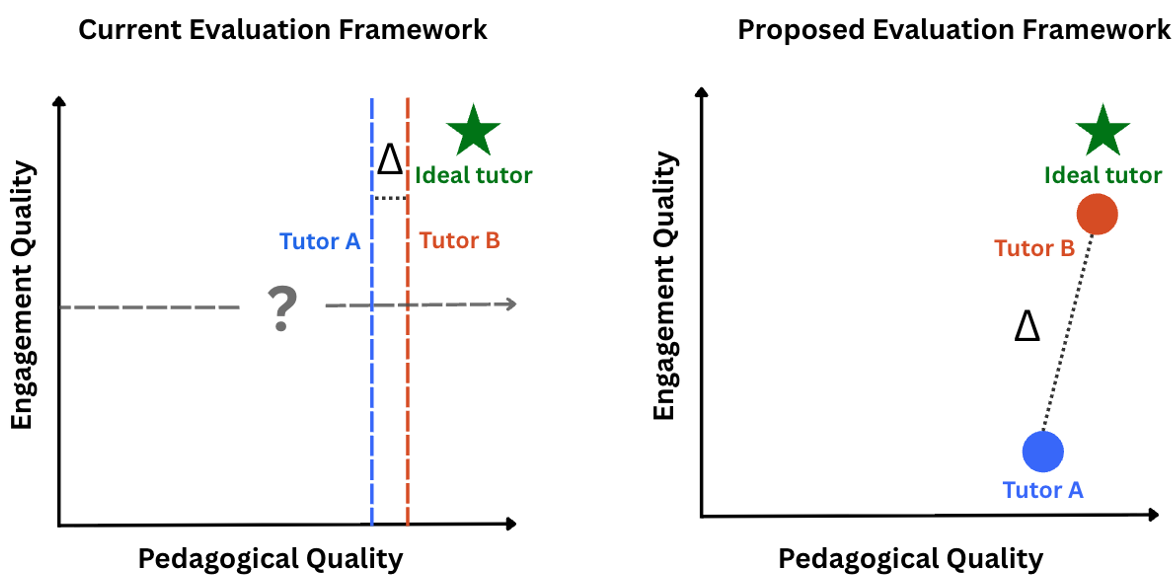 Figure 1: The dual-axis framework—balancing pedagogical quality with behavioral engagement.
Key Results: Engagement Wins
The team found that while the MisconceptionTutor was slightly better on pedagogical scores, it was massively better on engagement.
- Relevance Surge: In every single assignment, students were significantly more likely to listen to the MisconceptionTutor (improving RelScore by up to 21%).
- Predicting Satisfaction: When students were asked if the tutor was "helpful," their answer correlated strongly with their own behavior (whether they could successfully apply the hint) but had almost zero correlation with most pedagogical metrics like "tone" or "humanness."
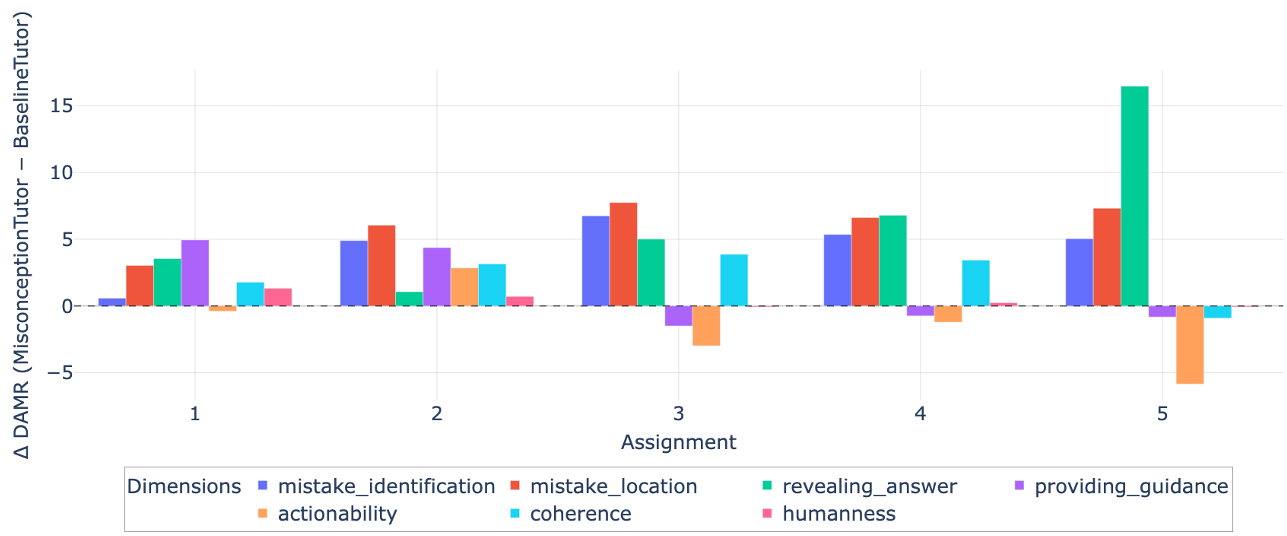 Figure 2: Performance delta between the two tutors across pedagogical dimensions.
The "Revealing Answer" Paradox
One fascinating finding: when a tutor "accidentally" reveals the answer (a pedagogical "fail"), student SuccScore goes through the roof. This highlights the danger of optimizing for engagement alone. If we only track if students "succeed," we might accidentally build AI tutors that just do the homework for them. We need both axes to ensure students are working (Pedagogy) and that the work is effective (Engagement).
Critical Insight: The "Prerequisite" vs. The "Differentiator"
The paper posits an elegant hierarchy for AI tutoring:
- Pedagogical Quality is the Prerequisite. It ensures the tutor isn't harmful, offensive, or too "leaky" with answers.
- Engagement is the Differentiator. Once you have a safe, smart tutor, the real way to improve it is by making the feedback more "uptake-friendly."
Future Work & Limitations
The study is limited to "immediate uptake"—it doesn't prove that students learned the concept for the long term, only that they fixed the current bug. The next frontier in AI tutoring evaluation will likely involve "transfer tasks"—checking if a student who followed an AI hint on Monday can solve a similar problem on Friday without help.
Conclusion
This work provides a roadmap for the next generation of AI-native education. We can no longer evaluate LLM agents as static "text generators." We must evaluate them as participants in a behavioral loop. If your AI tutor isn't changing how a student interacts with their code, it doesn't matter how "pedagogical" its response is.