
MM-Hand: Decoupling Actuation for the Next Generation of Dexterous Humanoids
MM-Hand: A 21-DOF Multi-modal Modular Dexterous Robotic Hand with Remote Actuation
The paper introduces MM-Hand, a 21-DOF multi-modal modular dexterous hand utilizing remote tendon-driven actuation. By relocating motors to a remote hub via metal spring sheaths, the design achieves a lightweight end-effector with integrated joint encoders, tactile sensors, and in-palm stereo vision, while reaching a fingertip force of 25N.
TL;DR
MM-Hand is an open-source, 21-DOF dexterous hand that solves the weight and thermal issues of robotic grippers by moving the "muscles" (motors) away from the "fingers." It uses a remote tendon-driven system combined with high-density multimodal sensing—including tactile, joint, and stereo vision—to provide a robust platform for learning-based manipulation.
Background: The End-Effector Bottleneck
In the quest for human-level manipulation, robotics researchers face a harsh reality: human-like dexterity requires many degrees of freedom (DoFs), but adding motors to a hand makes it heavy, bulky, and hot. This increased inertia limits the speed of the robotic arm and complicates the integration of delicate sensors.
MM-Hand adopts Remote Tendon-Driven Actuation, pushing the actuators to a standalone hub. While this concept isn't new, the "how" is critical. Most remote systems suffer from friction losses and "ghost" movements when the arm itself moves. MM-Hand addresses these through a combination of rigorous theoretical modeling and modular mechanical innovation.
Why Remote Actuation? The Insight
The primary motivation is Decoupling. By freeing the palm from the bulk of the motors, the researchers could:
- Integrate More Sensors: Plenty of internal volume for in-palm stereo cameras and tactile buses.
- Modularize Maintenance: Features "Quick Tendon Connectors" that allow single-finger replacement without re-stringing the entire arm.
- Optimize Thermal Behavior: Sensitive electronics in the hand aren't affected by motor heat.
Methodology: The Core Architecture
The heart of the system lies in its Bowden-cable transmission. The authors provide a capstan-type friction model to explain why metal spring tubes were selected over standard PTFE; the corrugated structure of the metal reduces surface contact, yielding lower kinetic friction.
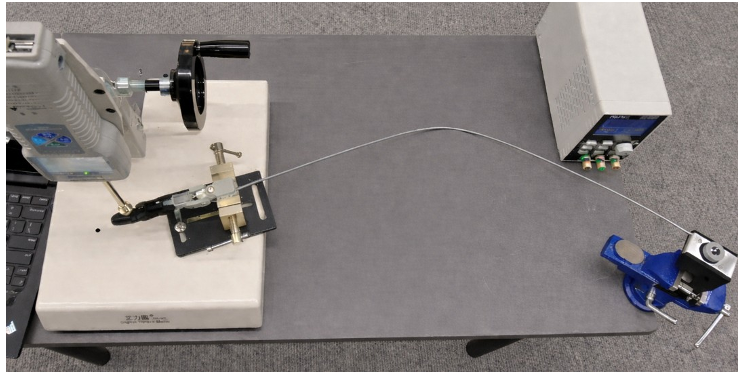 Figure 1: The system-level electronics architecture, showcasing the integration of joint encoders and tactile sensors via SPI daisy chains to minimize wiring.
The finger design utilizes a vertically split multi-piece phalanx. This 3D-printable approach allows for smooth, internal curved channels for the Dyneema tendons, which is a significant improvement over traditional designs that often result in "jagged" internal paths that fray the tendons.
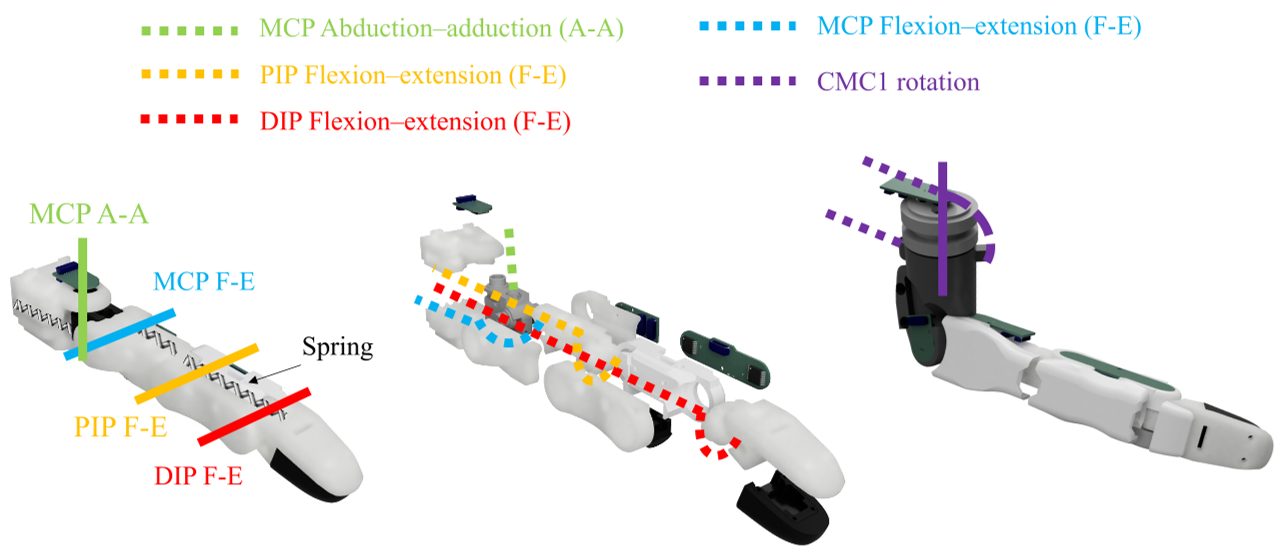 Figure 2: The modular finger structure. Note the split phalanx design used to simplify tendon installation.
Experiments: Performance under Pressure
The most impressive result is the Fingertip Load Performance. Even with a 1-meter long tendon transmission, the fingertips can output 25N of force. This is sufficient for the majority of human-centric tasks.
Crucially, the authors evaluated Dynamic Tracking while the robotic arm was in motion. Although arm movement introduces disturbances to the tendon path length, the use of absolute joint encoders (AS5047P) on the fingers allowed the PID controller to maintain a steady-state error of <0.1°.
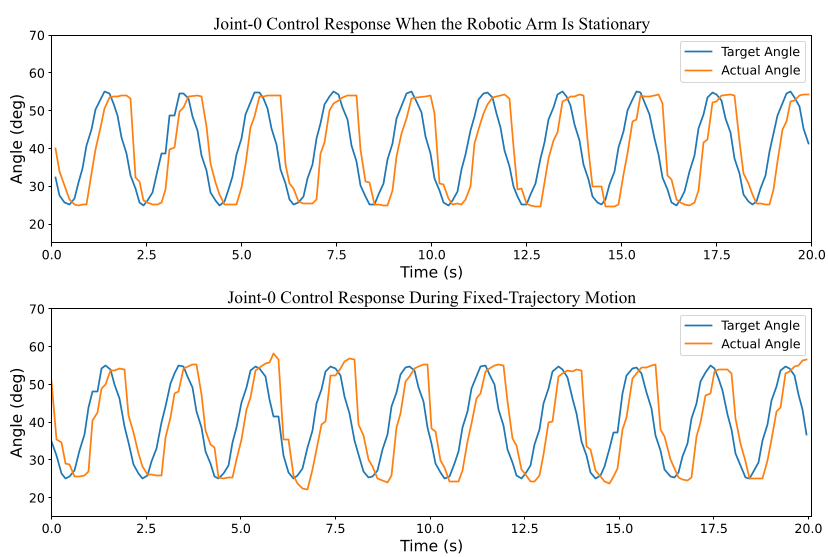 Figure 3: Tracking performance of Joint 0. Despite the friction-induced delay (approx. 0.2s), the closed-loop system accurately follows the trajectory.
Critical Insight & Limitations
MM-Hand's greatest value is its Open-Source nature and Multimodal integration. By providing in-palm stereo vision (using RAFT-Stereo for depth), it enables researchers to bridge the gap between "seeing" a task and "feeling" it through tactile feedback.
However, the 0.2s delay caused by tendon friction is a "physics-level" constraint. For high-speed reactive tasks (like catching a falling object), this hysteresis remains a challenge. The authors are already working on MM-Hand 1.1 to reduce palm size and improve spring-return force, showing a clear path toward commercial-grade maturity.
Conclusion
MM-Hand stands as a blueprint for lightweight, high-DOF robotic hands. It proves that with the right sensing and mechanical modularity, we don't have to choose between dexterity and agility.