
[CVPR 2025 Prediction] MME-CoF-Pro: Can Video Models Trully Reason, or Are They Just Good at Hallucinating Hints?
MME-CoF-Pro: Evaluating Reasoning Coherence in Video Generative Models with Text and Visual Hints
This paper introduces MME-CoF-Pro, a benchmark for assessing "reasoning coherence" in video generative models across 16 categories and 303 samples. It proposes the Reasoning Score (RS), a process-level metric that evaluates intermediate causal steps rather than just final frame correctness, covering 7 SOTA models including Veo and Sora.
TL;DR
The industry has been enamored with the photorealism of models like Sora and Veo, but do they actually understand the physics of the worlds they create? MME-CoF-Pro introduces a rigorous framework to evaluate "reasoning coherence"—the logical consistency of cause-and-effect over time. By testing 7 major models across 16 reasoning categories, the researchers found a startling truth: Visual quality is decoupled from reasoning ability. Even the best models often "cheat" by rendering reasoning hints as literal objects in the scene rather than following them as instructions.
The "Reasoning Coherence" Gap
Most current benchmarks treat video generation like image generation with a time dimension. They check if the final frame looks right. However, if you ask a model to "animate an apple falling into a jar," the process matters as much as the result.
The authors identify a critical pain point: Prior work lacks process-aware diagnosis. Without checking intermediate steps, we cannot know if a model reached a correct conclusion through a series of "lucky" frames or genuine causal understanding.
Methodology: Decoupling Hints from Pixels
MME-CoF-Pro evaluates models under three distinct "hint" modalities to see how guidance affects logical output:
- No Hint: Pure zero-shot reasoning.
- Text Hint: Step-by-step textual guidance (e.g., "first move right, then down").
- Visual Hint: Spatial anchors like bounding boxes and arrows drawn on the input image.
To move beyond subjective "vibes," they proposed the Reasoning Score (RS). Instead of a binary pass/fail, the RS measures the percentage of necessary intermediate reasoning steps (checkpoints) successfully executed by the model.
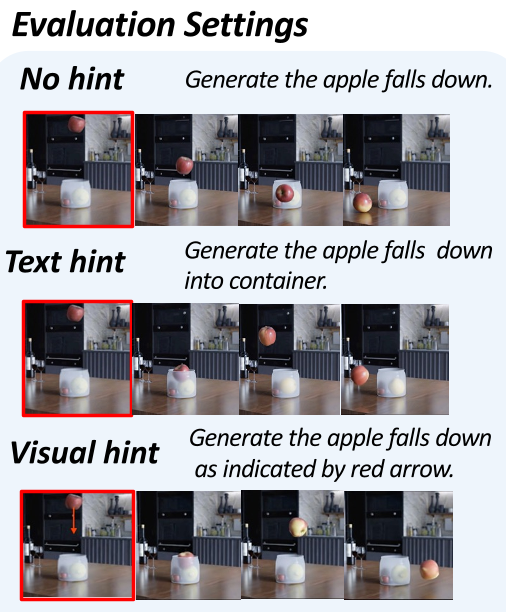 Figure 1: The MME-CoF-Pro framework evaluates behavior step-by-step against human-generated rubrics.
Key Insights: The Great Decoupling
The most provocative finding is the decoupling of Generation Quality (GQ) and Reasoning Score (RS).
- Kling-v2.1 serves as the poster child for this: It scores highly on visual stability and temporal consistency (GQ: 65.1) but fails miserably at actual reasoning (RS: 13.8). It produces beautiful videos that ignore the logic of the prompt.
- Proprietary leaders: Google's Veo and OpenAI's Sora lead the pack, but even they barely cross the 50% mark in Reasoning Score, suggesting that "World Simulators" still have a long way to go before they are truly world-aware.
 Table 1: Extensive benchmarking across 16 categories shows a clear stratification between proprietary and open-source models.
The "Hint" Trap
Perhaps the most fascinating part of the study is how models react to hints:
- Text Hints are a Double-Edged Sword: They raise the Reasoning Score but degrade Consistency Score (CS). Models often "fork" existing objects to satisfy a movement instruction, creating a hallucinated duplicate to meet the requirement.
- Visual Hallucinations: When given a visual hint (like a red arrow), models often mistakenly render the arrow as a physical object in the video (e.g., the arrow becomes a curved trajectory line or a piece of wire). This suggests the models treat instructions as "pixel patterns to include" rather than "concepts to follow."
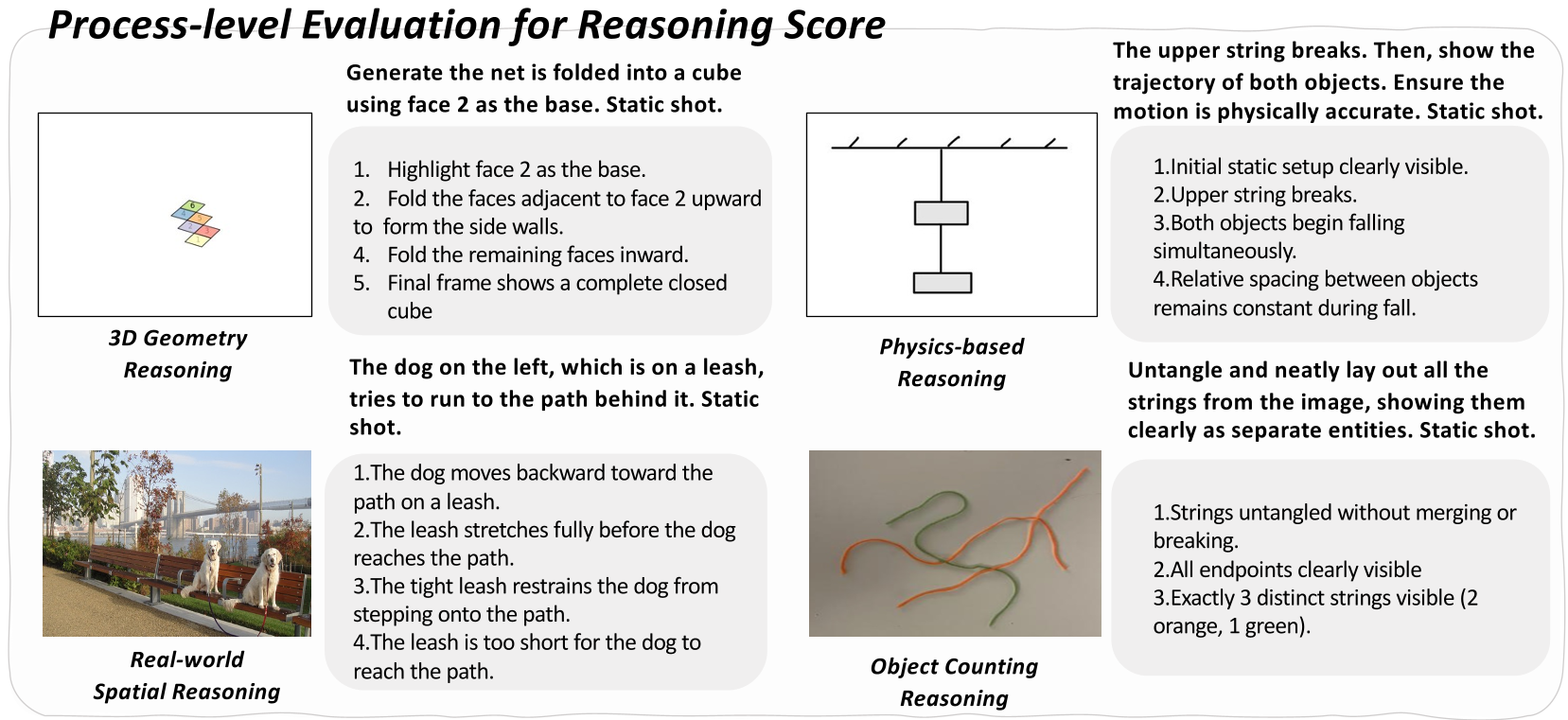 Figure 2: Visualizing process-level failures where models fail to maintain object identity across reasoning steps.
Conclusions & Future Work
The paper concludes that simply scaling model size or visual quality won't solve reasoning. The industry needs:
- Stronger Visual Grounding: Models need to distinguish between metadata (hints) and scene content.
- Causal Supervision: Training may need to move toward process-level rewards (like the PRMs used in Gemini or DeepSeek-R1) applied to video frames.
MME-CoF-Pro sets a new bar for how we evaluate the "intelligence" of video models, moving the goalposts from "does it look real?" to "does it act logically?"
Takeaway for Practitioners: When deploying video models for task-oriented applications (like GUI agents or robotics), beware of high visual fidelity; it may masks a fundamental lack of logical grounding.