
Unifying Symplectic and Lie Theory: A Deep Dive into Poisson Geometry
A brief introduction to Poisson geometry
This paper provides a comprehensive pedagogical introduction to Poisson geometry, authored by Henrique Bursztyn based on CRM minicourses. It covers the transition from classical Hamiltonian mechanics to modern Poisson manifolds, Lie algebroids, and Dirac structures, highlighting the field's role as a unifying framework for symplectic geometry and Lie theory.
TL;DR
Poisson geometry is the overarching framework that generalizes symplectic manifolds to include singularities and varying ranks. This technical review, based on Henrique Bursztyn's foundational course notes, explores how the Jacobi Identity and Bivector Fields allow us to treat classical mechanics, symmetry groups, and quantum deformations within a single geometric category.
Contextual Position: This work acts as a modern "Rosetta Stone" for the field, bridging 19th-century mechanics with 21st-century Dirac structures.
The Core Motivation: Beyond Non-Degeneracy
In standard symplectic geometry, the 2-form must be non-degenerate. However, real-world physical systems—like a spinning rigid body—possess points where the "effective" phase space collapses.
The Poisson bracket solves this by focusing on the algebra of observables . The crucial insight is that while the geometric form may be singular, the algebraic structure (a Lie bracket satisfying the Leibniz rule) remains robust.
Methodology: The Splitting Theorem and Foliations
The heart of Poisson geometry is the Weinstein Splitting Theorem. It asserts that locally, every Poisson manifold is just a product of a "nice" symplectic space and a "messy" part where the Poisson structure vanishes.
1. The Bivector Viewpoint
Instead of a 2-form , we use a bivector field . The condition for to be a Poisson structure is expressed via the Schouten-Nijenhuis bracket: This encodes the Jacobi identity into a purely tensorial differential condition.
2. The Symplectic Foliation
A Poisson manifold is not a single symplectic space, but a "collection" of them. The image of the map defines a distribution that integrates into Symplectic Leaves.
- Insight: Dynamics (Hamiltonian flows) stay within a single leaf, but the leaves themselves can vary in dimension across the manifold.
 Figure 1: The relationship between a symplectic realization and the underlying Poisson manifold via the leaf .
Key Examples: From to Log-Symplectic Manifolds
The author categorizes several pivotal structures:
- Linear Poisson Structures: These are duals of Lie algebras (). The bracket is simply the Lie bracket of the algebra.
- Poisson-Lie Groups: Groups where the multiplication is a Poisson map (e.g., standard ).
- Log-Symplectic: Systems where the Poisson structure is symplectic everywhere except on a hypersurface where it vanishes "nicely."
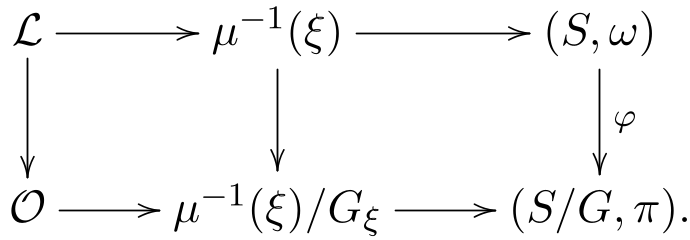 Figure 2: Representative visualization of leaf structures in standard Poisson spheres.
Advanced Frontiers: Symplectic Groupoids and Dirac Structures
The "Holy Grail" of the field is Integration. Just as every Lie algebra has a Lie group, can every Poisson manifold be "integrated" into a Symplectic Groupoid?
The answer is "not always," and the paper details the obstructions. However, for those that can, the Symplectic Groupoid provides a full, non-degenerate "face" to the singular Poisson manifold .
Dirac Structures: The Ultimate Generalization
The paper concludes with Dirac Structures . These unify Poisson and presymplectic geometry, allowing us to handle submanifolds and constraints (like those found in gauge theory) with unprecedented elegance.
Critical Analysis & Future Outlook
While the notes are comprehensive, they stick to -manifolds. The future of the field lies in the Holomorphic and Algebraic contexts, where Poisson structures describe the geometry of moduli spaces.
The Takeaway: If you are dealing with a system where symmetry and dynamics are intertwined (e.g., General Relativity, String Theory), you aren't just doing geometry—you're doing Poisson geometry.
Limitations: The "integrability" of a Poisson manifold remains a difficult global problem, requiring sophisticated tools from Lie algebroid cohomology.