
[Nature Physics] Altermagnetic Crossroads: How Pressure Unlocks Superconductivity in CsV2Se2O
Pressure-Induced Superconducting-like Transition in the $\it d$-wave Altermagnet Candidate CsV$_2$Se$_2$O
This study investigates CsV2Se2O (CVSO), a d-wave altermagnet candidate, discovering a pressure-induced superconducting-like transition. By applying high pressure, the researchers suppressed a density-wave-like insulating state and observed the emergence of a zero-resistance-like downturn below 3 K alongside strange-metal transport behavior.
TL;DR
Researchers have discovered a superconducting-like transition in CsV2Se2O (CVSO), a candidate for the recently theorized d-wave altermagnetism. By applying pressure, they successfully "melted" a density-wave insulating state, giving way to a strange-metal regime and a superconducting downturn at approximately 3 K, establishing a profound link between altermagnetic symmetry and unconventional pairing.
The Altermagnetic Mystery
In the landscape of magnetism, altermagnets are the "new kids on the block"—materials that possess zero net magnetization (like antiferromagnets) but exhibit momentum-dependent spin splitting (like ferromagnets). Specifically, d-wave altermagnets possess a spin texture in reciprocal space that mimics the symmetry of d-wave Cooper pairs found in high-temperature superconductors.
The burning question for condensed matter physicists has been: Does this symmetry correspondence actually lead to superconductivity in real materials?
From Insulator to Strange Metal
At ambient pressure, CVSO is a "weakly insulating" parent state. It’s not a simple semiconductor; it’s a highly correlated system where a density-wave (DW) instability at 100 K gaps out the Fermi surface.
The authors used High-Pressure X-ray Diffraction to show that while the crystal structure stays tetragonal (P4/mmm), it undergoes an iso-structural transition between 15 and 22 GPa. This compressional anomaly acts as a "tuning knob," increasing orbital hybridization and eventually collapsing the insulating density-wave state.
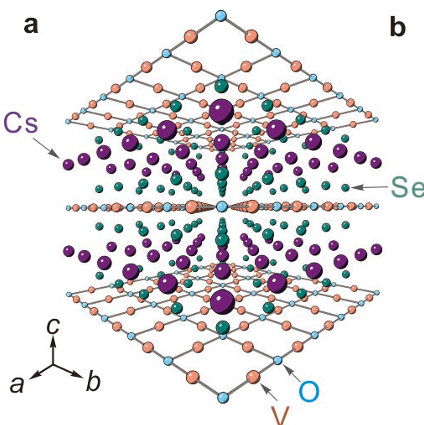 Figure 1: The crystal structure (a) and the ARPES-verified G-type antiferromagnetic background (f-j).
Methodology: The Pressure-Tuned Phase Diagram
To observe the transition, the team subjected CVSO single crystals to extreme pressures in a Diamond Anvil Cell (DAC). As pressure increased:
- The anomaly vanished: The resistivity "hump" at 100 K moved to lower temperatures and disappeared.
- Magnetoresistance (MR) flipped: At low pressure, MR was negative (typical of scattering in a DW state); at high pressure, it became positive and quadratic, signaling the return of itinerant "strange metal" carriers.
- Superconductivity emerged: Below 3 K, a sharp resistive drop appeared, which could be suppressed by an external magnetic field—the "smoking gun" for a superconducting transition.
 Figure 4: The emergence of the superconducting-like downturn (a-c) and the final pressure-temperature phase diagram (e).
Critical Insight: A New Member of the "Unconventional" Club
The discovery of superconductivity in CVSO is statistically and phenomenologically significant. The resulting phase diagram (Figure 4e) is strikingly similar to those of cuprates and nickelates:
- A Reconstructed Parent State (Density Wave) is suppressed.
- A Strange-Metal regime (linear-in-T resistivity) appears.
- Superconductivity sits on the shoulder of the suppressed order.
The researchers argue that since the crystal symmetry doesn't change, the superconductivity is likely mediated by spin fluctuations arising from the altermagnetic background.
Conclusion and Future Outlook
CVSO proves that square-net vanadium oxychalcogenides are a fertile ground for exploring the interplay between altermagnetism and pairing. While the current transition temperature () is low (~3 K) compared to the 16.3 K recently reported in the non-centrosymmetric , this study provides a much "cleaner" look at how bandwidth tuning drives superconductivity in a stoichiometric altermagnet.
Limitations: The researchers note that while the transport is "superconducting-like," further studies on bulk coherence and specific heat are needed to confirm the transition's nature truly. The next frontier? Determining if the pairing symmetry is indeed d-wave, mirroring the host altermagnet's symmetry.
Technical Editor's Note: This paper effectively bridges the gap between the theoretical allure of altermagnetism and the experimental reality of superconducting instabilities.