
Reconstruction or Semantics? Decoding the DNA of Robotic World Models
Reconstruction or Semantics? What Makes a Latent Space Useful for Robotic World Models
This paper investigates the optimal latent space for robotic world models based on Action-conditioned Latent Diffusion Models (LDM). By systematically comparing reconstruction-aligned (e.g., VAE) and semantic (e.g., V-JEPA, SigLIP) latent spaces on the BridgeV2 dataset, the authors demonstrate that semantic latents provide superior foundation for robotic planning and policy evaluation, even when reconstruction latents excel in pixel-level fidelity.
In the quest to build "simulators for everything," roboticists have turned to Action-Conditioned Video Diffusion Models. These models act as learned proxies for the real world, allowing robots to "dream" of future outcomes before executing an action. However, a fundamental question remains: What should the world model see?
Most current Latent Diffusion Models (LDMs) operate in a space optimized to reconstruct pixels (like VAEs). But as this new research from Mila and Polytechnique Montréal reveals, looking "pretty" isn't the same as being "useful" for a robot.
TL;DR
The study systematically evaluates six different latent spaces—ranging from standard VAEs to advanced semantic encoders like V-JEPA and SigLIP. The core finding: Semantic latent spaces are significantly better foundations for robotic planning and policy evaluation, even when they produce slightly blurrier videos than their reconstruction-heavy counterparts.
The "Pixel-Perfect" Fallacy
The prevailing status quo in generative AI is that better reconstruction leads to better models. However, for a robot, a world model is not just a video generator; it is a transition function .
The authors argue that standard VAE latents often "hallucinate" task semantics—creating a visually coherent but physically impossible state—while semantic latents (pre-trained on massive datasets via self-supervised learning) preserve the action-relevant structure of the scene.
Methodology: A Controlled Latent Experiment
To isolate the effect of the latent space, the researchers kept everything else constant:
- Transition Model: A Diffusion Transformer (DiT).
- Dataset: BridgeV2 (WidowX 250 robot manipulation).
- Conditioning: Action and visual history.
High-Dimensional Navigation
Semantic spaces like V-JEPA are high-dimensional (), making diffusion training unstable. The authors used a "wide head" DiT architecture and a Semantic-VAE (S-VAE) adapter to compress these features into a "diffusion-friendly" space without losing the semantic "juice."
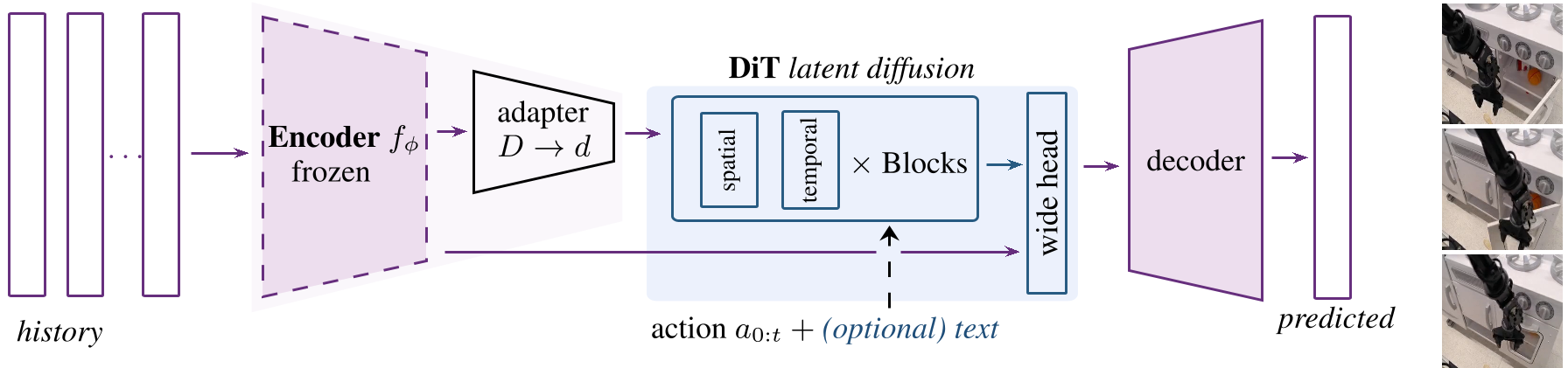 Figure 1: The experimental setup isolating the latent interface.
Key Insights from the Three-Axis Evaluation
1. Planning and Policy Success
The researchers didn't just calculate FVD scores; they put a policy (OpenVLA) in the loop.
- V-JEPA 2.1 and SigLIP 2 dominated. They showed much higher robustness when "distractor objects" were added to the scene or when instructions were changed out-of-distribution (OOD).
- VAE-based models often reverted to "default" behaviors, ignoring new instructions because their latent space didn't distinguish task-level changes clearly enough.
2. Action Recoverability (CEM Planning)
Can we look at a latent trajectory and figure out what the robot did?
- Using the Cross-Entropy Method (CEM) to recover actions, the study found that semantic latents make action-aligned geometry explicit.
- As shown below, the alignment between latent trajectories and ground-truth actions is far tighter in semantic spaces.
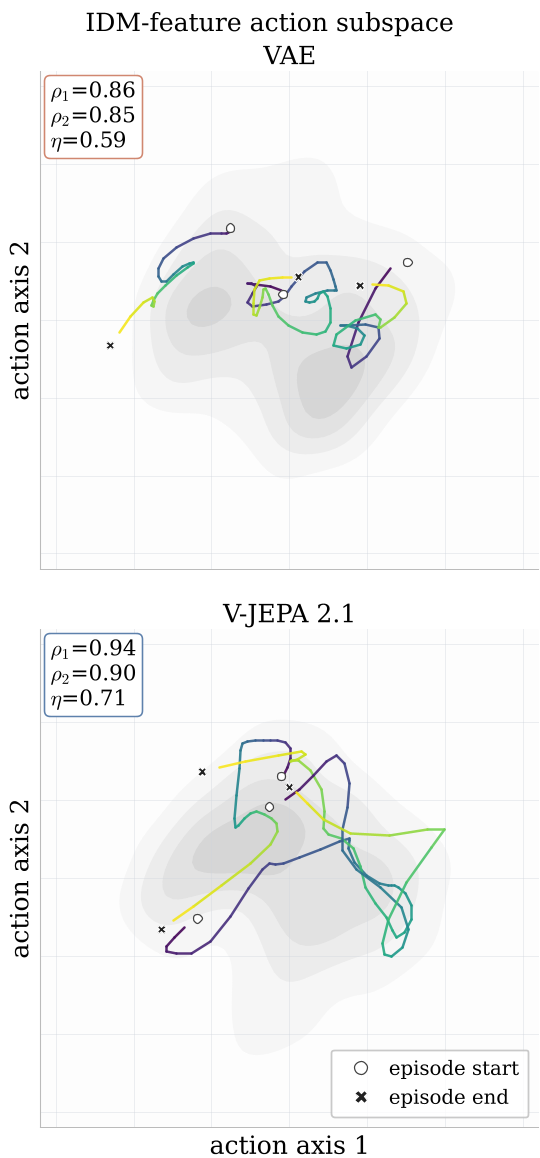 Figure 2: Projection of episodes onto canonical-correlation directions between IDM features and actions.
3. Visual Fidelity vs. Utility
While VAEs like Cosmos scaled well in terms of raw SSIM and FID at larger model sizes (DiT-Large), they still lagged behind in CEM action recovery and Success Classification.
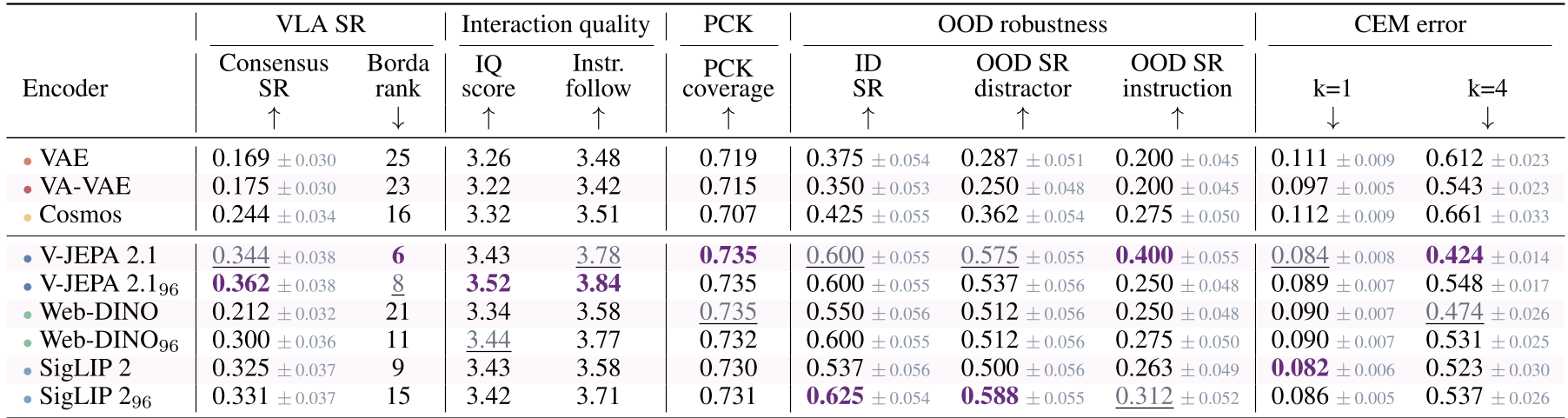 Table 1: Semantic encoders (V-JEPA, Web-DINO) outperform VAEs in Policy Success Rate (SR) and CEM Error.
Failure Modes: Geometry vs. Semantics
One of the most fascinating takeaways is how these models fail:
- Reconstruction Latents: Fail by hallucinating entirely wrong objects (e.g., adding a basket that isn't there) but rendering them sharply.
- Semantic Latents: Fail on "fine-grained" geometry (e.g., not opening a drawer wide enough) but they keep the "intent" of the task intact.
Conclusion: The New Recipe
The paper concludes with a high-value "recipe" for the robotics community:
- Prioritize Semantic Encoders: Use V-JEPA or SigLIP as the default latent space.
- Use Adapters for Control: While native features are great, d=96 adapters help the diffusion process "denoise" more effectively.
- Stop Obsessing over Pixels: Evaluation should focus on policy-in-the-loop success and action recoverability rather than just visual plausibility.
This work marks a significant shift in how we think about the "vision" component of biological-inspired robotics—moving from a camera that records to a brain that understands.