
ReconVLA: Giving "Eyes" (and Doubts) to Vision-Language-Action Models
ReconVLA: An Uncertainty-Guided and Failure-Aware Vision-Language-Action Framework for Robotic Control
ReconVLA is a novel uncertainty-aware framework designed to enhance the reliability of Vision-Language-Action (VLA) models in robotic control. It introduces dual-level monitoring—Action-level via Conformal Quantile Regression (CQR) and State-level via Mahalanobis distance—enabling robots to anticipate and mitigate execution failures without retraining the underlying VLA policy.
TL;DR
The rise of Vision-Language-Action (VLA) models like OpenVLA and has brought us closer to a "Foundation Model" for robotics. However, these models have a dangerous flaw: they are often confidently wrong. ReconVLA (Reliable Conformal VLA) addresses this by wrapping existing VLAs in a statistical safety net. By quantifying action-level uncertainty and state-level anomalies, it boosts success rates by 17% and prevents catastrophic hardware failures—all without touching the original model's weights.
The Problem: The Confidence Gap in Robotics
Imagine a robot tasked with picking up a cup. If the lighting changes or a new object appears, a standard VLA might generate an action that causes the robot to collide with a wall. Because the model doesn't "know what it doesn't know," it executes these faulty actions with the same vigor as correct ones.
The paper identifies two critical failure modes:
- Noise Uncertainty: Generative models produce slightly different actions every time they are "queried." How do we pick the best one?
- Input Uncertainty: When the robot's visual or internal state drifts far from what it saw during training (Out-of-Distribution), the policy essentially starts "hallucinating."
Methodology: The Two Pillars of Reliability
ReconVLA introduces a dual-layered approach that operates alongside the frozen VLA policy.
1. Action-Level: Conformal Quantile Regression (CQR)
Instead of relying on a single action, ReconVLA samples multiple candidate actions from the policy. It then uses CQR to predict the Euclidean distance between these candidates and what an "expert" would have done.
- The Intuition: It learns an upper bound on the error. If a candidate action has a high predicted error bound, it is rejected.
- Benefit: This allows the robot to "hedge its bets" and select the most stable, expert-like action from a pool of stochastic possibilities.
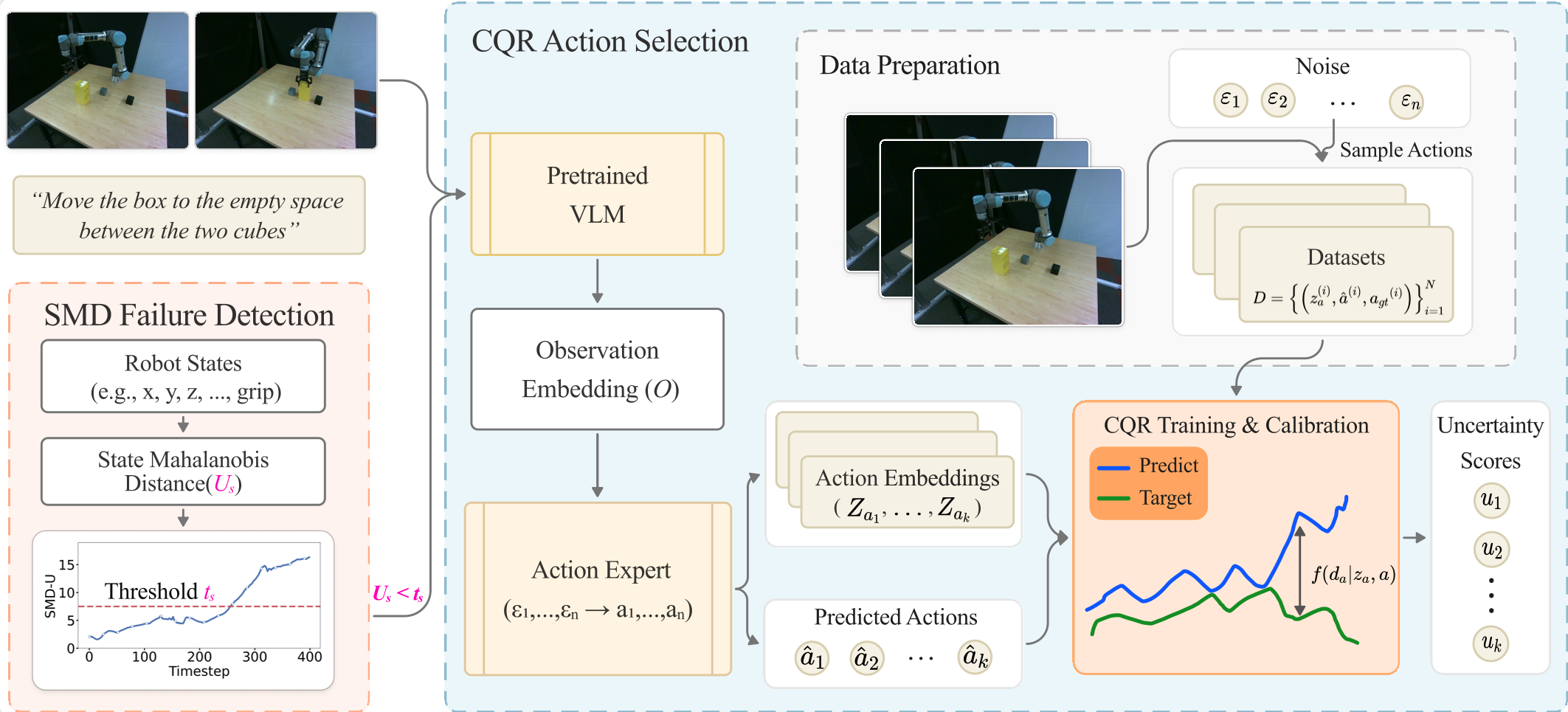 Fig 1: The ReconVLA framework integrating vision, language, and the dual uncertainty modules.
2. State-Level: Mahalanobis Distance Monitoring
Even if an action looks "certain," the robot might be in a dangerous position. ReconVLA monitors the internal state representation of the robot. It calculates the Mahalanobis Distance—a statistical measure of how many "standard deviations" the current state is from the training data mean.
- Thresholding: Using Youden’s J statistic, the authors set a threshold that triggers a "halt" command before the robot reaches its physical limits.
Experimental Proof: From Simulation to the Real World
The authors tested ReconVLA across the LIBERO task suite and on a real UR5 robotic arm.
SOTA Comparison
Traditionally, researchers used Token Entropy (how "confused" the language model is) as a proxy for uncertainty. The results in Table III show these are virtually useless (AUC ~0.5). In contrast, ReconVLA's metrics achieved an AUC of 0.922, proving that monitoring physical actions and states is far more effective than monitoring words.
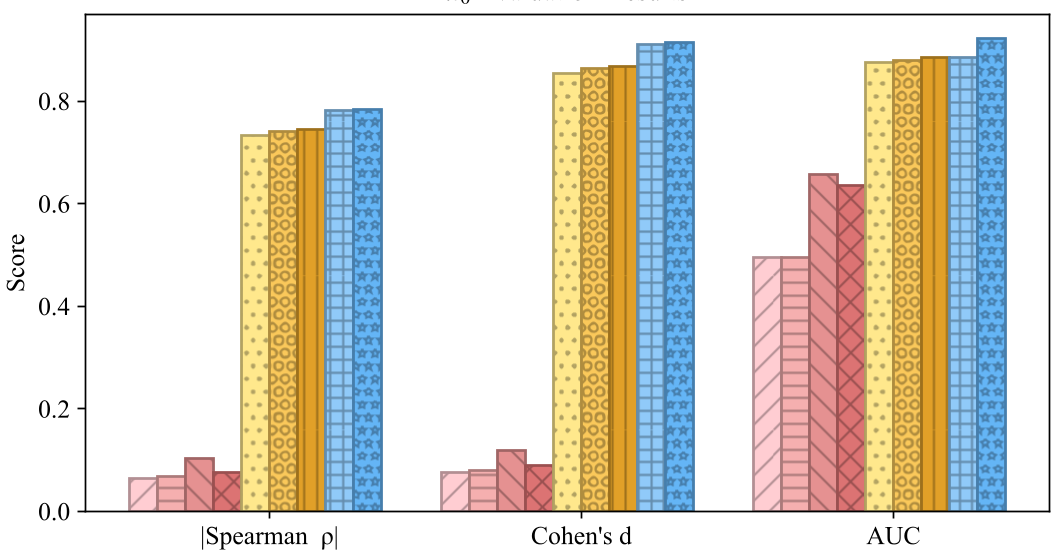 Fig 2: Performance comparison showing ReconVLA (CQR and SMD) outperforming all baseline uncertainty metrics.
Real-Robot Failure Prevention
In "edge-of-workspace" trials, the default policy consistently hit hardware limits, triggering a "protective stop" (hardware power-off). ReconVLA-SMD proactively halted the robot in 80% of trials (16/20) before the crash occurred, leaving the robot powered on and ready for human intervention.
Critical Insight & Conclusion
ReconVLA proves that we don't necessarily need bigger models or more data to make robots safer; we need better introspection.
Key Takeaways:
- Statistically Grounded: Conformal prediction offers mathematical guarantees that simple "confidence scores" do not.
- Model-Agnostic: Because it works on embeddings and outputs, it can be applied to any VLA (RT-2, , etc.).
- Future Impact: This sets a precedent for "Safety Envelopes" for LLM-based agents, moving beyond binary success/failure toward calibrated autonomy.
While there is a slight performance drop in highly specific tasks (like "moving milk"), the overall tradeoff—trading a tiny bit of speed for a massive gain in reliability—is exactly what's needed for robots to move from laboratories to homes.