
SelfEvo: Breaking the Annotation Barrier in 4D Perception via Self-Distillation
Self-Improving 4D Perception via Self-Distillation
SelfEvo is a self-improving framework for learning-based 4D/multi-view reconstruction that utilizes unlabeled videos to enhance pretrained models like VGGT and π3. By leveraging spatiotemporal context asymmetry through self-distillation, it achieves SOTA performance on dynamic scenes without requiring any ground-truth 3D/4D annotations.
TL;DR
The dependence on "ground-truth" 3D labels has long been the Achilles' heel of 4D computer vision. SelfEvo changes the game by introducing a self-improving framework that uses unlabeled videos to refine pretrained reconstruction models. By simply giving a "Teacher" more frames than a "Student," the model learns to supervise itself, yielding up to 36.5% gains in depth accuracy without a single new label.
Background & Motivation: The Scalability Wall
Recent models like DUSt3R and VGGT have shown that Transformers can "solve" 3D reconstruction if trained on enough data. However, the industry faces a massive bottleneck: 4D data (3D over time) is incredibly hard to annotate. You can't just ask a human to label the exact millimeter depth of every pixel in a moving video.
The authors observed a fundamental "Physical Intuition": More views = Better Reconstruction. If a model sees 64 frames of a scene, its geometry prediction is naturally more stable than if it only sees 2 frames. SelfEvo exploits this gap as a source of free supervision.
Methodology: The Power of Asymmetry
The architecture follows a Teacher-Student paradigm, but with a twist of Spatiotemporal Context Asymmetry.
1. The Distillation Loop
- The Teacher: Sees a long video clip (e.g., 24-64 frames). It uses its global context to create a "master" geometric map.
- The Student: Sees a skeletonized version of the same clip (e.g., only 2-12 frames).
- The Goal: The Student is forced to predict the rich geometry the Teacher saw, effectively learning to "hallucinate" missing context.
2. The Winning Recipe
Through rigorous ablation, the authors identified three critical design choices:
- Frame Dropping: Randomly removing frames is more effective for creating "difficulty" than blurring or cropping images.
- Online EMA Teacher: The Teacher isn't a fixed snapshot; it's a "Moving Average" of the Student. As the Student gets smarter, the Teacher provides even better pseudo-labels.
- Selective Freezing: Freezing the Camera Decoder while training the Depth Decoder ensures the model doesn't "get lost" in its own coordinate system while trying to improve.
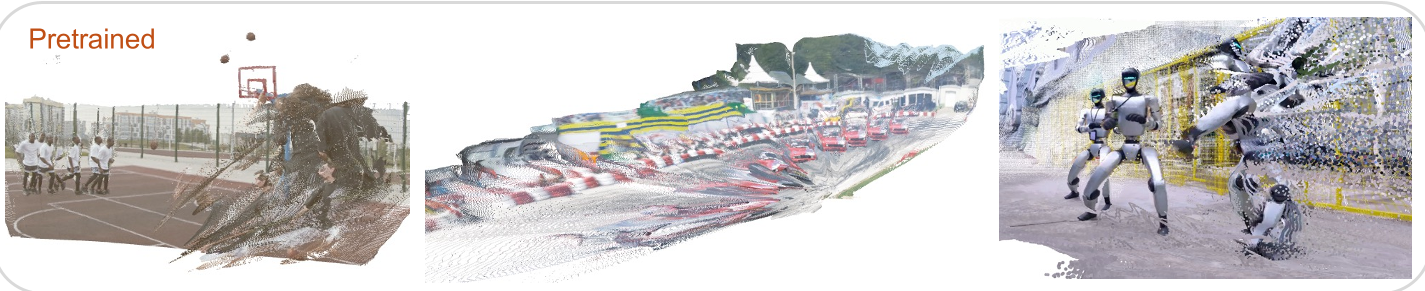 Fig 1: The SelfEvo framework showing the context-rich Teacher supervising the sparse-context Student.
Experimental Triumphs
SelfEvo was tested on various architectures (VGGT, π3) and domains (Games, Human motion, Robotics).
SOTA Results
On the OmniWorld-Game benchmark, where most models struggle with dynamic objects, SelfEvo dominated:
- Depth Estimation: Rel. improvement of 36.5%.
- Camera Accuracy: Rel. improvement of 20.1%.
Zero-Shot Generalization
Perhaps most impressively, a model self-improved on synthetic game data actually performed better on real-world robotics (DROID) and ego-centric videos (HOI4D).
 Table 1: Significant performance jumps on OmniGeo and OmniVideo benchmarks after Self-Evo training.
Deep Insight: Why Does This Work?
Traditional self-supervision relies on Photometric Consistency (making sure the pixels look the same from different angles). But this fails in dynamic scenes (if a cat moves, the pixels change!).
SelfEvo bypasses this by using Model Consistency. It assumes the model’s internal geometric prior, when given more information, is a "truer" signal than any pixel-matching math. This makes it inherently robust to moving objects, lighting changes, and complex motion.
Conclusion & Future Outlook
SelfEvo demonstrates that we are entering the era of Post-Training for Geometry. Just as LLMs use RLHF to improve after pretraining, 4D models can now use Self-Distillation to sharpen their perception using the infinite supply of unlabeled internet videos.
Limitations: The model still needs a "reasonable" starting point. If the pretrained model is completely lost, the distillation "blind leading the blind" effect could occur. Future work likely involves token-level dropping to further push the boundaries of information asymmetry.
For a deeper dive into the visualizations, check out the project page at self-evo.github.io.