
Single-Satellite Quantum Repeaters: Overcoming the Distance Barrier in Space
Single-Satellite Quantum Repeater Performance Analysis
The paper presents a comprehensive performance analysis of space-based entanglement distribution, specifically comparing Direct Dual-Downlink (DDDL) with a Single-Satellite Quantum Repeater (SSQR) equipped with quantum memories. It establishes that while DDDL is limited by simultaneous dual-link losses, SSQR can overcome these constraints through memory-facilitated entanglement swapping, achieving higher distribution rates in high-loss scenarios.
TL;DR
Researchers have demonstrated that integrating quantum memories into satellites (SSQR) can fundamentally change the loss scaling of global entanglement distribution from to . By analyzing specific overpass geometries and city-pair links, this study proves that a memory capacity of just 200 modes can outperform current direct-photon missions (like Micius), provided we solve the 100ms coherence time challenge.
Background: The Latency vs. Loss Trade-off
Current space-based quantum communication relies on "Direct Dual-Downlink" (DDDL). Like the pioneering Micius mission, a satellite sends two entangled photons simultaneously to two ground stations (Alice and Bob). The catch? Both photons must survive the atmospheric gauntlet at the same time. If the loss to Alice is , the success rate for the pair scales as .
Quantum repeaters offer a way out: store one photon in memory until the other is confirmed as received, then perform an "entanglement swap." This shifts the scaling to . However, this introduces latency. Because the satellite must wait for a classical "success" signal from Earth (a round trip of several milliseconds), the attempt rate is limited compared to a continuous high-rate photon source.
Methodology: The Architecture of an SSQR
The study analyzes a Single-Satellite Quantum Repeater (SSQR) using the Sender-Receiver protocol.
1. The Core Insight: Memory Allocation
Not all overpasses are created equal. If a satellite passes directly over Alice but stays near the horizon for Bob, Alice’s link is much "easier." The authors propose Optimal Static Memory Allocation, where more memory slots are assigned to the noisier link to equalize the rates and , maximizing the final swapped pair rate.
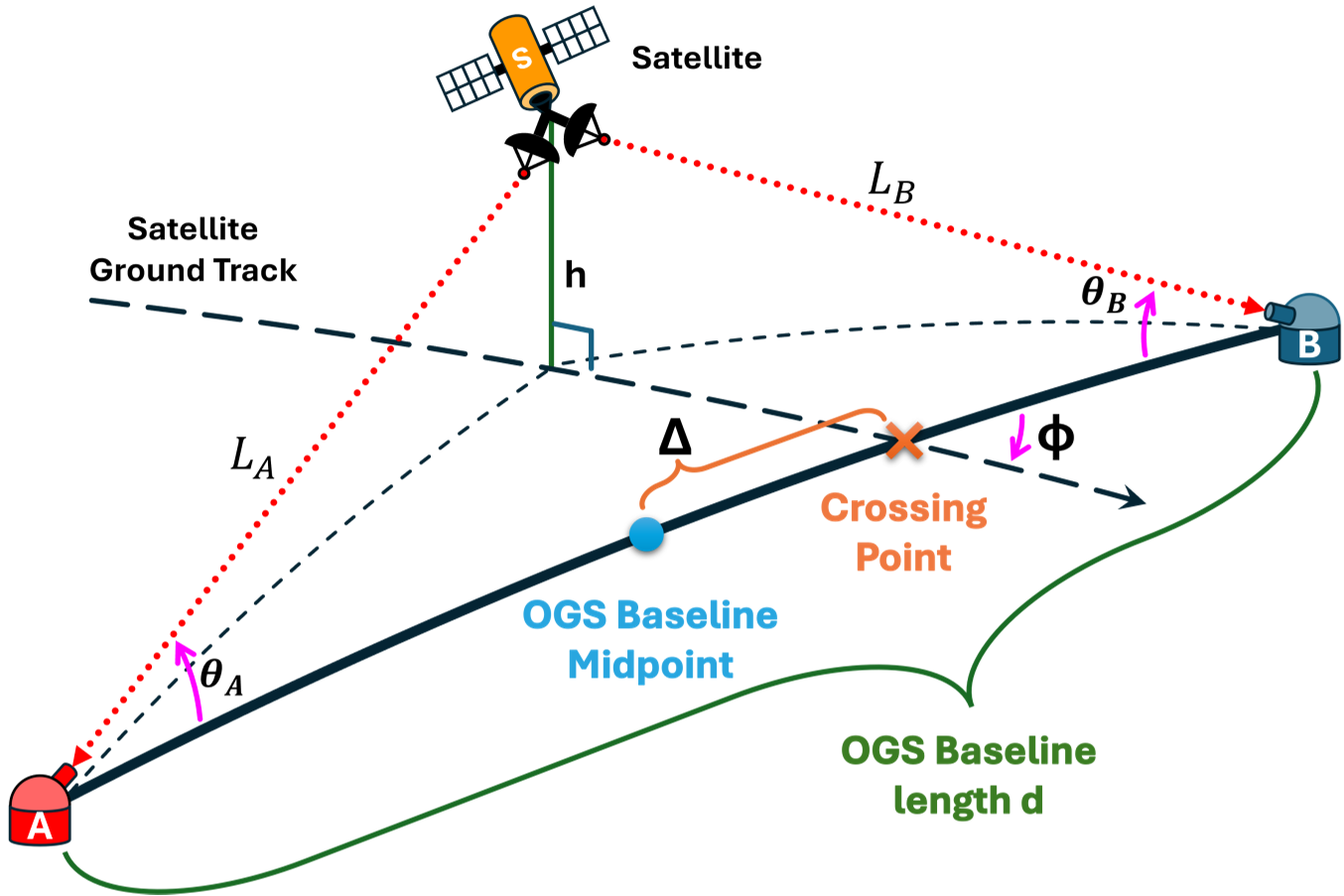 Figure 1: Comparison between DDDL (synchronous) and SSQR (asynchronous/memory-based) distribution.
2. Fidelity and Dephasing
Using Monte Carlo simulations, the team modeled the "waiting time" of qubits in memory. Qubits don't just sit there; they decohere. The study uses a dephasing model where fidelity drops as a function of the dephasing time .
Key Results: Where Repeaters Win
The study compared DDDL with SSQR () across several international links:
- The Crossover Point: SSQR becomes superior for system losses dB. If you have a small, "portable" ground station with high loss, a repeater satellite is almost mandatory.
- Altitude Advantage: DDDL prefers lower orbits (closer = less loss). SSQR, however, thrives at higher altitudes (500-750km). Why? The longer visibility window at high altitudes compensates for the increased loss, as the memory "buffers" the transmission.
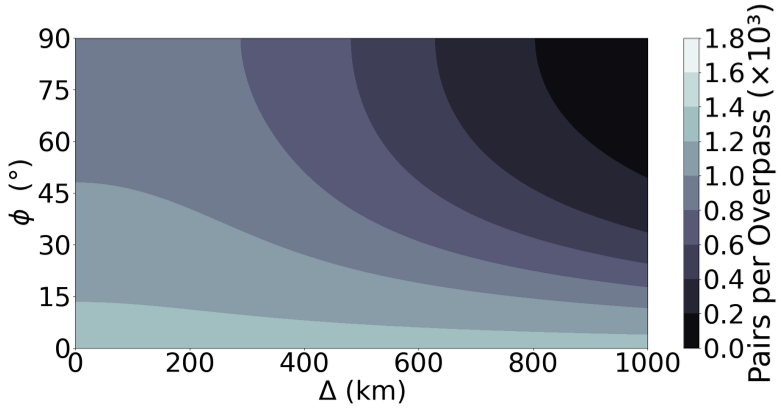 Figure 2: Heatmaps of Pair Distribution Volume (PDV) across different overpass offsets () and angles ().
The Quality-Quantity Trade-off
A critical finding from the Monte Carlo data shows that while SSQR provides more pairs, the Fidelity varies wildly. To maintain a fidelity , the system needs a memory lifetime of at least 100ms. If the memory is "leaky," the satellite must adopt a policy of discarding "old" qubits (using a buffer), trading off pair count for purity.
Critical Insight: The "Why"
Why does the Symmetric overpass favor the Repeater while the Zenith-Zenith favors DDDL?
- DDDL Logic: Success depends on . A Zenith-Zenith pass minimizes both and simultaneously, creating a massive peak in the rate.
- SSQR Logic: Success depends on (including the effort rate latency). The symmetric pass keeps both links balanced, preventing one link from "waiting" indefinitely for the other, thus maintaining a higher integrated volume.
Conclusion and Future Outlook
This work provides a blueprint for the next generation of quantum satellites. While Micius proved direct distribution is possible, the future of the Quantum Internet lies in the repeater. The roadmap is clear:
- Develop space-qualified memories with 100ms+ lifetimes.
- Implement dynamic memory allocation to handle asymmetric overpasses.
- Shift to higher LEO orbits to capitalize on longer visibility.
Takeaway: We don't need thousands of memory slots to beat the current SOTA; we just need smarter management of the few hundred we can launch today.