
[ArXiv 2026] Spectrally-Guided Diffusion: Specializing Noise Schedules for Pixel-Perfect Efficiency
Spectrally-Guided Diffusion Noise Schedules
The paper introduces Spectrally-Guided Diffusion Noise Schedules, a method that designs per-instance noise schedules for pixel diffusion based on an image's power spectral density. By tailoring the denoiser's noise trajectory to individual image properties, the authors achieve state-of-the-art results for single-stage pixel diffusion, notably outperforming the SiD2 baseline with significantly fewer denoising steps.
TL;DR
While Latent Diffusion Models (LDMs) dominate the generative landscape, their dependence on fixed autoencoders limits their upper bound. This paper revitalizes single-stage pixel diffusion by introducing Spectrally-Guided Noise Schedules. By adapting the noise level to the unique power spectrum of every single image, the authors eliminate redundant denoising steps, achieving superior FID scores and massive speedups in the low-step regime (fewer than 64 steps).
Background: The Heuristic Bottleneck
In the world of Diffusion, the Noise Schedule is the "speed limit" of generation. Traditional schedules like the Cosine or Sigmoid curves are applied globally to entire datasets. However, natural images are not uniform; a high-resolution landscape has vastly different spectral energy than a low-resolution portrait.
Previous SOTA such as Simple Diffusion attempted to solve this by shifting schedules based on resolution. But these are still dataset-wide heuristics. The authors of this work ask a fundamental question: Why use the same noise trajectory for every image?
The Insight: "Tight" Schedules via Spectral Bounds
The core intuition is that noise should be "tight."
- Maximum Noise (): The level that just barely destroys the coarsest structure (low frequencies).
- Minimum Noise (): The level that preserves the finest details (high frequencies).
Standard schedules often spend 10-20% of their time applying noise that is too weak to change the image, or 50% of the time applying noise so heavy that the signal is already long gone. By using the Radially-Averaged Power Spectral Density (RAPSD), the authors calculate precisely when each frequency component is corrupted.
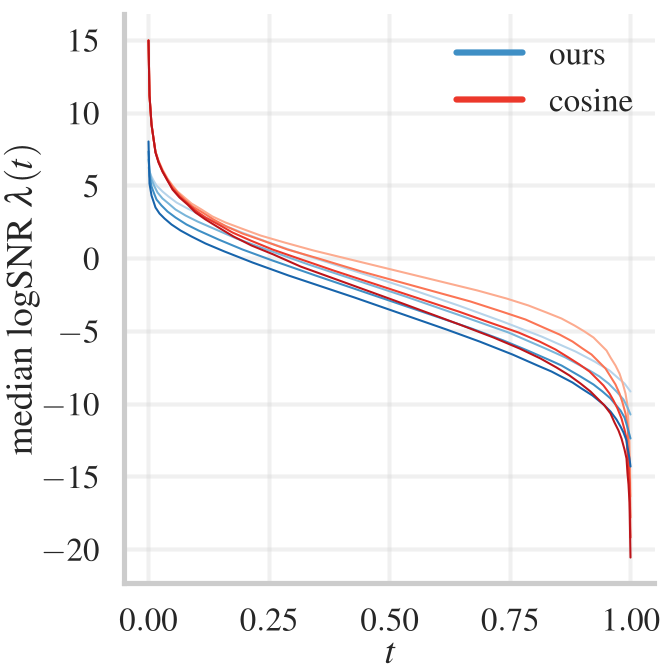 Figure 1: While modern heuristics follow dataset-level spectral trends, the proposed method adapts to the specific spectrum of each instance (middle/right).
Methodology: Frequency vs. Power
The authors propose three types of schedules:
- Frequency-focused (): Treats all frequencies equally.
- Power-focused (): Focuses more on low frequencies where image energy is concentrated.
- Mixed Schedule (): An organic blend of both that captures both global structure and local texture.
Since we don't have the "clean image" during inference, they train a simple RAPSD Sampler—a GMM that predicts the spectral parameters () from a class label or prompt.
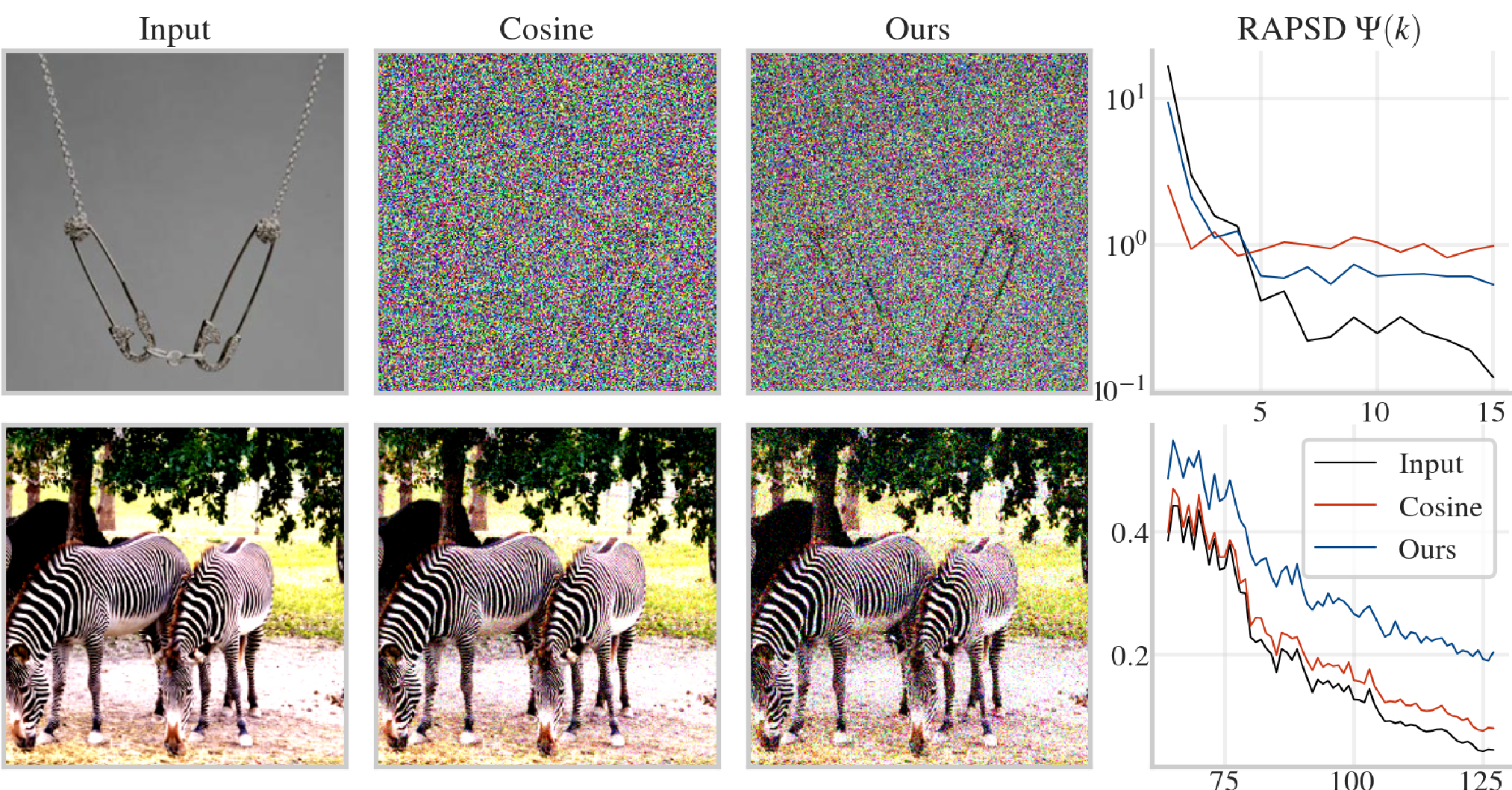 Figure 2: Our "tight" schedules avoid insufficient noise (bottom) and excessive noise (top), ensuring every denoising step is mathematically productive.
Experimental Performance: Winning the Low-Step Race
The results are most striking when the number of sampling steps (NFE) is restricted. In the low-step regime (32-128 steps), the "Tight" schedule maintains an FID that baseline models only reach at 512 steps.
| Model (ImageNet 256) | NFE | FID ↓ | IS ↑ |
|---|---|---|---|
| SiD2 (Baseline) | 512 | 1.68 | 288.2 |
| Ours (Mixed) | 256 | 1.42 | 297.0 |
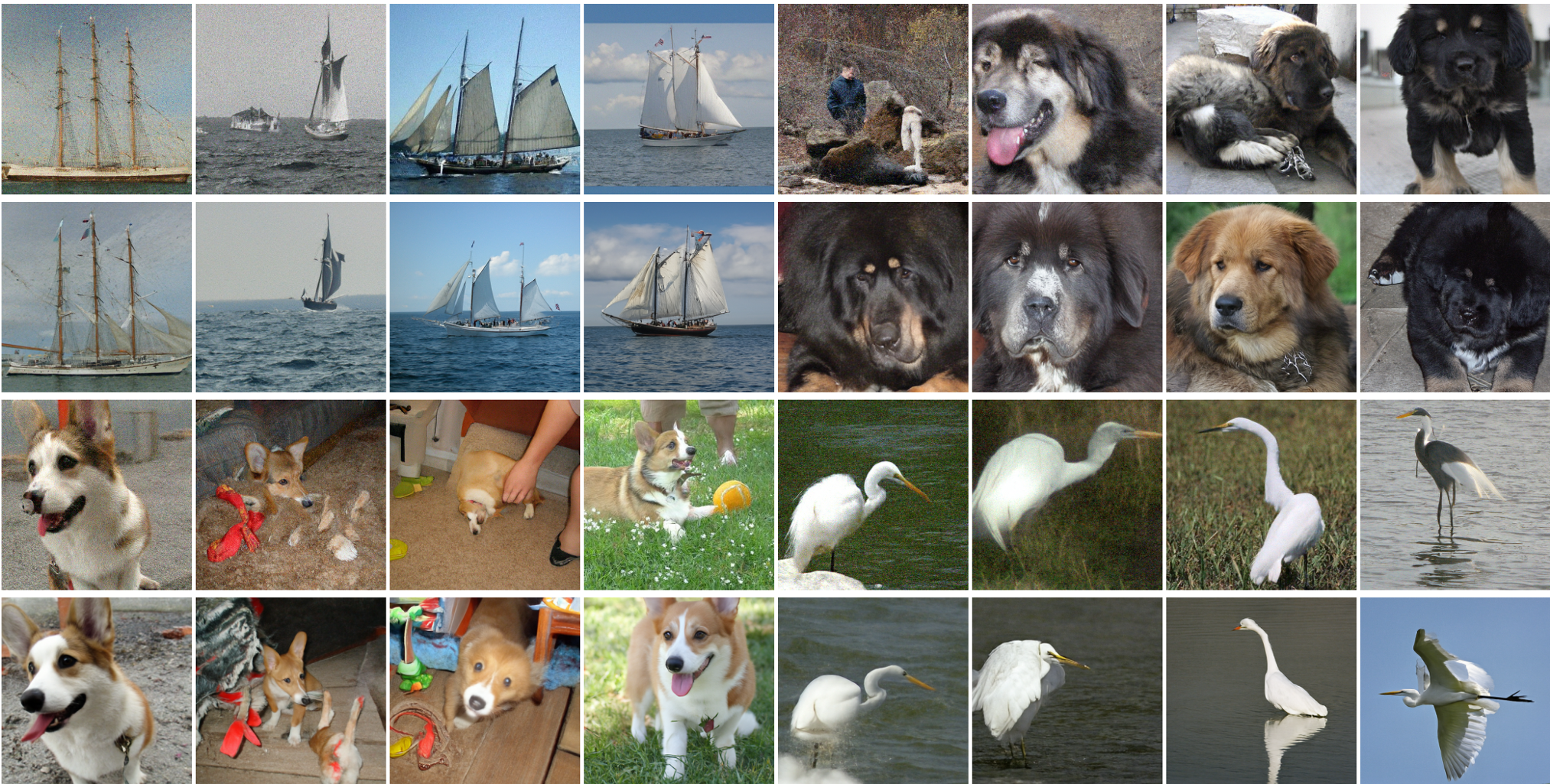 Figure 3: At 32 and 64 steps, the baseline (top) shows significant artifacts, while the Spectrally-Guided model (bottom) remains sharp and coherent.
Deep Insight: Creative Control through Spectra
An unexpected "superpower" of this method is Spectral Manipulation. By manually adjusting the predicted (the power-law exponent) during sampling, a user can control the "detail density" of the generated image—effectively a knob for texture and contrast that operates at a principled physical level rather than just a crude filter.
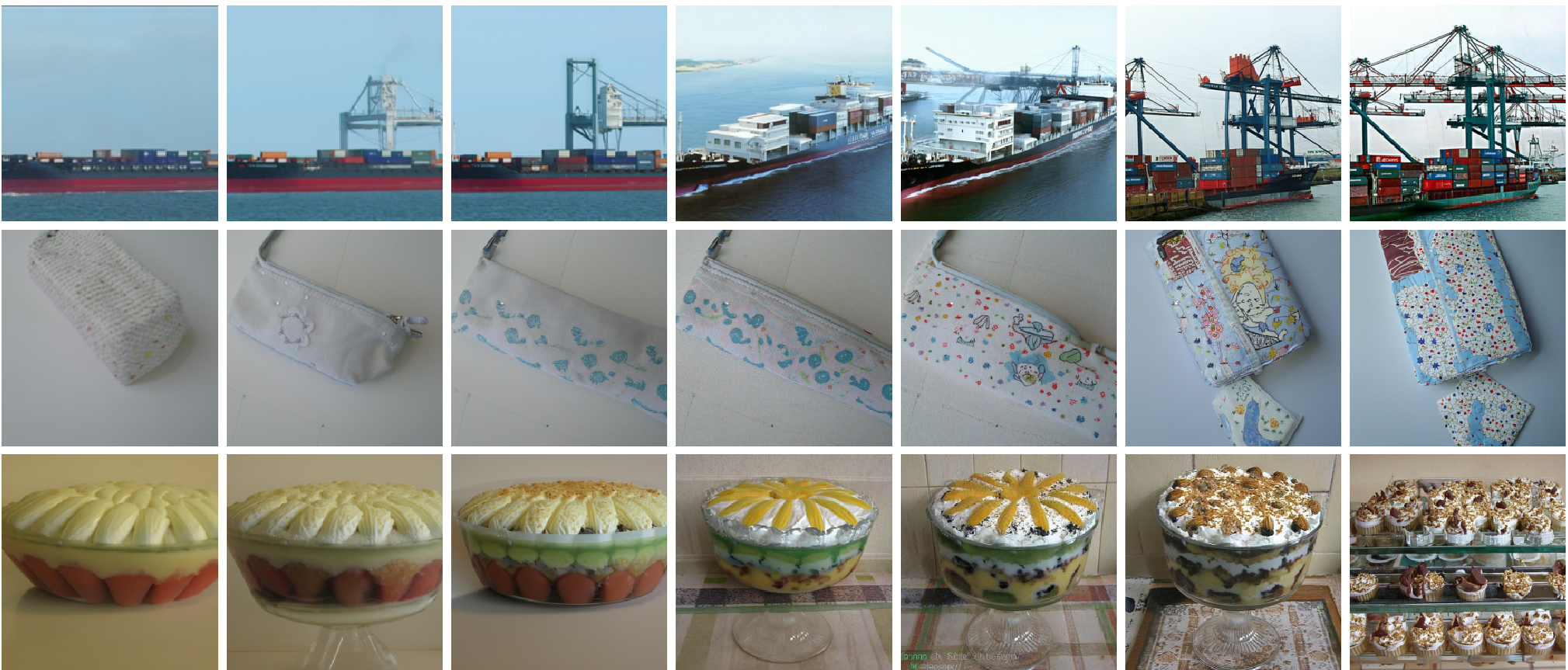 Figure 4: By modifying the energy at high frequencies, the model produces variations in texture while maintaining the original semantic structure.
Conclusion & Future Outlook
This work proves that Pixel Diffusion isn't slow; its schedules are just inefficient. By specializing the noise path to the image's spectral DNA, we can cut sampling costs in half without sacrificing SOTA quality. While it currently lags behind distilled models in absolute speed, the combination of Spectrally-Guided schedules with distillation techniques could represent the next frontier in real-time high-fidelity generation.