
Silicon Vacancy Spin Dynamics: How Strain Shapes the Future of Integrated Quantum Tech
Strain-induced modification of spin-optical dynamics in silicon vacancy centers for integrated quantum technologies
This study investigates the impact of lattice strain on the spin-optical dynamics of silicon vacancy () centers in 4H-SiC. By utilizing a purely optical pulse-probe scheme and an effective spin-3/2 Hamiltonian, the authors demonstrate that strain significantly suppresses the transition rates from the lowest metastable state (MS1) to the ground state, leading to a measurable reduction in photoluminescence.
TL;DR
Integrating quantum emitters into chips is essential for scaling, but the resulting lattice strain is often a "silent performance killer." This paper provides a deep dive into how strain affects Silicon Vacancy () centers in 4H-SiC. The verdict? Strain significantly slows down the metastable state decay, leading to dimmer emitters and lower spin initialization fidelity.
The "Integration Paradox"
To build a quantum internet, we need spin-photon interfaces—tiny devices that connect stationary qubits (spins) to flying qubits (photons). The center in silicon carbide (SiC) is a superstar here because it's CMOS-compatible. However, to get the light out efficiently, we must carve these centers into nanophotonic waveguides or resonators.
This fabrication process squeezes the crystal lattice, creating strain. While we knew strain shifted emission colors, its effect on the "dark" metastable states (the highway used for spin initialization) was largely a mystery—until now.
Methodology: Peering into the Dark States
The authors employed a sophisticated 10-level model to describe the center. They used an all-optical pulse-probe scheme, which is a breakthrough because it avoids the need for microwave hardware that can cause overheating in cryogenic setups.
The Spin-Strain Hamiltonian
By fitting experimental Data to an effective spin-3/2 Hamiltonian, the team could decompose strain into:
- Axial Strain (): Modifies the zero-field splitting.
- Transverse Strain (): Induces mixing (hybridization) between spin states.
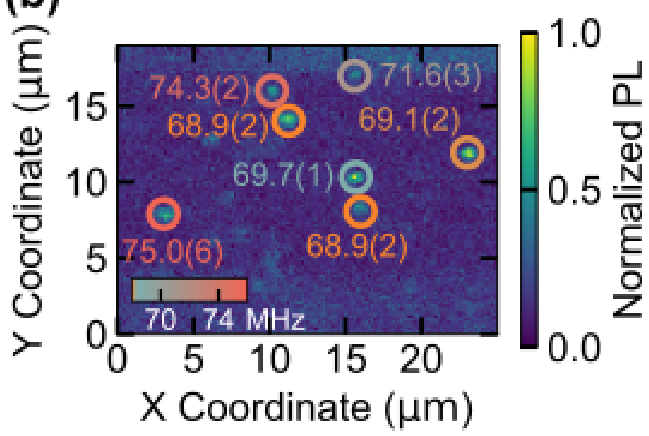 Figure 1: The 10-level model featuring ground quartets, excited quartets, and the intermediate metastable states (MS).
Key Discoveries: A Slower, Dimmer Qubit
The core of the paper lies in the Metastable State (MS) dynamics. Using the Lindblad Master Equation to fit experimental fluorescence decay, the authors found:
- Extended Lifetimes: The lifetime of the lowest metastable state (MS1) more than tripled under strain (from ~247 ns to ~833 ns).
- Reduced Emission: Because the electron stays "trapped" in the dark metastable state longer, the overall photon count drops by approximately 5.7%.
- Initialization Hit: In the absence of strain, spin initialization reached ~98%. Under strain, the mixing of states reduced this fidelity significantly, as the system can no longer clearly distinguish between and states.
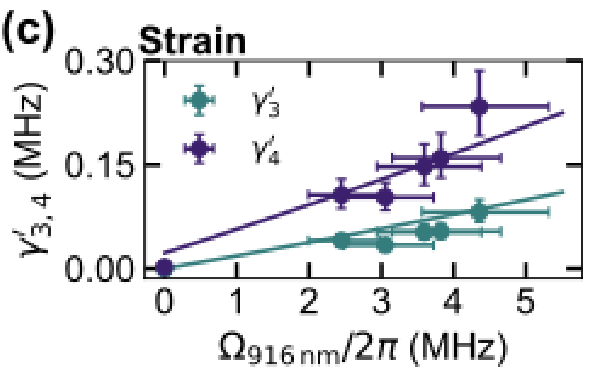 Figure 2: Time-resolved decay showing the drastic difference in metastable recovery between unstrained (top) and strained (bottom) emitters.
Why Does This Happen? (Physical Intuition)
Through ab initio calculations (CI-cRPA), the authors looked at the symmetry of the defect. centers naturally have symmetry. Transverse strain breaks this symmetry, distorting the "potential energy surfaces" of the atoms. This makes the non-radiative jump (ISC) from the metastable state back to the ground state much harder, effectively "bottlenecking" the entire optical cycle.
Critical Analysis & Outlook
This work is a reality check for the quantum photonics community. It proves that strain is not just a spectral shift; it is a dynamical shift.
- The Good: We now have an all-optical "thermometer" for strain. We can characterize the local environment of a qubit just by looking at its light-pulse timings.
- The Bad: Current nanophotonic designs may be unintentionally degrading their qubits.
- The Path Forward: Future designs must incorporate "strain engineering"—either by designing structures that compensate for strain or by using strain as a tool to actively tune the spin-photon interface.
Conclusion
If we want high-performance quantum chips, we have to stop treating the semiconductor lattice as a static background. This study provides the mathematical and experimental roadmap to navigating the complex spin-strain landscape in 4H-SiC.