
SWE-chat: The Reality Check for AI Coding Agents—From "Vibe Coding" to Security Risks
SWE-chat: Coding Agent Interactions From Real Users in the Wild
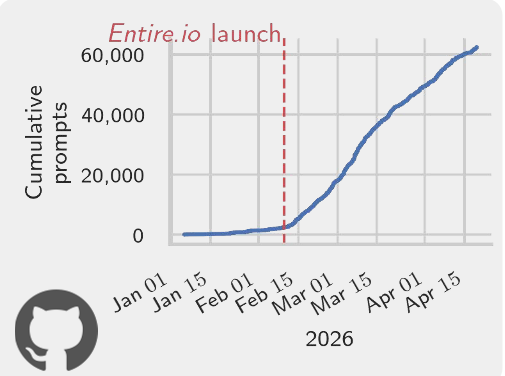
SWE-chat is the first large-scale, "in-the-wild" dataset of 6,000 real-world AI coding agent sessions (Claude Code, Cursor, etc.) from open-source developers. It features 63,000 user prompts and 355,000 tool calls, mapping interaction traces to actual Git commits with line-level authorship attribution.
TL;DR
While the AI community fixates on SOTA leaderboard scores, a new study from Stanford University reveals what happens when AI coding agents meet real developers in the wild. SWE-chat is the first large-scale dataset capturing 6,000 real interaction sessions. The findings are a wake-up call: "Vibe Coding" (letting the AI do everything) is skyrocketing, but it comes with a 9x increase in security vulnerabilities and a massive efficiency tax, with less than half of AI-generated code actually reaching the final commit.
The Problem: The "Sim-to-Real" Gap in Coding AI
Current benchmarks like SWE-bench evaluate agents in a vacuum—given an issue, can the agent fix it in one shot? In reality, software engineering is a conversation. Developers prompt, get confused, move the goalposts, and meticulously nitpick implementation details.
Existing research has lacked the "ground truth" of these interactions. We didn't know how often users push back, why they discard AI code, or how much "agent work" is just expensive noise.
Methodology: Mining the Wild
The authors leveraged Entire.io, an open-source tool that logs agent sessions (Claude Code, Cursor, etc.) and links them to specific Git commits. This allowed for line-level authorship attribution: for every line of code in the final repository, the researchers could tell if it was written by a human or an agent.
They categorized sessions into three modes:
- Human-only: Agent explains code; Human writes it.
- Collaborative: A joint effort.
- Vibe Coding: The agent authors >99% of the code.
The Rise of Vibe Coding
The data shows a massive behavioral shift. Vibe coding sessions doubled from 20% to 40% of all sessions in just three months. However, pure autonomy is a double-edged sword:
- Cognitive Friction: Users push back after 39% of agent turns.
- Inefficiency: Vibe coding consumes 3x more tokens and **0.05 in collaborative mode.
- Safety Hazard: Vibe-coded commits introduce 0.76 vulnerabilities per 1k lines, compared to just 0.08 for humans.

Methodology The Core: User Personas
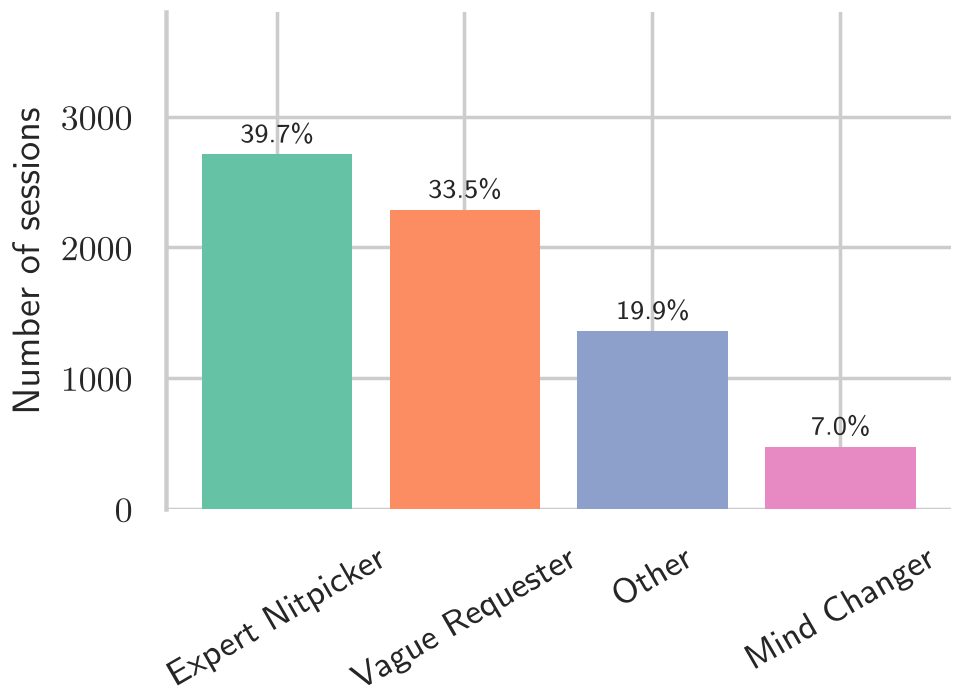
The study identified that most users aren't passive; they are "Expert Nitpickers." They maintain a stable goal but issue precise, technical corrections to the agent's work. This implies that agent interfaces shouldn't just be "chat boxes" but sophisticated collaborative environments that anticipate friction.
Critical Analysis: Why Autonomy Isn't Always the Answer
The most striking insight is that collaborative coding is the most efficient mode. When humans and agents work together, session runtimes are lower, token costs are minimized, and code survival rates are more predictable.
The "silent failures" of agents—where they hallucinate a fix or modify the wrong parameter—remain a major bottleneck. Agents stop to ask for clarification in only 1.4% of turns, while humans feel the need to interrupt or correct in 44% of cases. There is a clear "asymmetry of oversight."
Conclusion & Future Outlook
SWE-chat provides the empirical foundation to move beyond "toy" benchmarks. The takeaway for the industry is clear:
- Stop optimizing solely for autonomy; start optimizing for interaction.
- Security is the new frontier: We need automated, agent-specific security auditing before commits are merged.
- Simulators: This data allows the creation of "user simulators" to train agents on how real (and nitpicky) developers actually behave.
As AI agents become a permanent fixture in the developer's toolkit, the focus must shift from "can it code?" to "can it collaborate safely and efficiently?"
Source: Stanford University (Baumann et al., 2026). Check out the SWE-chat dataset website for live updates.