
[T-800] Breaking the 800 Hz Barrier: Capturing the Hidden High-Frequency Dynamics of Human Dexterity
T-800: An 800 Hz Data Glove for Precise Hand Gesture Tracking
The T-800 is a high-bandwidth data glove system that achieves synchronized 18-joint full-hand motion tracking at 800 Hz. It utilizes a broadcast-based synchronization protocol and a "sandwich" mechanical stress isolation architecture to capture high-frequency human dexterity previously lost to temporal undersampling.
TL;DR
Human hands execute micro-adjustments in sub-second intervals, yet our best sensors have been "blind" to these fast dynamics due to low sampling rates. The T-800 data glove shatters this bottleneck, providing 800 Hz synchronized tracking across 18 joints. By solving clock drift via hardware broadcasting and protecting sensors with a "sandwich" isolation structure, T-800 reveals that much of human dexterity happens in the >100 Hz spectral band—information previously lost to aliasing.
The "Temporal Blurring" Problem
In the quest for robotic dexterity, we rely on human demonstrations. However, existing IMU-based gloves (like those from Manus or Xsens) usually cap out at 100-200 Hz. According to the Nyquist Sampling Theorem, a 200 Hz system can only capture signals up to 100 Hz.
Worse yet, distributed sensors possess independent internal oscillators. Over time, these clocks drift. A "simultaneous" snap of the fingers might be recorded across several milliseconds of error, a phenomenon the authors call temporal blurring. This lack of precision makes it impossible to model the sharp transient forces and rapid accelerations that characterize real human agility.
Methodology: The T-800 Architecture
The T-800 solves these challenges through two primary innovations:
1. Broadcast-Based Synchronization
Instead of sequentially polling each IMU (which introduces variable latency), the T-800 uses a custom I/O matrix to broadcast a global "timestamp latch" command. This ensures all 18 sensors freeze their local timers at the exact same microsecond. The host then uses these "anchors" to resample the data onto a perfectly aligned 800 Hz grid.
2. The "Sandwich" Mechanical Shielding
If a sensor slides against the skin or is squeezed by the glove's fabric, the data is corrupted. The authors designed a rigid exoskeleton for each 9.8mm IMU island.
- Top Shield & Bottom Plate: Route fabric tension and phalanx pressure around the sensor.
- Friction Coupling: Concentrates normal force to ensure the IMU moves precisely with the bone, even during vigorous shaking.
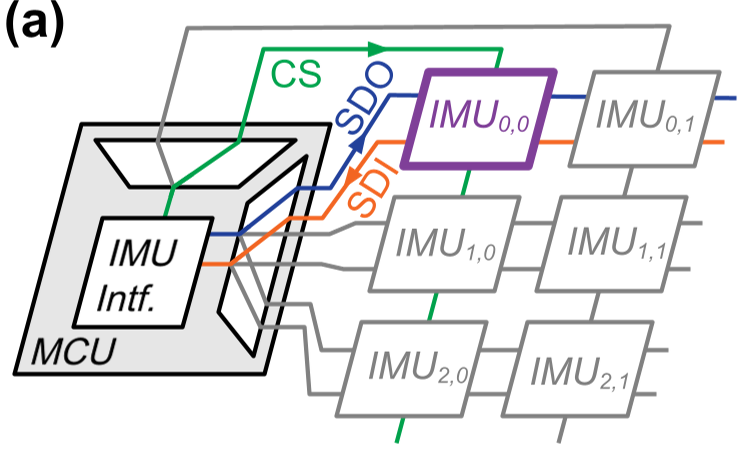 Figure 1: (a) 18-node IMU array. (b-c) The "sandwich" structure for mechanical isolation.
Spectral Discovery: The "Unseen" 100 Hz+ World
The most striking contribution of this work is the spectral analysis. By processing signals at 800 Hz, the authors looked at the "forbidden" band above 100 Hz.
When performing complex tasks like pen spinning, they discovered sharp bursts of energy at frequencies that 200 Hz systems simply cannot see.
- Localized Energy: During spinning, high-frequency energy is found only in the manipulating fingers (thumb, index, middle), while others remain "spectrally quiescent."
- Impact Dynamics: When catching a heavy ball, the entire hand exhibits a global high-frequency response as it absorbs the shock.
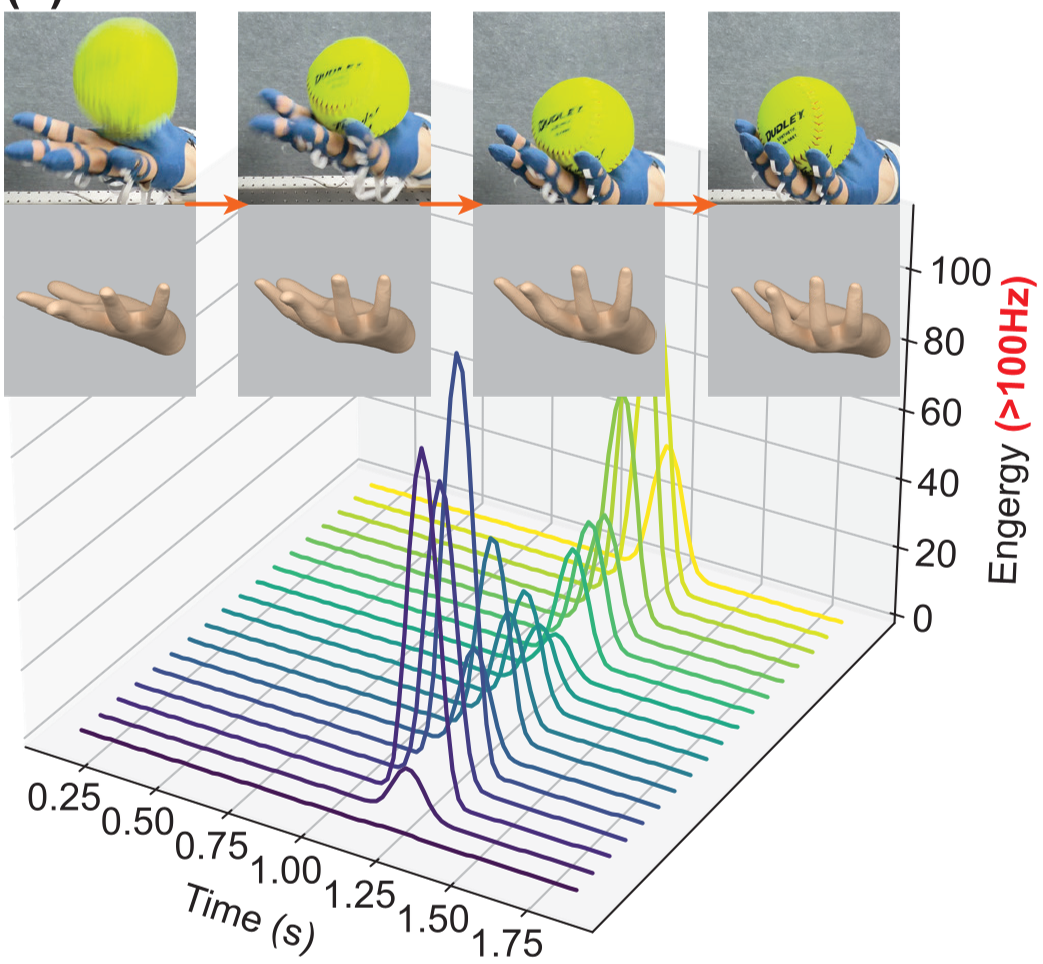 Figure 2: Spectral power summation for frequencies > 100 Hz, revealing high-speed kinematic features essential for dexterity.
From Human to Robot: Kinematic Retargeting
To prove that this "super-resolution" data is useful, the team mapped the T-800's output to three major robotic hands: the Shadow Hand, Allegro Hand, and Leap Hand.
Using a sequential programming framework to solve the nonlinear optimization of joint angles, they achieved remarkably low tracking errors. Interestingly, the Leap Hand (0.6 mm RMSE) outperformed the Shadow Hand (8.3 mm RMSE). While the Shadow Hand is more "human-like" in shape, its tighter range of motion limits its ability to follow the extreme high-speed agility captured by the T-800.
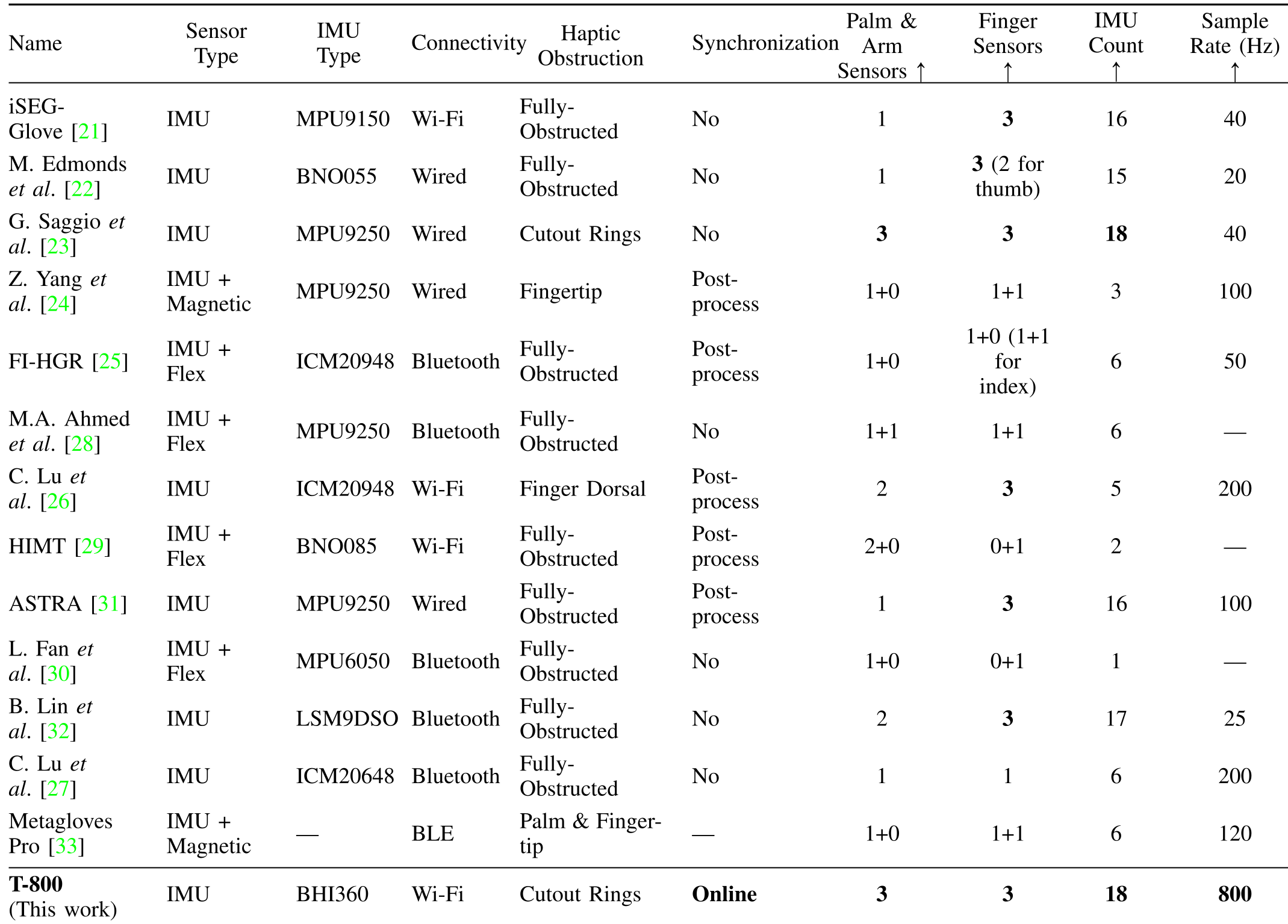 Table 1: T-800 vs. SOTA. Note the 800 Hz sample rate and online synchronization.
Conclusion and Future Outlook
The T-800 is more than just a glove; it is a "microscope" for human motion. By revealing that high-frequency micro-adjustments are the secret sauce of dexterity, it sets a new bar for Embodied AI data collection.
The Limitations? While it tracks motion (kinematics) perfectly, it doesn't yet track force (kinetics). The authors suggest that the next step is integrating dense tactile sensing arrays into this 800 Hz pipeline—creating a complete high-speed sensorimotor loop for robots to learn from.
Takeaway: If you want a robot to spin a pen or catch a ball like a human, you can't record at 50 Hz. You need the T-800's "super-resolution" to see the physics of agility.