
The Dual Role of Point-Gap Topology: Unveiling Non-Markovianity and Transport in Stochastic Chains
Topological Characterization of Discrete-Time Classical Stochastic Processes: Dual Role of Point-Gap Topology
The paper introduces a topological framework for characterizing discrete-time classical stochastic processes using point-gap topology. It demonstrates that the winding number of a stochastic matrix's spectrum around the origin serves as a rigorous indicator of non-Markovianity, while the winding around generic points relates to directed transport.
TL;DR
Researchers have discovered that the "topology" of a transition matrix in a classical random walk reveals two secrets: whether the system is moving in a specific direction (transport) and whether it has "memory" (non-Markovianity). This breakthrough allows scientists to distinguish between simple random movements and complex, feedback-controlled processes (like Maxwell’s Demon) using purely mathematical winding numbers.
Background: Beyond the Wave-Like Analogy
While topology is a staple of quantum materials, its application to classical stochastic processes—where particles jump between states with certain probabilities—has been limited. Most prior work focused on the generators of continuous-time dynamics. This paper shifts the focus to the Stochastic Matrix () itself, treating its complex eigenvalues as a map that defines the "identity" of the process.
The Problem: The Hidden Memory Constraint
A central question in probability theory is the "embedding problem": Can a discrete snapshot of a system (a stochastic matrix) be explained by a smooth, memoryless (Markovian) flow? Historically, this is nearly impossible to solve for large systems. The authors propose that Topology provides the answer. If the eigenvalues of the matrix "wind" around the origin of the complex plane, it is mathematically impossible for that system to be memoryless.
Methodology: The Winding Number
The authors define a topological invariant, the winding number , based on the Bloch matrix .
- Origin-Gap Topology (): If the spectrum winds around zero, the process is inherently non-Markovian.
- Point-Gap Topology (): If the spectrum winds around a generic point, it signifies directed transport (asymmetry).
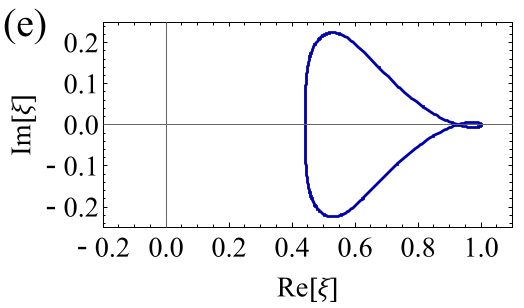 In Fig 1, the authors map different feedback protocols to spectral loops. (c) shows a standard random walk (no origin winding), while (g) shows a modified feedback loop that encapsulates the origin, proving it cannot be purely Markovian.
Key Insight: The Maxwell’s Demon Connection
The paper re-examines a classic "Maxwell's Demon" experiment. In the experiment, a demon observes a particle and adjusts a potential barrier to "trap" jumps in one direction.
- Without Feedback: The spectrum forms a loop but does not enclose the origin.
- With Feedback: The loop can be shifted to enclose the origin.
This shift proves that the "intelligence" or memory of the demon is encoded in the topological structure of the matrix.
Results & Quantum Advantage
The study concludes with a fascinating comparison: Classical vs. Quantum. They demonstrate that a stochastic matrix that is "topologically forbidden" for classical Markovian systems can actually be simulated by a Quantum Markovian system. This happens because quantum coherence (off-diagonal elements in the density matrix) acts as a high-dimensional memory bank that the classical world cannot access.
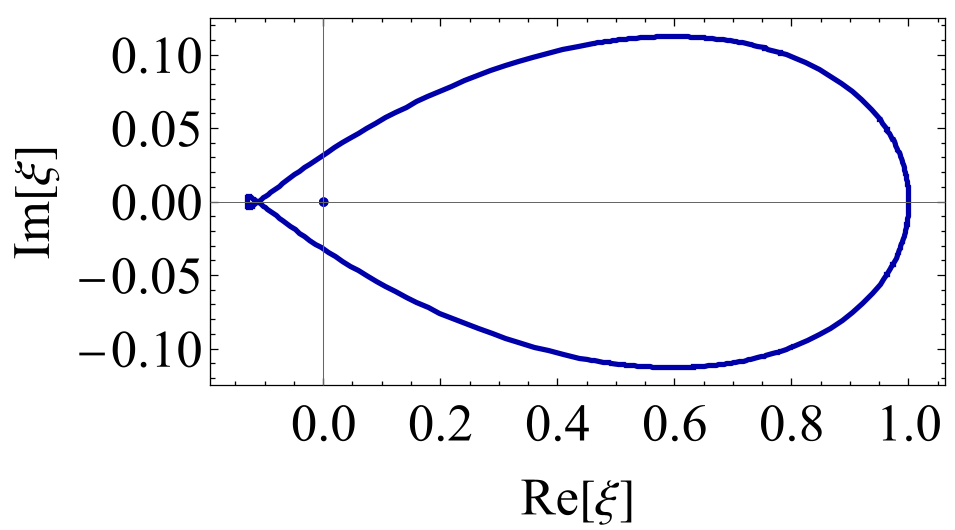 Fig 2: The spectrum of a quantum-simulated stochastic process. The presence of zero eigenvalues (quantum projection) allows the winding number to exist where classical physics would fail.
Conclusion: A New Tool for Stochastic Thermodynamics
The dual role of point-gap topology offers a powerful diagnostic tool. By calculating the winding number, researchers can now:
- Identify directed transport without long-term simulation.
- Mathematically prove the presence of feedback or memory effects.
- Bridge the gap between non-equilibrium thermodynamics and topological phase theory.
Limitations: The current model assumes translational invariance (lattices). Future work will need to address disordered or complex networks where Fourier transforms aren't readily available.