
[Nature Commun. 2026] Decoding Topology: Robust Charge Pumping for Neural Network Wavefunctions
Topological invariant of periodic many body wavefunction from charge pumping simulation
The paper introduces a novel approach to calculate many-body topological invariants in Neural Network Wavefunctions (NNWF) by simulating adiabatic charge pumping. Using this method, the authors successfully extract fractional Chern numbers for Abelian fractional Chern insulators (FCI) and identify composite Fermi liquid (CFL) states in twisted MoTe2 systems.
TL;DR
Researchers have developed a robust method to extract topological invariants (Chern numbers) from many-body neural network wavefunctions. By simulating topological charge pumping through adiabatic flux insertion, they successfully identified fractional Chern insulators and composite Fermi liquids in twisted MoTe2, solving a long-standing "identification" bottleneck in the field of AI-driven quantum physics.
The Problem: The "Black Box" of Topological Neural Networks
While Neural Network Wavefunctions (NNVMC) have proven incredibly powerful at finding the ground states of strongly correlated systems, they suffer from a "characterization crisis."
In traditional Exact Diagonalization (ED), we have the full spectrum and can integrate Berry curvature. In NNWFs, we only have a variational representation of the state. When different phases (like a Fractional Chern Insulator and a trivial Charge Density Wave) compete closely in energy, how do we know for sure which one the neural network has "learned"? Standard topological metrics often require the full manifold of degenerate states, which NNVMC cannot always access.
The Insight: Laughlin’s Argument Meets Neural Networks
The authors revisit Laughlin’s charge pumping argument. Imagine a torus: if you thread a magnetic flux through the hole, the system's "charge center" (polarization) shifts.
- Trivial Insulator: The charge center returns to the start ().
- Integer Chern Insulator: One full charge is pumped ().
- Fractional Chern Insulator: A fractional amount of charge is pumped ().
By monitoring the Resta polarization operator during this flux insertion, the authors can "watch" the topology unfold without needing the full energy spectrum.
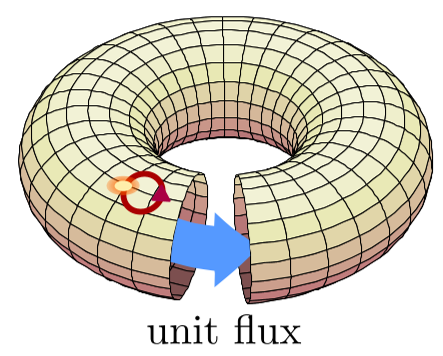 Figure 1: (b) NNVMC framework mapping coordinates to . (c-f) Schematic of how polarization phase shifts identify different topological orders.
Methodology: Simulating the Pump
The process involves:
- Iterative Training: Training the NNWF at , then slowly increasing the phase twist , using the previous state as a starting point to ensure adiabatic continuity.
- Polarization Tracking: Calculating the expectation value of the polarization operator at each step.
- Slope Extraction: The slope of the polarization phase relative to the flux insertion gives the Chern number directly.
Experimental Results: MoTe2 and the Composite Fermi Liquid
The team applied this to twisted MoTe2, a "hot" material in condensed matter physics.
1. Identifying FCIs
At 2/3 filling, they extracted a Chern number of 0.667 (), matching theoretical predictions. More importantly, at 1/3 filling, where FCIs compete with trivial CDWs, the method clearly distinguished the two, showing a flat line (C=0) for the CDW and a sloped line (C=1/3) for the FCI.
2. The First CFL Identification in NNWFs
Perhaps the most significant achievement is the identification of the Composite Fermi Liquid (CFL) at 1/2 filling. CFLs are gapless and notoriously hard to characterize. The charge pumping method yielded a Chern number of , providing decisive evidence for the CFL state over a normal Fermi liquid.
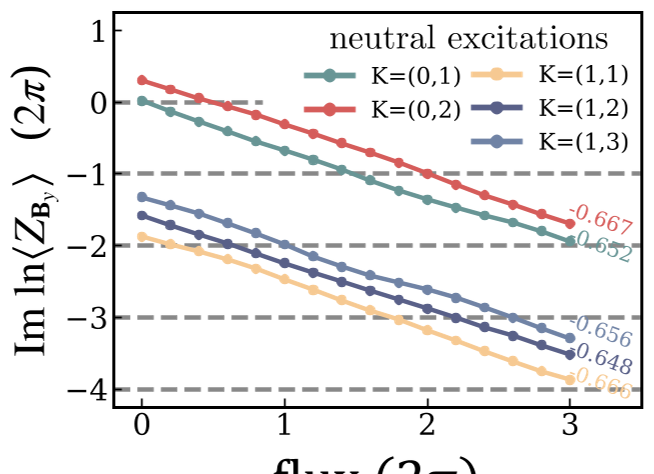 Figure 2: Quantized charge pumping for 2/3 and 1/3 filling states, validating the fractional invariants.
Critical Insight & Future Outlook
This work transforms NNVMC from a "guess-the-energy" tool into a "prove-the-topology" tool.
Key Takeaways:
- Generality: The method works for both ground states and neutral excitations.
- Stability: It is robust against Monte Carlo noise and choice of momentum sector.
- Future Impact: The authors suggest that by looking at the off-diagonal elements of the polarization matrix, we could eventually probe anyonic statistics—the "holy grail" of topological quantum computing.
Limitations: While robust, the method requires multiple training steps to ensure adiabaticity, which increases computational cost.
In conclusion, by "pumping" the wavefunction, we can finally peer into the topological heart of artificial neural networks applied to the quantum world.