
[Nature Communications] Deciphering the Source of Uncertainty: Why Your Wind and Solar Projections Disagree
Uncertainty in wind and solar projections depends on global and regional climate models
This study presents a spatially and seasonally resolved variance decomposition of wind and solar resource projections over the Alpine region. Using a 31-pair RCM–GCM ensemble and ANOVA techniques, the authors quantify how much uncertainty stems from Global Climate Models versus Regional Climate Models, revealing that the dominant source of uncertainty shifts significantly between variables and seasons.
TL;DR
A high-resolution study of the Alpine region reveals that the uncertainty in renewable energy projections isn't a "one-size-fits-all" problem. While Global Climate Models (GCMs) dictate the future of wind in flatlands, Regional Climate Models (RCMs) are the primary source of uncertainty for solar power in the summer and wind in the mountains. For energy planners, this means a "diverse model portfolio" is a necessity, not an option.
The "Resolution" Paradox
In the quest for net-zero, we are increasingly dependent on the weather. However, climate models often present a frustratingly blurry picture of the future. Some models suggest wind speeds will increase; others suggest a "stilling." Historically, researchers assumed that simply adding high-resolution Regional Climate Models (RCMs) would "fix" these uncertainties by providing better local physics.
The authors of this study argue that this isn't always the case. By decomposing the variance of 31 different RCM-GCM combinations, they ask a critical question: Who is responsible for the "noise" in our data?
Methodology: The ANOVA Lens
The research team employed a Two-Way Analysis of Variance (ANOVA) to slice through the complexity. They looked at six key dimensions of climate data, including extreme events (90th percentile) and "renewable droughts"—days where both solar and wind production are critically low.
Key Model Architecture and Study Area
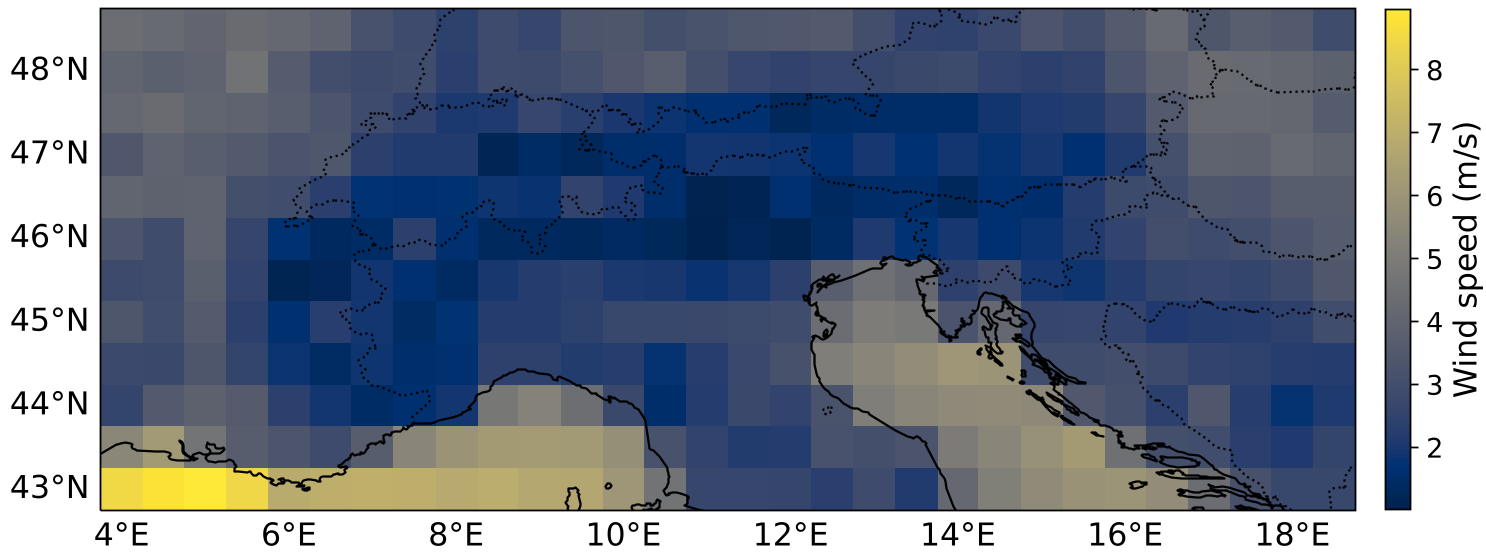 Figure 1: The study focuses on the Alpine region, a "natural laboratory" for testing high-resolution models due to its complex terrain.
The model treats the total variability () as a sum of the GCM effect, the RCM effect, and a residual term that captures interactions and noise.
Deep Dive: Solar vs. Wind
1. The Solar Summer Shift
For solar radiation, the results were highly seasonal. In the summer, RCMs dominated the uncertainty. This makes intuitive sense: summer solar intensity is heavily influenced by regional cloud cover and convective processes—features that RCMs are specifically designed to resolve. In winter, however, the large-scale atmospheric "forcing" from GCMs becomes more influential.
2. The Orographic Wind Effect
Wind speed uncertainty showed a geographic divide. Over the open sea and flat plains, the driving GCMs (the "big picture" circulation) governed the projected changes. However, as soon as the terrain became vertical (the Alps), the RCMs took the lead.
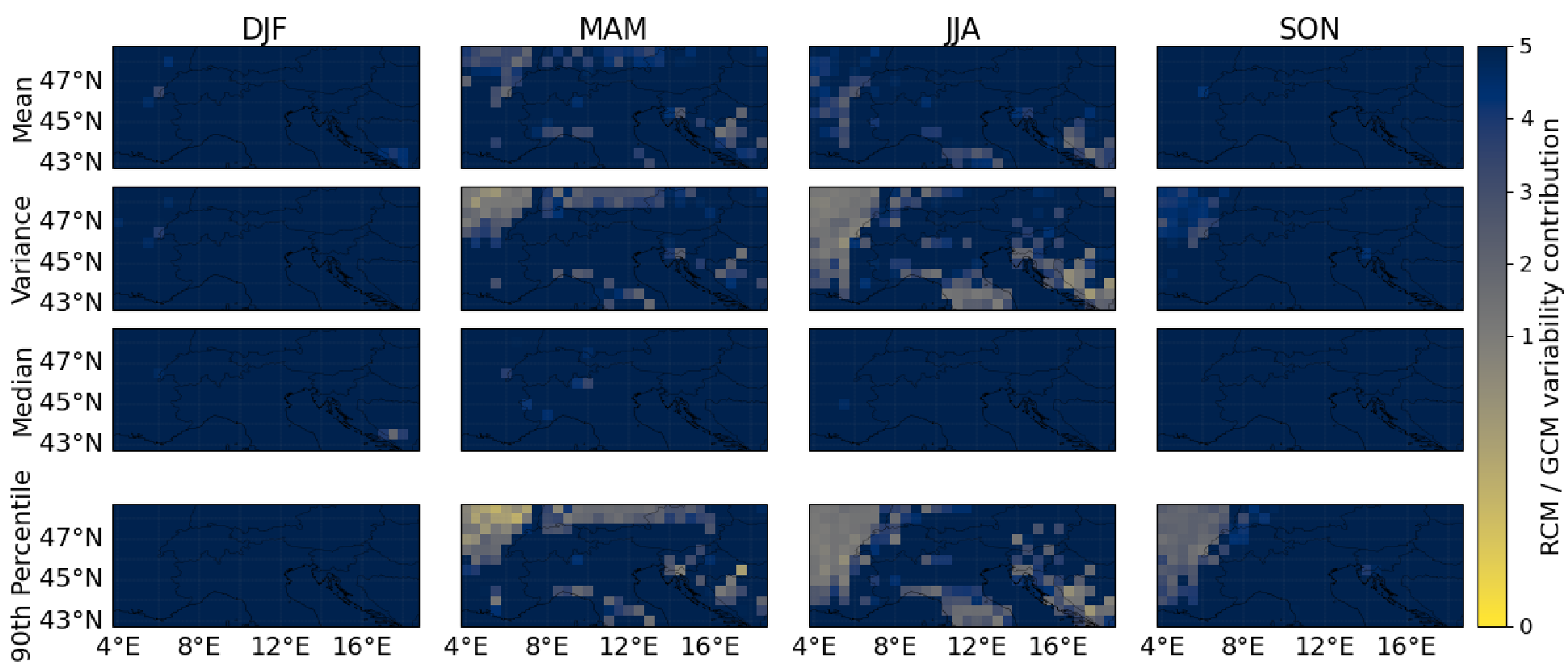 Figure 3: Historical solar radiation variability. Red colors indicate RCM dominance, which is prevalent across most seasonal means.
Why It Matters: The Future of Energy Planning
Perhaps the most sobering finding is the lack of "robust" trends. As shown in the KDE plots below, the ensemble of models is split: about half project an increase in resources, and half project a decrease.
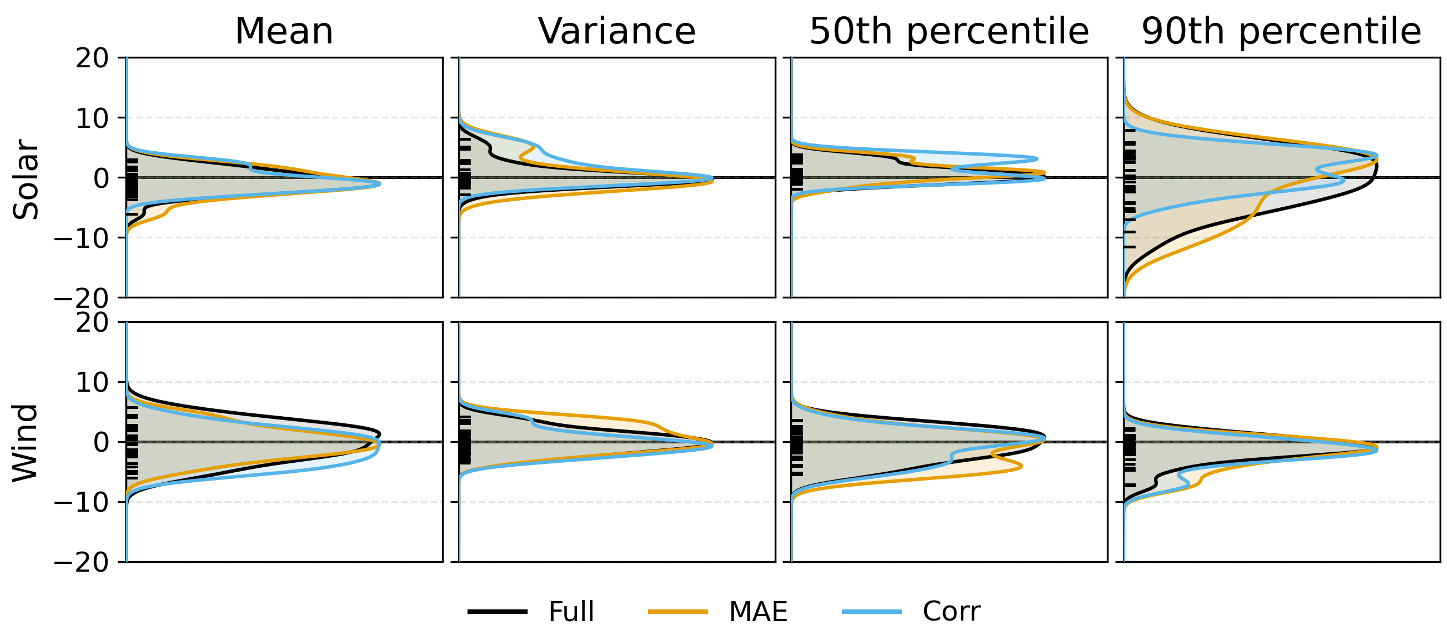 Figure 9: The spread of projected changes for solar and wind metrics. The wide distribution around the zero line indicates that we cannot yet say with certainty whether these resources will increase or decrease.
Critical Insights & Limitations
- The Alpine Anchor: The study proves that in complex terrain, RCMs are not just "nice to have"—they are the primary source of signal and noise.
- Winter Vulnerability: Since electricity demand peaks in winter in Europe, the dominance of GCM uncertainty during this season suggests we need better global circulation modeling to secure our winter energy supply.
- Lower Bound Thinking: The authors admit this variance decomposition is a "lower-bound" estimate. It doesn't include scenario uncertainty (what if we follow a different emission path?) or internal chaotic fluctuations of the climate.
Conclusion
This paper serves as a technical "Buyer Beware" for the energy industry. Using data from a single RCM–GCM pair to plan a multi-billion dollar wind farm or solar grid is essentially a gamble. The path forward involves uncertainty-aware decision-making, utilizing large, diverse ensembles to bracket the range of possible futures.