
VLMaxxing: Stop Paying for What Your VLM Already Knows
VLMaxxing through FrameMogging Training-Free Anti-Recomputation for Video Vision-Language Models
The paper introduces "VLMaxxing," a training-free approach to reduce redundant computation in Video Vision-Language Models (VLMs) by reusing visual states. It categorizes redundancy into three regimes (C-PERSIST, C-VISION, and C-CEILING), achieving up to 35.92x speedup in multi-turn follow-up queries on Qwen2.5-VL while maintaining answer fidelity.
TL;DR
Video Vision-Language Models (VLMs) are computationally expensive because they "rediscover the world" frame by frame. VLMaxxing introduces a training-free framework to reuse visual states, achieving over 35x speedup on follow-up questions and significantly reducing first-query latency by skipping redundant vision-tower work—all without changing model weights.
The Problem: The High Cost of Static Backgrounds
In a typical video stream—like a factory floor or a security camera—most pixels don't change. However, modern VLMs like Qwen2.5-VL or Gemma-4B treat every frame as fresh RGB data. This leads to two major inefficiencies:
- Re-ingestion Waste: Re-encoding the same background multiple times.
- Follow-up Redundancy: When a user asks three questions about the same 30-second clip, the model often re-processes the entire video prefix for every single query.
Existing solutions often require retraining or specialized "compressed-domain" architectures. The authors of VLMaxxing ask: How much can we save on a frozen, off-the-shelf model?
Methodology: The Three Regimes of Efficiency
The paper breaks down "Anti-Recomputation" into three distinct scientific regimes:
1. C-PERSIST (After-Ingest Reuse)
This is where the biggest gains live. Once a video is ingested, subsequent questions should only pay for the new text. However, "naive" cache reuse often leads to a cache basin—a state where the model's internal representations drift, leading to malformed or repetitive "pathological" answers.
- Solution: Selective Re-prefill. By refreshing just the newest visual frame (the "tail") while reusing the stable prefix, the model stays within its "fidelity envelope."
2. C-VISION (First-Pass Pruning)
For a brand-new video, the model can still save time by pruning tokens in the vision tower.
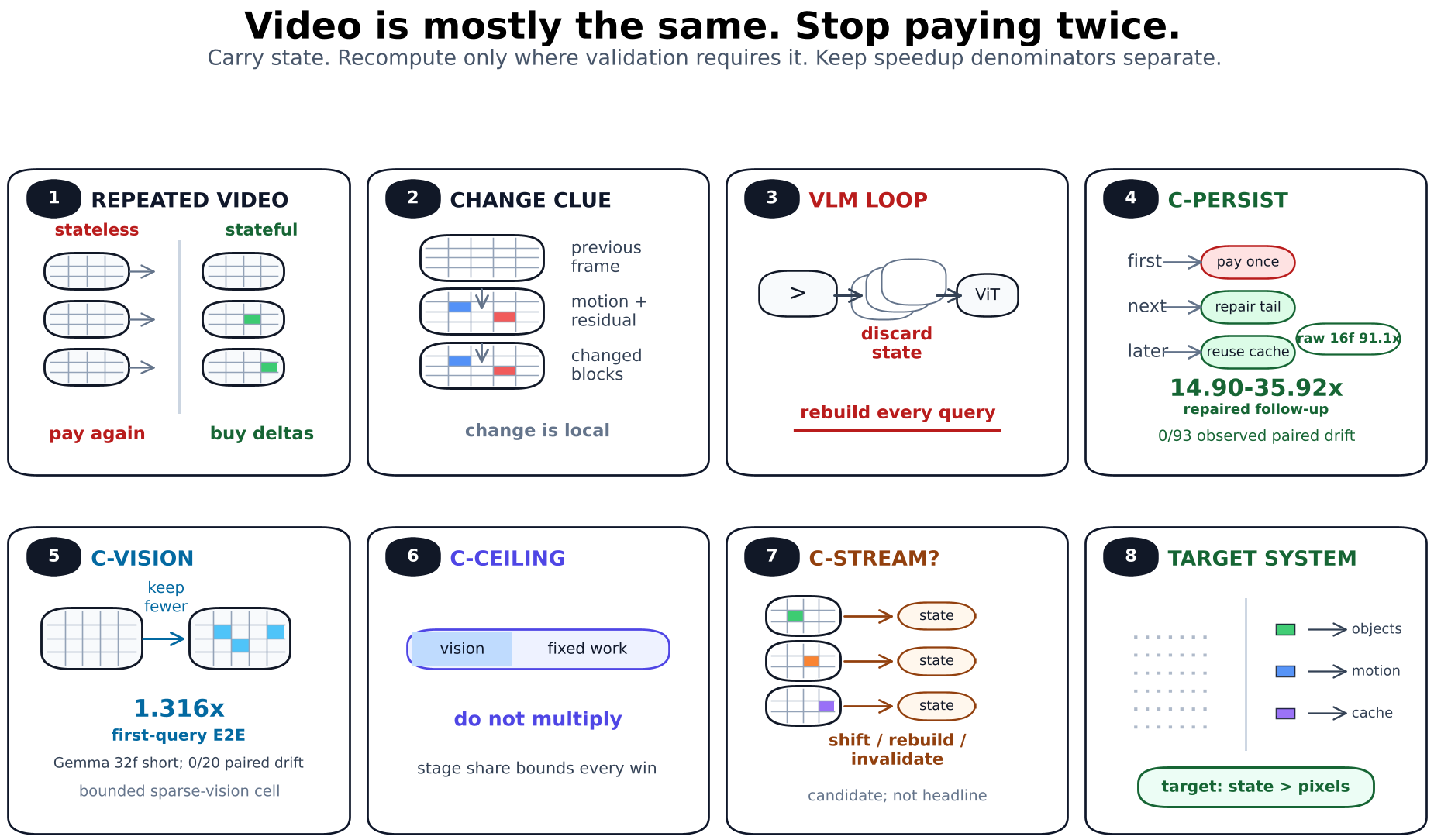 Figure 1: Overview of the C-PERSIST, C-CEILING, and C-VISION regimes.
3. C-CEILING (The Arithmetic Guardrail)
The authors introduce a vital reality check: if the vision tower only takes up 20% of the total wall-clock time, even a 10x speedup in the vision tower will only result in a modest ~18% end-to-end improvement. This "share-weighted" logic prevents overhyping component-level gains.
Key Experimental Results
The researchers tested their approach on VideoMME, TOMATO, and MVBench.
- Follow-up Latency: On Qwen2.5-VL-7B, follow-up latency dropped from several seconds to a median of ~0.8s, a massive 14x to 35x speedup.
- Fidelity: Using "Paired Drift" (checking if the model makes the exact same choice as the dense baseline), they proved that their adaptive repair preserved correctness perfectly (0/93 drift).
- Pruning: On Gemma 4-E4B, they achieved a 1.316x first-query speedup by skipping 42% of vision-tower work without losing accuracy.
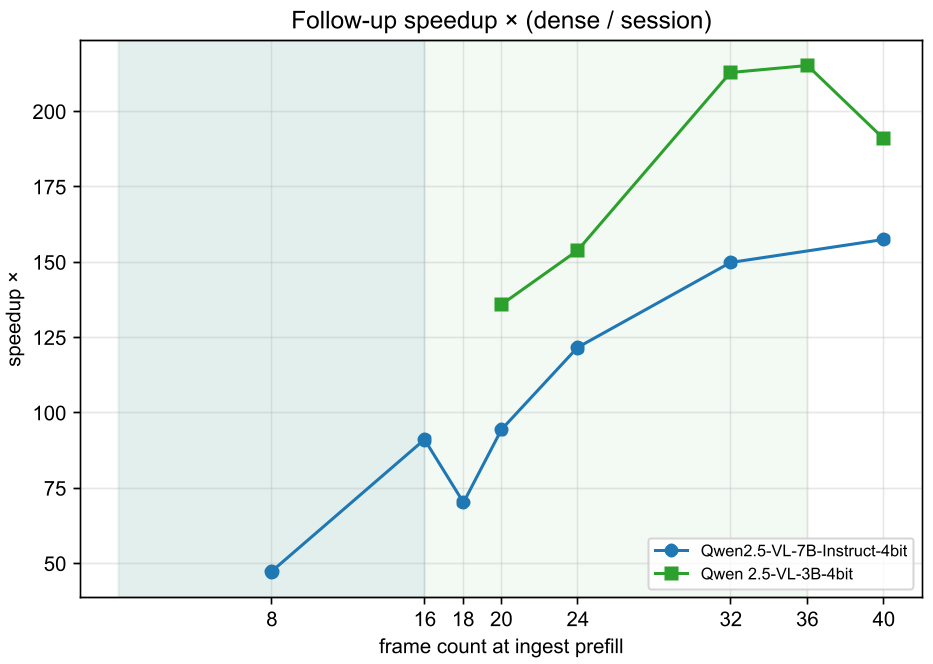 Figure 2: The "Cache Basin" failure. As more tokens are reused without repair, performance eventually collapses, necessitating the C-PERSIST repair strategy.
Deep Insight: Toward VLM-Native Media
The most profound takeaway isn't just the speedup—it's the call for a new media standard. Currently, we use codecs designed for human eyes (H.264/H.265). The authors argue for VLM-Native Media: streams that directly expose motion vectors, object tracks, and "uncertainty sidecars."
Instead of sending 30 RGB frames per second, we should send a State-Update Stream. The model would only "look" (compute) when the stream signals a meaningful change or a high degree of uncertainty.
Limitations & Future Work
While the results are impressive for static and medium-motion videos, the current "pixel-difference" planner is not yet a "semantic oracle." It can't always tell if a small pixel change is a task-critical event (like a LED flickering a code).
Future research will likely focus on:
- Converting "Semantic Substitution" into integrated sparse backends for production.
- Developing learned "recache gates" that use the model's own confidence to decide when to refresh.
Conclusion
VLMaxxing proves that we are currently overpaying for video understanding. By treating the video stream as a dynamic state that can be selectively repaired rather than a series of static images, we can unlock massive efficiency gains on the hardware we already own.