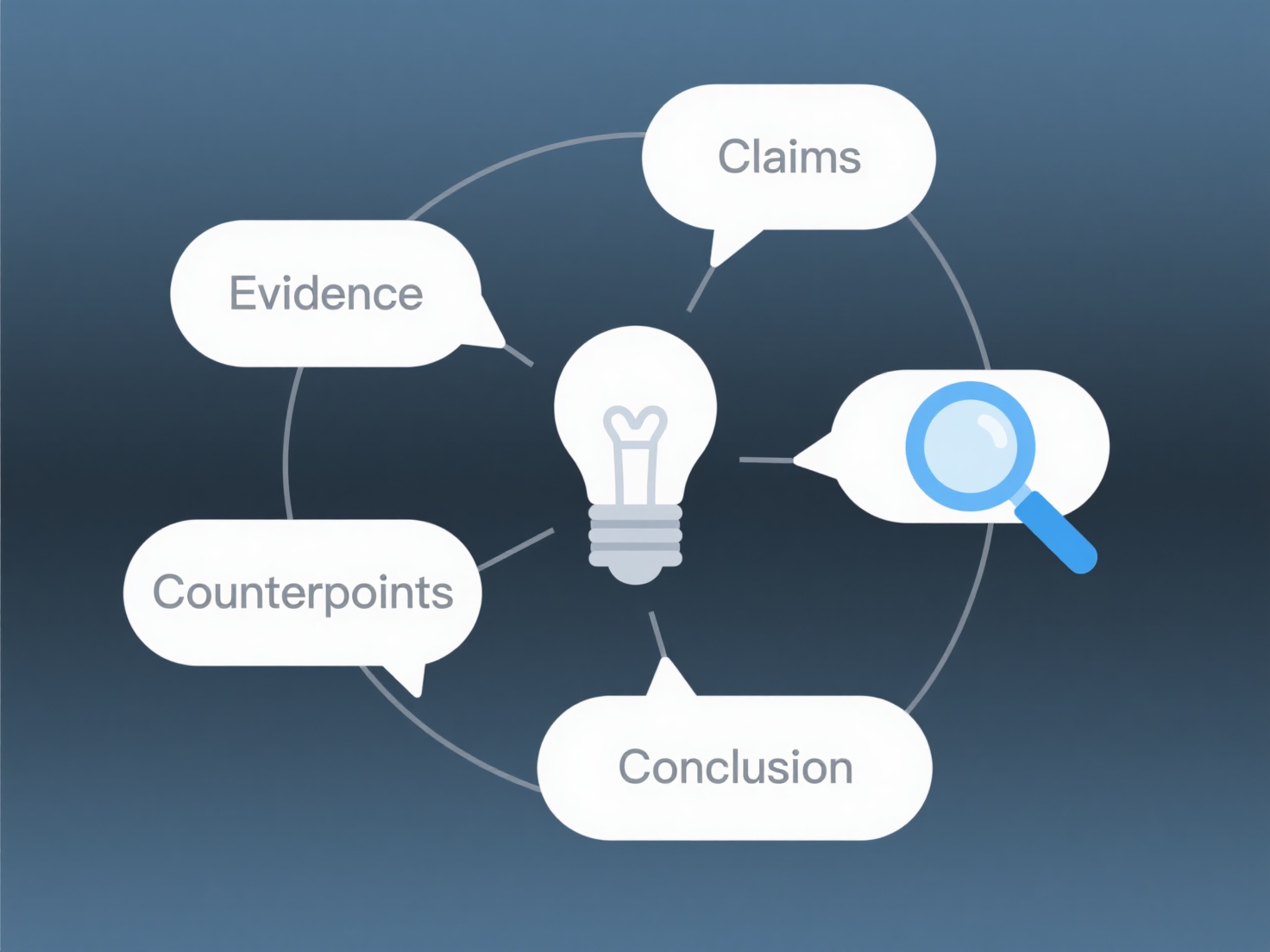
To ensure strong arguments for a critical analysis, you must formulate a clear thesis, rigorously evaluate the source material's methodology, and back every critique with verifiable academic evidence.
Writing a critical analysis goes beyond merely summarizing a text. It requires you to actively interrogate the author’s claims, identify underlying biases, and assess the validity of their conclusions. Whether you are writing a literature review or a standalone critique, following a structured approach will help you build compelling, evidence-based arguments.
1. Deconstruct the Original Claims
Before you can build your own argument, you need to fully understand the author's position. Break down the academic paper to identify the primary research question, the methodology used, and the core conclusions. Ask yourself: What assumptions is the author making? Are there logical leaps between their data and their findings?
2. Interrogate the Evidence
A strong critical analysis requires you to evaluate the quality of the evidence presented. Look for sample size limitations, methodological flaws, or potential conflicts of interest. When interrogating complex research, using tools like WisPaper's Scholar QA allows you to ask specific questions about a paper's claims and get answers traced back to the exact page and paragraph, ensuring your critique is perfectly aligned with the original text.
3. Develop a Clear Thesis Statement
Your argument needs a central anchor. Based on your evaluation, draft a thesis statement that clearly defines your critical stance. Avoid generic statements like "This paper has flaws." Instead, aim for a specific, targeted claim such as, "While the study provides valuable insights into initial adoption rates, its reliance on self-reported data limits the generalizability of its long-term conclusions."
4. Synthesize with Existing Literature
Do not analyze the paper in a vacuum. To ensure your arguments hold up to academic scrutiny, compare the text against the broader literature. Does this paper align with the current scientific consensus, or does it contradict established theories? Bring in external, peer-reviewed sources to validate your critiques and to highlight where the original author's perspective might fall short.
5. Anticipate Counterarguments
The most robust academic arguments acknowledge other perspectives. Consider how the original author or another researcher might defend the work against your critique. By preemptively addressing these counterarguments in your writing, you demonstrate comprehensive critical thinking and significantly strengthen the persuasiveness of your overall analysis.