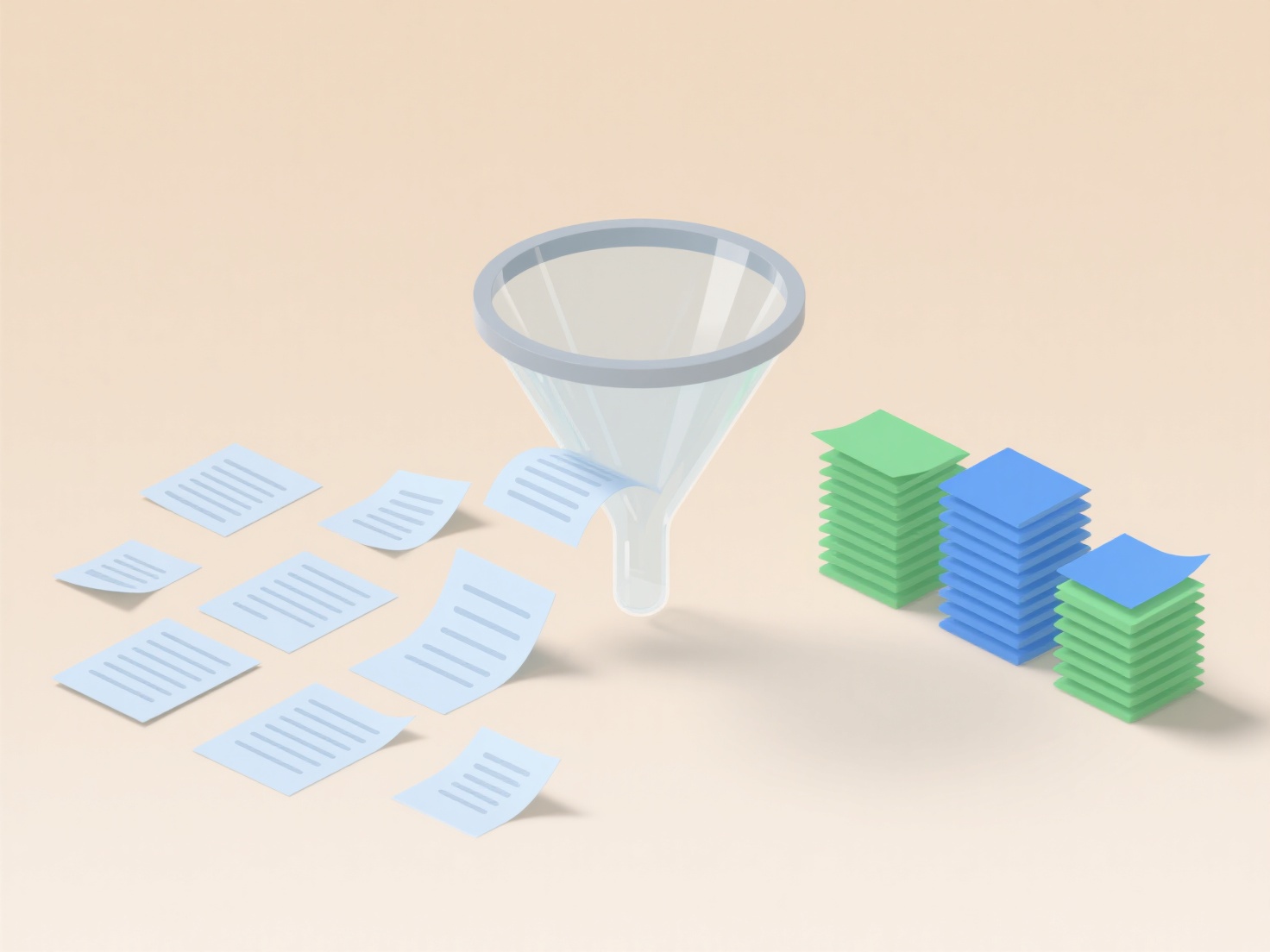
To filter research notes for a grant proposal, categorize your annotations based on the specific sections of the funding application—such as the problem statement, research gap, and methodology—to extract only the evidence that directly supports your project's narrative.
When writing a grant proposal, your goal is to persuade reviewers that your project is innovative, feasible, and worthy of funding. Unlike a broad literature review, a funding application requires a highly focused approach. You must ruthlessly filter your research notes to avoid overwhelming the reader with unnecessary background information. Here is a practical approach to filtering and organizing your notes for a successful application.
1. Map Notes to Proposal Sections
Start by creating an outline based on the funding agency's specific guidelines. Most grant applications require standard sections: background, significance, innovation, and approach. Review your raw notes and assign them to these distinct categories. Archive any notes that do not directly serve one of these sections, no matter how interesting the research might be.
2. Isolate the Research Gap
Grant reviewers want to see exactly what is missing in the current literature and how your project fills that void. Filter your notes to highlight previous studies' limitations, conflicting results, or unanswered questions. Grouping these specific insights together will help you build a strong, evidence-based justification for your proposed research.
3. Consolidate Methodological Evidence
Your experimental design and methodology need to be airtight. Filter your notes to find papers that validate the techniques, assays, or analytical models you plan to use. If you have a massive collection of documents, you can use WisPaper's My Library to organize your references and chat with your uploaded papers via AI, allowing you to instantly filter your notes and extract the exact methodological details you need without rereading every PDF.
4. Prioritize Recent and High-Impact Sources
Space is strictly limited in grant writing. When filtering your annotations, prioritize notes taken from recent publications (within the last 3–5 years) and highly cited papers in your field. This demonstrates to the review committee that you are up-to-date with the latest advancements and are building your hypothesis on a contemporary foundation.
5. Tag Your Preliminary Data
If your notes include your own lab results, pilot studies, or previous publications, tag them separately. Seamlessly integrating your preliminary data with external literature proves to the reviewers that your team is uniquely positioned and capable of executing the proposed work.