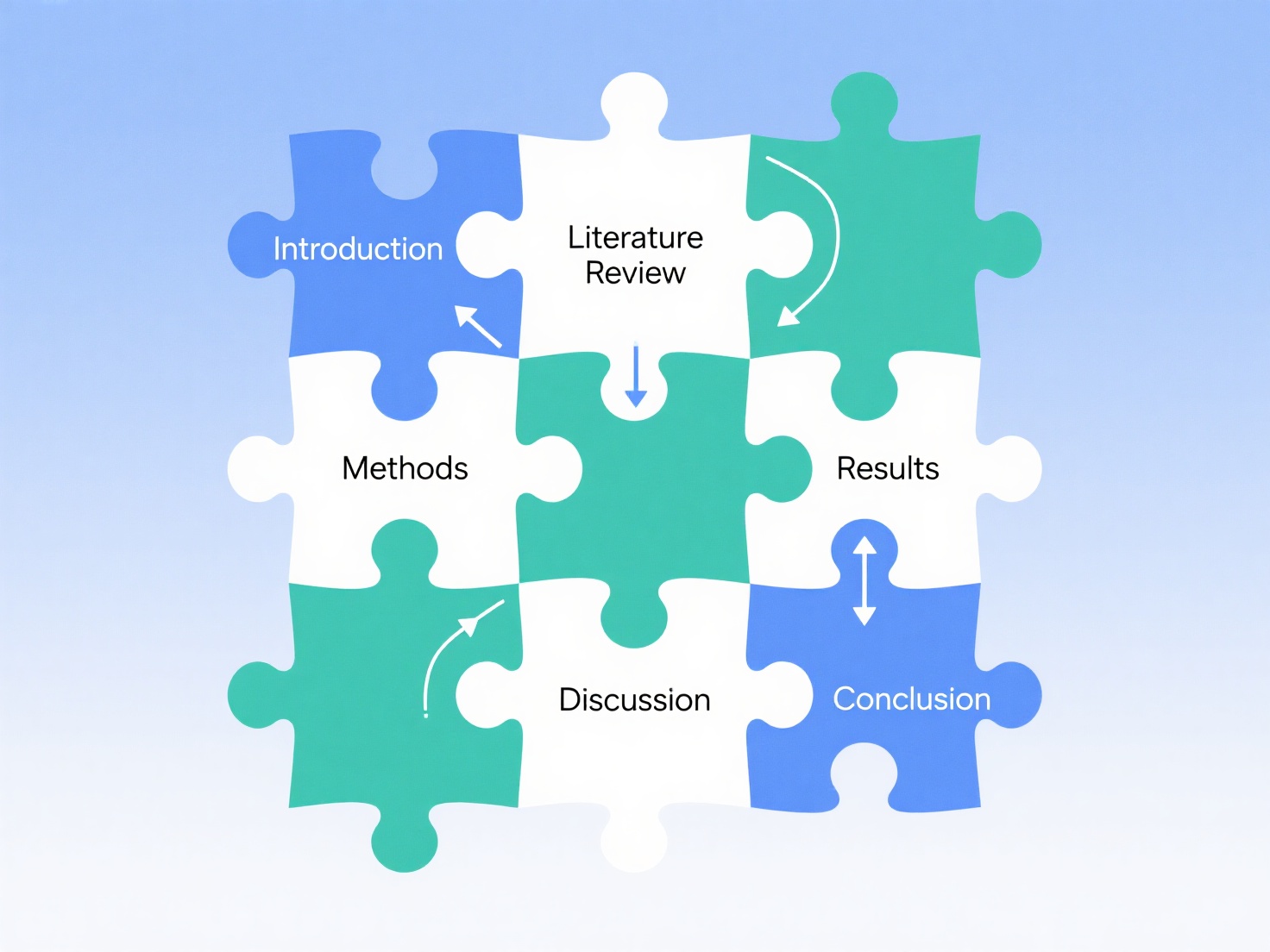
To outline your dissertation sections effectively, you should organize your work into the standard five-chapter structure—Introduction, Literature Review, Methodology, Results, and Discussion—and break each chapter down into specific, logical subheadings.
A well-structured thesis outline acts as a roadmap, keeping your writing focused and preventing you from feeling overwhelmed. While specific university guidelines vary, most empirical dissertations follow an expanded version of the classic IMRaD format.
Here is how to structure the outline for each core dissertation chapter:
Chapter 1: Introduction
Start by setting the stage for your research. Your outline for this section should include subheadings for the background of the study, the specific problem statement, your core research questions or hypotheses, and the overall significance of your work.
Chapter 2: Literature Review
This section synthesizes existing research to justify why your study is necessary. Outline your subheadings based on key themes, theoretical frameworks, or chronological developments rather than just listing sources one by one. A strong literature review outline must clearly highlight what is missing in current research—if you are struggling to pinpoint this, WisPaper's Idea Discovery feature uses agentic AI to automatically identify research gaps from your saved literature, helping you structure a compelling argument.
Chapter 3: Methodology
Your methodology outline must detail exactly how you plan to conduct (or have conducted) your research. Include specific sections for your research design (qualitative, quantitative, or mixed methods), data collection procedures, participant demographics, and data analysis techniques. Outline this chapter with enough detail that another researcher could seamlessly replicate your study.
Chapter 4: Results
Organize your results section outline directly around your initial research questions or hypotheses. Plan to present your raw data, statistical analyses, or thematic findings here without interpreting their broader meaning just yet. You should also include outline placeholders for where tables, charts, and graphs will go.
Chapter 5: Discussion and Conclusion
The final chapter interprets your findings. Your outline should cover a brief summary of the results, how these findings relate back to your literature review, and the practical and theoretical implications of your work. Always include a subheading for the limitations of your study, followed by recommendations for future research and a strong concluding summary.
Tips for a Strong Chapter Outline
- Consult your advisor: Always get your high-level chapter outline approved by your committee before you begin drafting the actual text.
- Use a hierarchical structure: Utilize standard heading levels (Heading 1, Heading 2, Heading 3) in your word processor. This creates a clickable navigation pane that helps you visualize the flow of your arguments.
- Stay flexible: Treat your thesis structure as a living document. As your research progresses and your analysis deepens, your subheadings will naturally evolve.