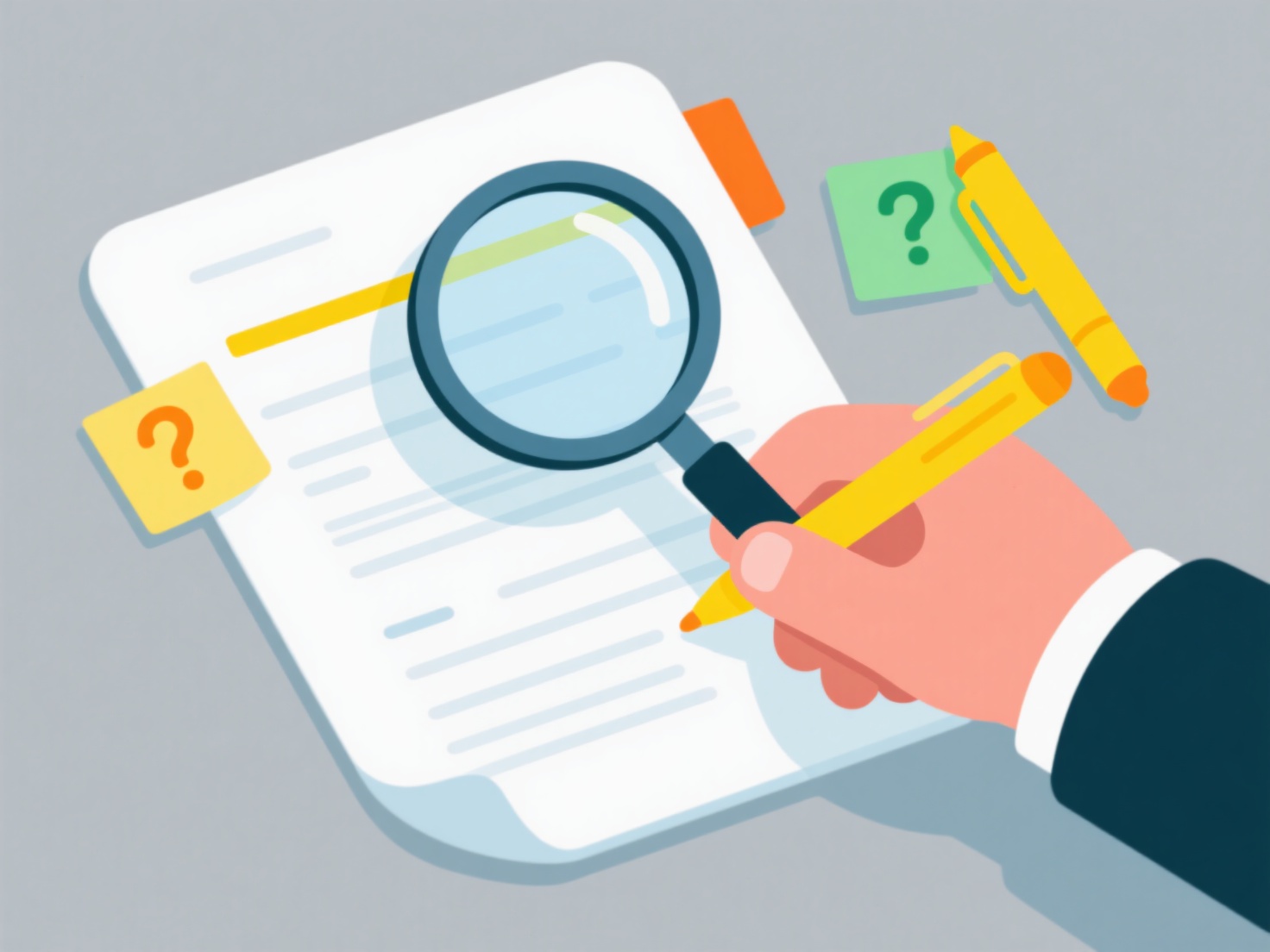
To read a research paper critically, you must evaluate the author's methodology, question their assumptions, and assess the validity of their conclusions rather than simply accepting the text as absolute truth.
Critical reading is an essential skill for any literature review, helping you distinguish between high-quality evidence and flawed studies. Instead of reading linearly from start to finish, approach the article strategically.
1. Skim for the Big Picture First
Before diving into the dense details, get a high-level understanding of the study. Read the title, abstract, introduction, and conclusion. Ask yourself: What is the primary research question? What gap in the literature is the author trying to fill? This initial pass provides the context needed to effectively evaluate the rest of the paper.
2. Evaluate the Methodology
The core of critical appraisal lies in the methods section. A study's conclusions are only as strong as its design. Look for potential biases, sample size limitations, or confounding variables. Did the researchers use appropriate statistical tests? Are the experiments well-controlled? If the methodology is weak, the results must be interpreted with a healthy dose of skepticism.
3. Scrutinize the Results and Claims
Examine the raw data, tables, and figures yourself before reading the author's interpretation in the discussion section. Do the results actually support the claims being made? Watch out for overstatements, cherry-picked data, or correlations disguised as causation. A critical reader always checks if the evidence aligns with the narrative.
4. Ask Questions and Verify Evidence
Active reading requires you to constantly interrogate the text. Note down confusing concepts, unsupported claims, or areas where the authors might have missed alternative explanations. If you are struggling to unpack dense academic arguments, using WisPaper's Scholar QA feature allows you to ask direct questions about the paper and get answers traced back to the exact page and paragraph, making it easier to verify specific claims.
5. Assess the Broader Impact
Finally, consider how the paper fits into your specific field of study. Does it challenge existing theories, or does it confirm previous findings? Identify the study's limitations—which good authors will clearly acknowledge themselves—and think about what future research is needed.
By breaking down the manuscript into these evaluative steps, you transition from a passive consumer of information to an active, analytical participant in the academic conversation.