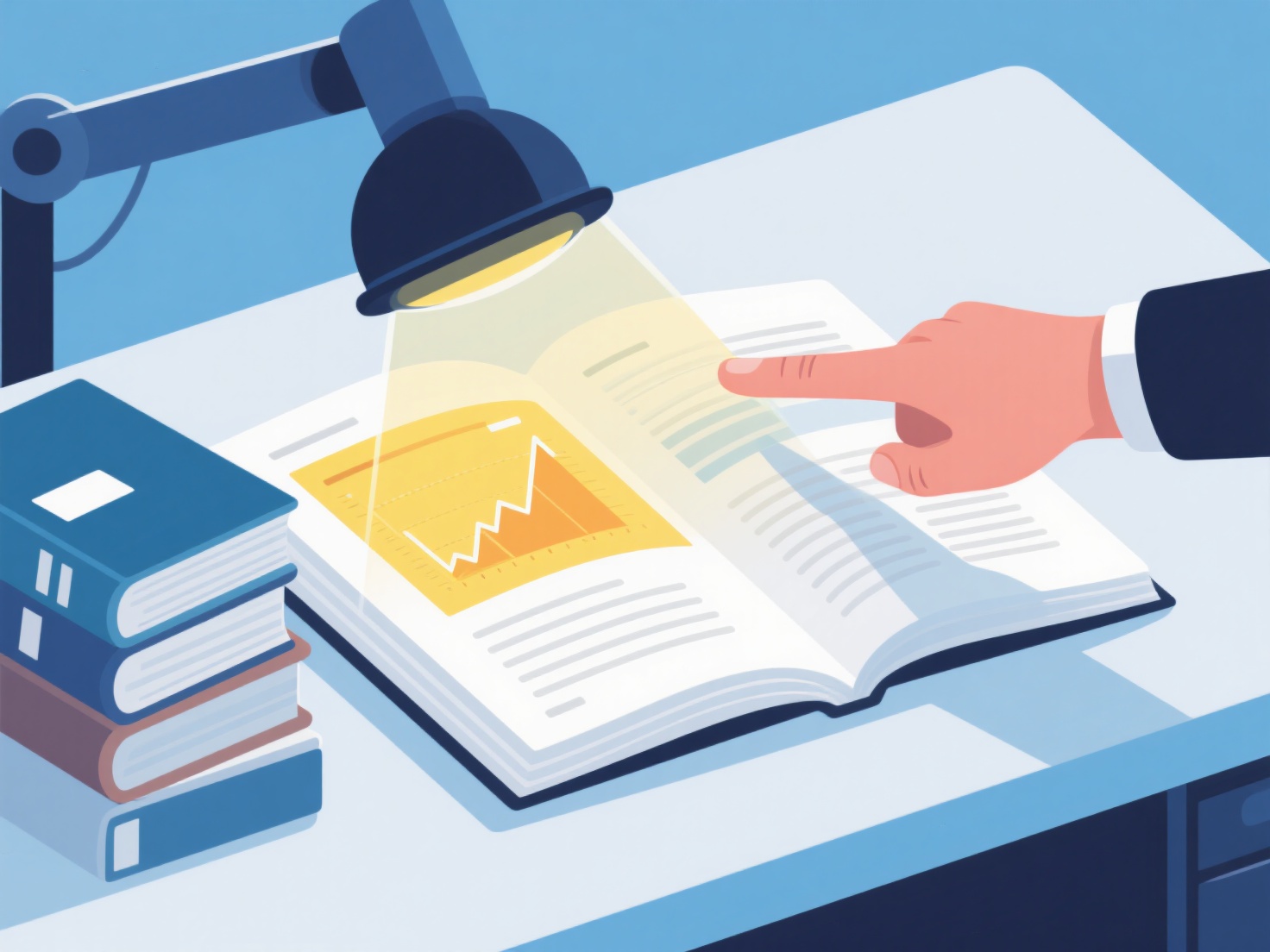
To read scientific journals faster, avoid reading papers front-to-back and instead strategically skim the abstract, figures, and conclusion to extract the core findings.
As a graduate student or early-career researcher, tackling a massive stack of literature can feel overwhelming. The secret to efficient literature reviews is realizing that not every academic paper requires a close, linear read. Adopting a non-linear reading strategy will help you process complex journal articles in a fraction of the time while avoiding information overload.
The Three-Pass Reading Method
Instead of starting at the introduction and slogging through to the references, break your reading into three targeted passes to quickly filter out irrelevant noise.
- The Broad Overview (Abstract and Conclusion): Start here to understand the authors' main research question and their final results. This initial pass takes only a few minutes and will immediately tell you if the paper is relevant to your own work or if you can move on.
- The Visual Scan (Figures and Tables): In scientific articles, the data tells the real story. Look closely at the charts, graphs, and their accompanying captions. A well-constructed paper will allow you to grasp the primary experimental outcomes just by reviewing its visual elements.
- The Deep Dive (Methodology and Discussion): Only read these dense sections if the paper is highly relevant to your research. If you are trying to replicate a study, understand a specific lab technique, or critique their limitations, this is where you should focus your energy.
Leverage AI for Faster Comprehension
You no longer have to rely solely on manual skimming to get through dense, jargon-heavy material. When you are struggling to understand a complex paper or just need to extract a specific data point, WisPaper's Scholar QA lets you ask questions directly to the document and traces every answer back to the exact page and paragraph so you can verify claims instantly. This targeted approach saves you from reading pages of background context you already know.
Take Smart, Searchable Notes
Reading faster is only useful if you retain the information. As you skim, write down a one-sentence summary of the paper's main contribution in your own words. Jot down any immediate critiques or ideas it sparks for your own research gaps. By keeping these notes in a centralized reference manager, you prevent the need to re-read the same journal articles weeks later when you finally sit down to write your manuscript.