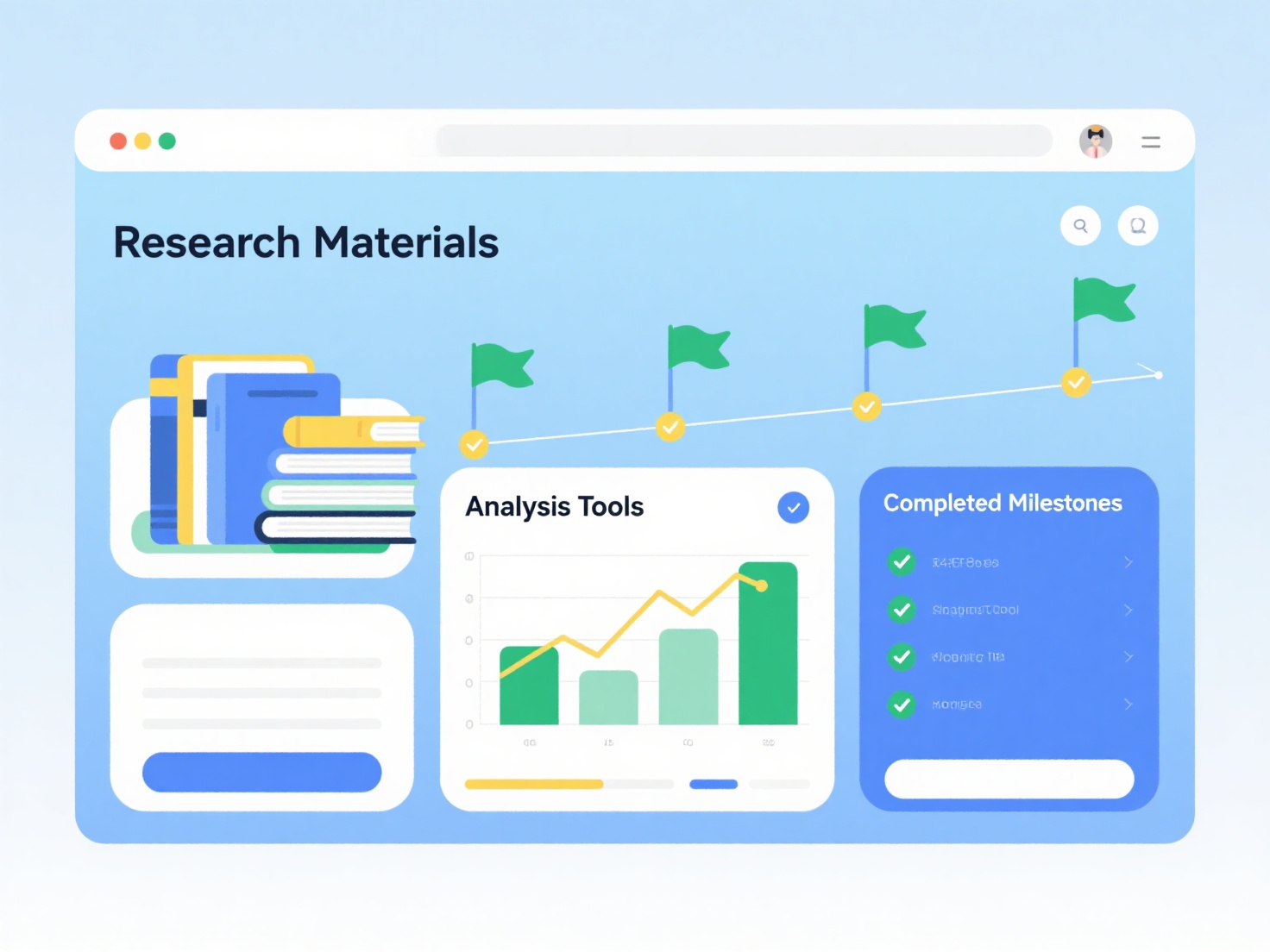
To track research progress effectively, you should establish a centralized system to manage your literature, break your main project into measurable milestones, and maintain a daily log of your findings.
Research projects often span months or even years, making it easy to lose sight of the bigger picture. Without a solid tracking system, graduate students and early-career researchers can quickly become overwhelmed by scattered notes, messy folders, and unclear next steps. Building a structured workflow ensures you stay organized and maintain momentum from your initial literature search to your final draft.
1. Break Your Project into Micro-Milestones
Large goals like "write literature review" or "run experiments" are too vague and frequently lead to procrastination. Instead, break your research phases into actionable micro-milestones. For example, set a goal to "summarize five papers on neural networks" or "clean the demographic dataset." Checking off these smaller tasks provides a psychological boost and gives you a clear, visible record of your forward momentum.
2. Centralize Your Literature and Notes
Scattered PDFs and lost citations are the biggest enemies of research productivity. You need a single, reliable hub for all your reading materials. Instead of losing track of annotated documents across different desktop folders, you can use WisPaper's My Library to organize your references Zotero-style and even use AI to chat with your uploaded papers to instantly recall specific notes and summaries. Keeping your literature centralized means you spend less time searching for sources and more time actively writing.
3. Maintain a Daily Research Journal
Whether you are working in a wet lab or conducting qualitative research, keeping a daily log is crucial. Spend five minutes at the end of every work session to write down what you accomplished, what roadblocks you encountered, and exactly where you need to start the next day. This practice prevents the common "where was I?" confusion when you return to your desk and creates a permanent record of your evolving methodology.
4. Schedule Weekly Review Sessions
Tracking progress requires regular reflection. Block out thirty minutes at the end of each week to review your micro-milestones. Ask yourself what worked well, which tasks took longer than expected, and what your priorities are for the upcoming week. Adjusting your timeline regularly keeps your project realistic and prevents minor delays from snowballing into major setbacks.
5. Visualize Your Timeline
Use visual tools like Gantt charts, Kanban boards, or a simple spreadsheet to map out your long-term deadlines. Visualizing your timeline helps you balance multiple academic responsibilities—like coursework, teaching, and writing—while ensuring your core research stays strictly on schedule.