
Toward Multiscreen Social TV: Bridging Broadcast and Geolocation-Aware Social Sense
100_Toward Multiscreen Social TV with Geolocation-Aware Social Sense.
The paper presents a cloud-based, multiscreen Social TV system that integrates geolocation-aware social media analytics with traditional TV broadcasting. By leveraging "Cloud Clones" and Big Data processing, the system synchronizes live TV programs with real-time social "sense" (topics, entities, and trends) on second-screen devices like tablets and smartphones.
TL;DR
This research pioneers a cloud-centric architecture that links traditional television with real-time social media analytics. By utilizing Cloud Clones—personalized virtual proxies in the cloud—the system delivers a "Social Sense" (real-time subtopics, entity graphs, and keyword clouds) to a second screen. The result is a seamless, interactive experience that reduces information retrieval time by over 80%.
Contextual Positioning
In the landscape of media evolution, this work sits at the intersection of Social TV and Cloud Computing. It moves beyond simple social media integration (like displaying tweets on a screen) by applying Big Data analytics to mine deep insights from geolocation-aware data, positioning itself as a comprehensive framework for the "TV Everywhere" paradigm.
The Problem: The Technology Gap in Modern Viewing
Despite the explosion of social networks, TV viewing remains largely a passive or fragmented experience. Users often browse social media while watching TV (the "second screen" phenomenon), but these two activities are rarely synchronized. Prior works faced three major hurdles:
- Scalability: Handling large-scale user-generated content (UGC) across diverse geolocations.
- Efficiency: High bandwidth costs when transcoding video for different mobile devices.
- User Friction: Complicated login and search processes required to find content-related social discussions.
Methodology: The Architecture of "Social Sense"
The authors proposed a layered architecture consisting of a Back-End System (IaaS/PaaS), the Social TV Subsystem, and the Consumer Layer.
1. The Cloud Clone Concept
The most innovative aspect is the Cloud Clone. Every user is assigned a Virtual Machine (VM) in the cloud that acts as their personal proxy. This clone:
- Fetches and transcodes media content based on the specific device (tablet vs. smartphone).
- Synchronizes sessions across multiple screens.
- Migrates across cloud nodes using a Markov Decision Process (MDP) to minimize transmission and migration costs.
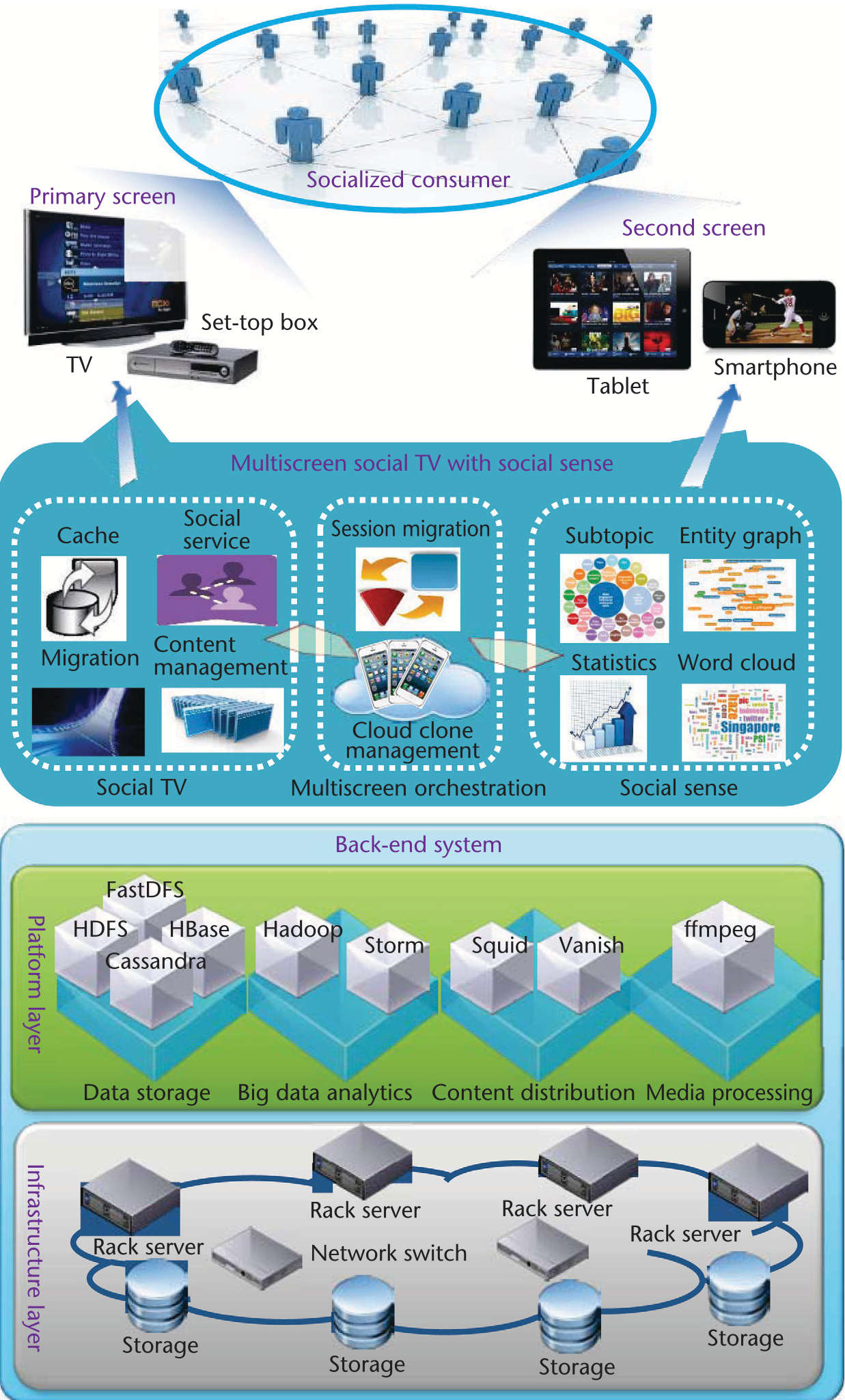 Figure 1: The layered architecture showing the interaction between the cloud back-end and diverse consumer devices.
2. Mining the "Social Sense"
The system doesn't just display a feed; it analyzes it. Using dynamic keyword crawlers and incremental clustering, it extracts:
- Subtopics: What specific parts of the show are people discussing?
- Entity Graphs: Which organizations, people, or locations are associated with the program?
- Interest Degrees: Quantitative metrics of social engagement.
Experiments and Results: Faster, Smarter, Better
The prototype, deployed across NTU and NUS private clouds, was tested using the Singaporean film Ah Boys to Men.
Visualizing Social Data
The system successfully generated complex entity graphs and word clouds, allowing users to dive deeper into the social context of the film without leaving their second-screen application.
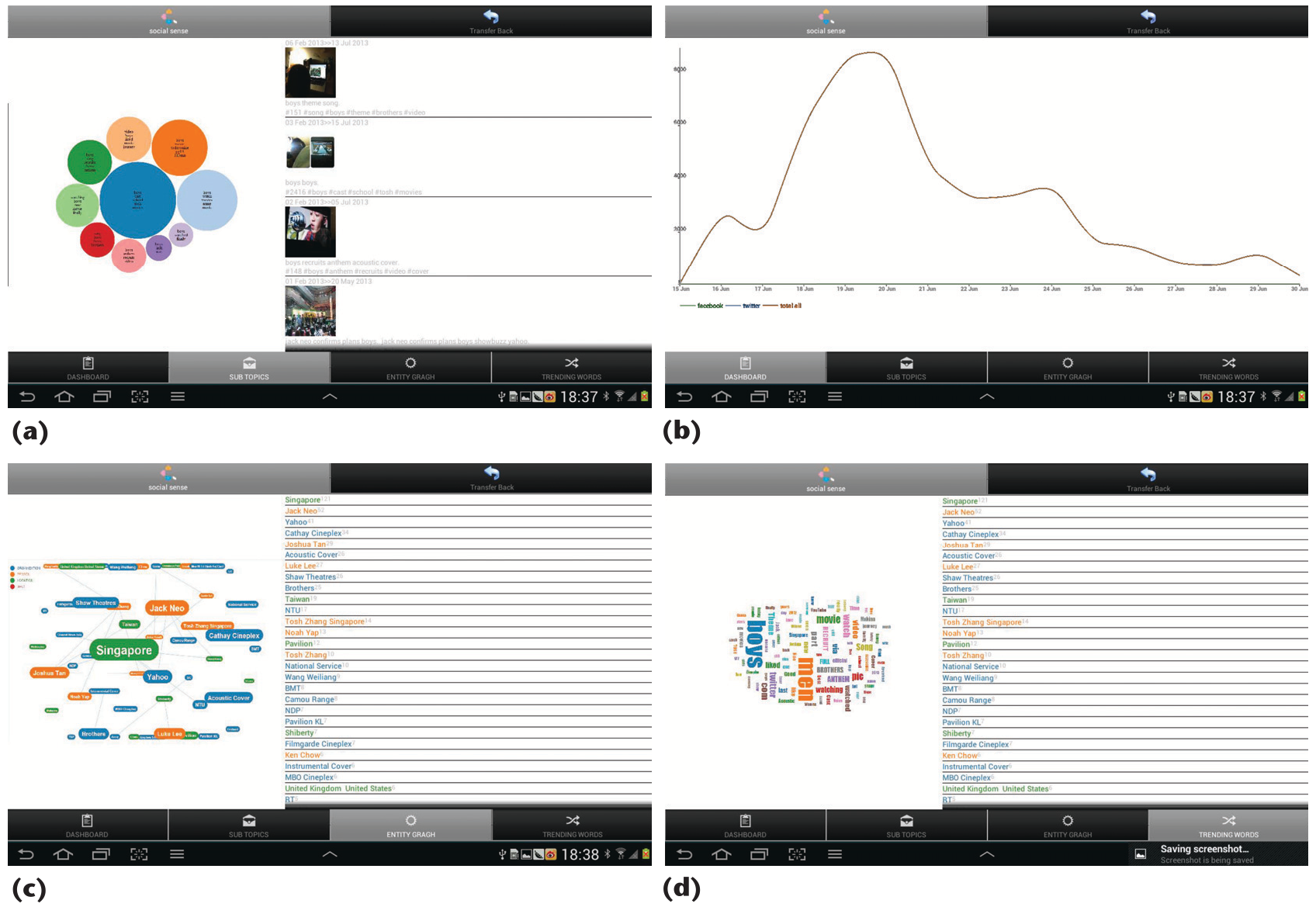 Figure 2: Four aspects of Social Sense: (a) Topics, (b) Degree of Interest, (c) Entity Graph, and (d) Keyword Cloud.
Efficiency Gains in User Experience
A subjective study with 15 participants compared the proposed QR-code orchestration against traditional web-based logins.
- Learning Curve: For first-time users, the system was 6.4x faster.
- Expert Performance: Even for experienced users, the system reduced the process from 40.8 seconds to a mere 4.9 seconds.
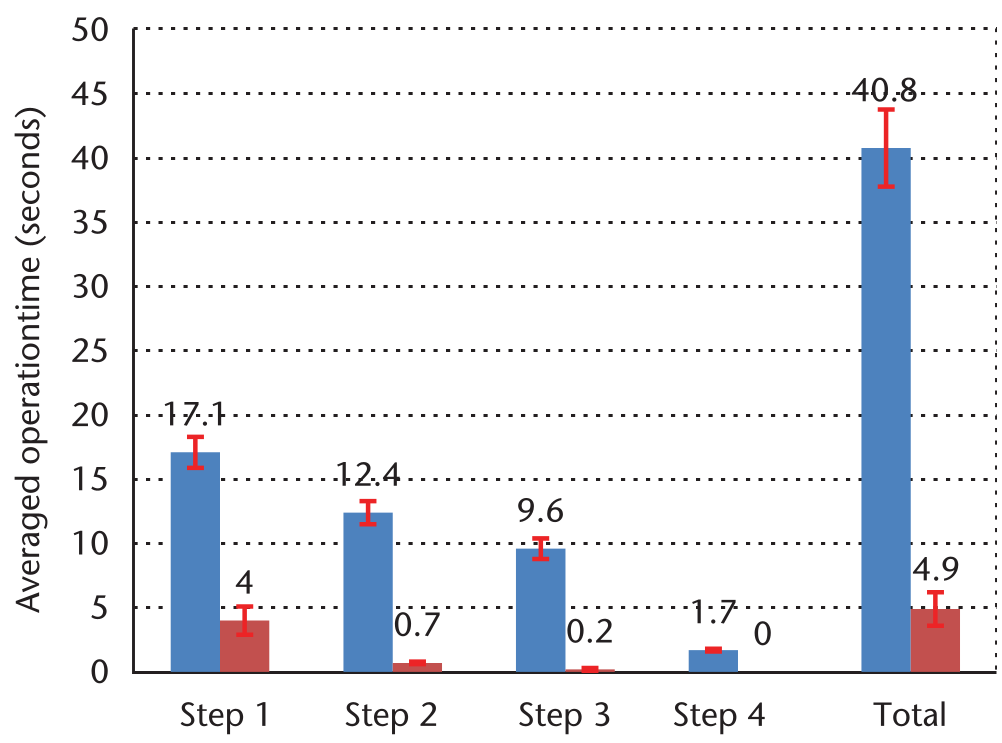 Figure 3: Average retrieval time comparison showing significant efficiency gains (Webpage vs. Our Scheme).
Critical Analysis & Conclusion
Takeaway
The integration of Cloud Clones is a powerful inductive bias for multiscreen systems. It abstracts the complexity of the hardware away from the user, allowing the cloud to handle the "heavy lifting" of data processing and session management.
Limitations
While the system is robust, its reliance on public microblog APIs (like Twitter/X or Facebook) makes it vulnerable to API rate limits and changes in data access policies. Furthermore, the 2013-era NLP techniques used (clustering/topic modeling) may now be surpassed by modern Transformers and LLMs in terms of sentiment accuracy.
Future Outlook
This work lays the foundation for Ubiquitous Media. As we move toward 6G and edge computing, the "Cloud Clone" might evolve into an "Edge Agent," offering almost zero-latency social interactivity and perhaps even Augmented Reality (AR) overlays for live TV.