
Building Industrial IoT Analytics: An Open-Source Blueprint for Environmental Prediction
10000_Building IoT Analytics and Machine Learning with Open Source Software for Prediction of Environmental Data.
The paper presents a comprehensive IoT analytics platform built entirely on open-source software, designed for environmental monitoring in industrial and high-tech zones. It integrates a Lambda architecture for hybrid data processing and utilizes Recurrent Neural Networks (RNN) for predictive environmental modeling, specifically achieving successful time-series forecasting for ambient temperature.
TL;DR
This research tackles the high costs and rigidity of commercial IoT platforms by proposing a custom-built, open-source stack using Lambda Architecture. By combining real-time streaming (Kafka) with long-term data warehousing (MongoDB) and predictive modeling (RNN), the authors provide a scalable framework for industrial environmental monitoring that balances "speed" with "accuracy."
The "Black Box" Problem in Industrial IoT
While giants like AWS and IBM provide powerful IoT hubs, they often present two major hurdles for mid-sized industrial zones: Cost and Inflexibility. These platforms are designed for general use cases; forcing them into niche environmental monitoring tasks often results in high operational overhead and data silos. The authors argue that the future of smart cities lies in open-source customization that allows enterprises to own their data pipelines and prediction logic.
Methodology: The Power of Partitions
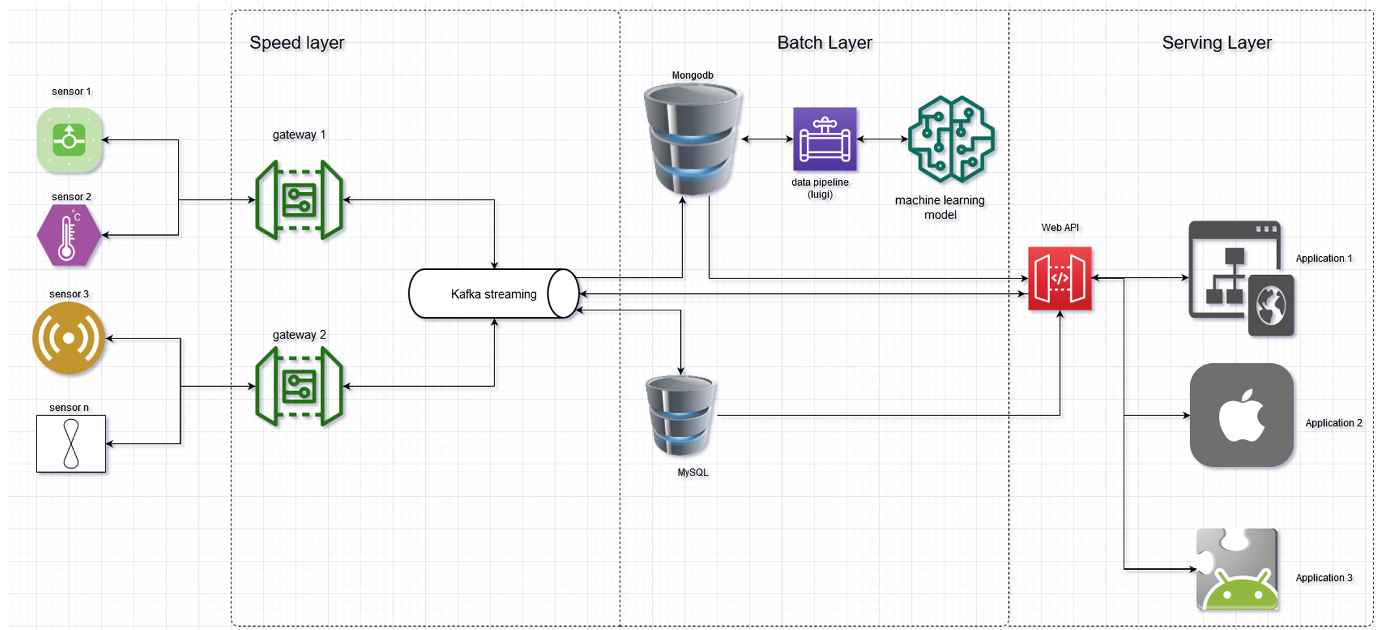
The heart of this system is the Lambda Architecture, which solves the "accuracy vs. latency" trade-off.
- Speed Layer (Real-time): Handles data coming in via MQTT from sensors (BLE, ZigBee, LoRa). This path uses Kafka to provide instant visibility into current environmental states.
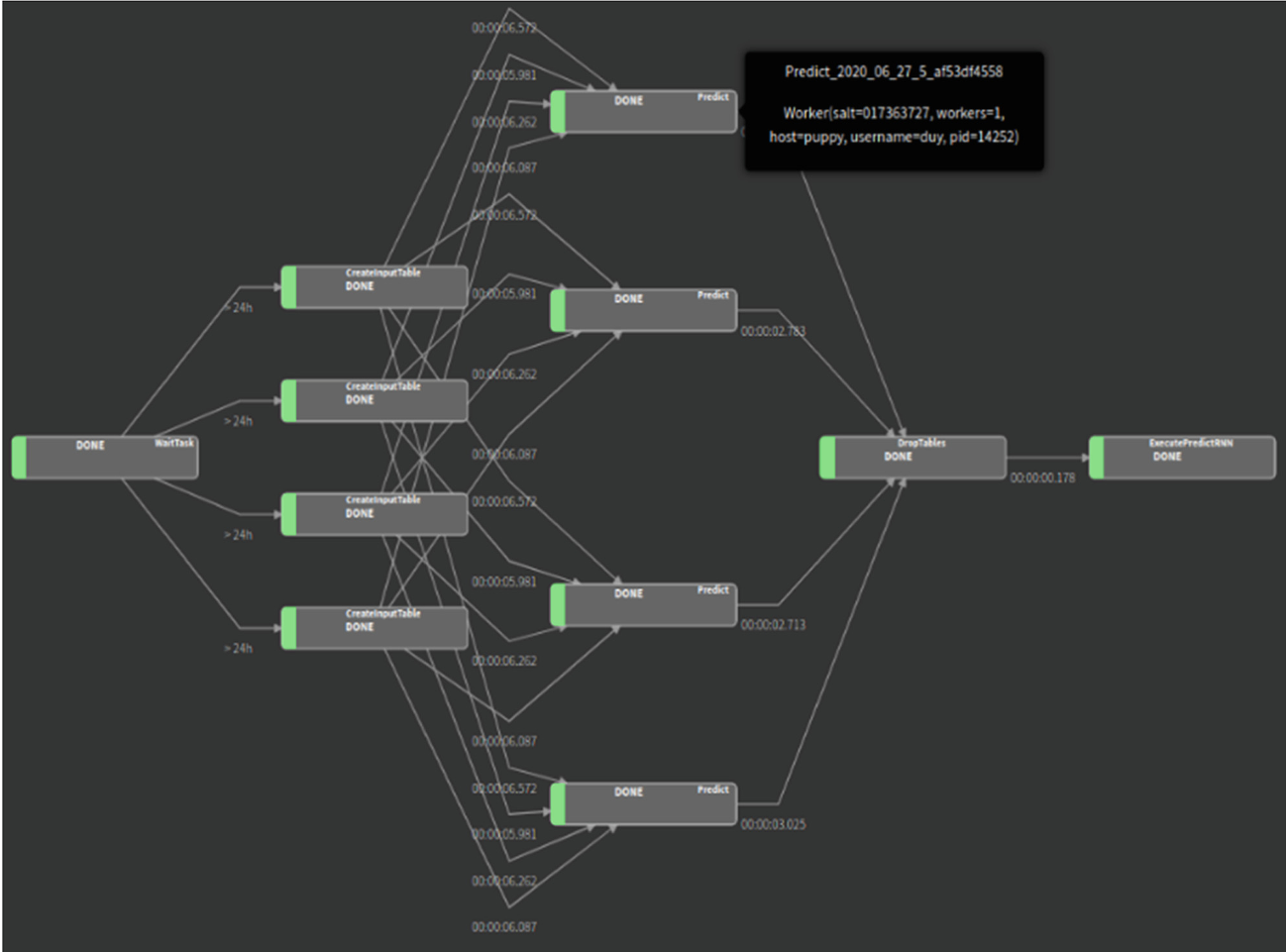
- Batch Layer (Deep Processing): Historical data is stored in MongoDB. Here, the Luigi pipeline manager orchestrates the data cleaning and training of Recurrent Neural Networks (RNNs).
- Serving Layer: Provides unified APIs for web dashboards to query both the live status and the results of predictive analyses.
Why RNNs for Environmental Data?
Environmental parameters like temperature, humidity, and wastewater pH are not random; they are Time-Series data. Traditional Neural Networks treat each data point in isolation. However, the authors utilize RNNs because they possess "memory"—the ability to use past sequences of data to inform future predictions. This is critical for anticipating critical failures or environmental violations in industrial zones before they occur.
Experimental Results and Deployment
The system was deployed in a real-world scenario at the Sai Dong Industrial Zone in Hanoi. The hardware layer utilized a versatile gateway supporting BLE, WiFi, and LoRa to monitor air and water quality.
- Data Visualization: The platform generates granular statistics over 1-month intervals, providing industrial managers with actionable insights.
- Prediction Performance: The RNN models were validated against ambient temperature logs, showing a high degree of correlation between predicted trends and actual sensor readings.
Deep Insight: A Step Toward Sovereign IoT
The significance of this work goes beyond the code. It demonstrates that by leveraging the "Big Data" principles (Lambda/Kappa architectures) and modern deep learning, local governments and private enterprises can build Sovereign IoT systems. These systems are fault-tolerant, highly scalable, and, most importantly, free from the recurring licensing fees of the tech giants.
Limitations and Future Work
While the ambient temperature prediction is a solid proof-of-concept, more complex parameters like multi-pollutant air quality indexes may require more sophisticated architectures like ST-GCN (Spatio-Temporal Graph Convolutional Networks) to account for spatial relationships between different sensor nodes.
Conclusion
This paper serves as a technical manual for those looking to build robust IoT analytics without the "Cloud Tax." By integrating Kafka, MongoDB, and RNNs, the authors have bridged the gap between raw sensor data and intelligent, predictive environmental management.