
CHIstory: When the Future Reinvents the HCI Past
10781_CHIstory.
CHIstory is a speculative and parodic video project presented at CHI 2009 that reimagines the history of Human-Computer Interaction (HCI) from the perspective of the year 2109. Featuring HCI pioneer Jonathan Grudin as a futuristic historian, the work recontextualizes seminal systems like NLS and Sketchpad within a fictional post-apocalyptic narrative.
TL;DR
CHIstory is a provocative piece of "academic performance art" that debuted at CHI 2009. Set in the year 2109, it presents a future where a "Great Usability Cataclysm" in 2068 has wiped out our digital heritage. A disembodied historian, played by Jonathan Grudin, attempts to piece together the primitive origins of HCI using fragmented archival footage of legends like Ivan Sutherland and Douglas Engelbart.
Contextualizing the Cataclysm: Why Parody Matters
In the fast-paced world of technology, we often suffer from "historical amnesia." We focus so much on the next SOTA (State of the Art) that we forget the socio-technical roots of our tools. The authors of CHIstory—an all-star cast including Michael Bernstein and Paul André—argue that by looking at our field through a "funhouse mirror," we can see its absurdities and triumphs more clearly.
The motivation here wasn't just to entertain. By creating a fictional gap in history (the 2068 Cataclysm), the authors force the viewer to ask: What would a future archaeologist think of our current "cutting-edge" interfaces? Would they see genius, or would they see the seeds of a usability disaster?
Methodology: The Future Historian's Lens
The project uses a narrative framing device. By casting Jonathan Grudin, a real-world historian of the field, as the voice of the future, the work gains a layer of meta-irony. The methodology involves:
- Recontextualization: Taking real footage from 1960s systems (e.g., NLS, Sketchpad) and describing them as if they were mysterious ancient artifacts.
- Speculative Fiction: Projecting current usability challenges into a global "dark age" of bad design.
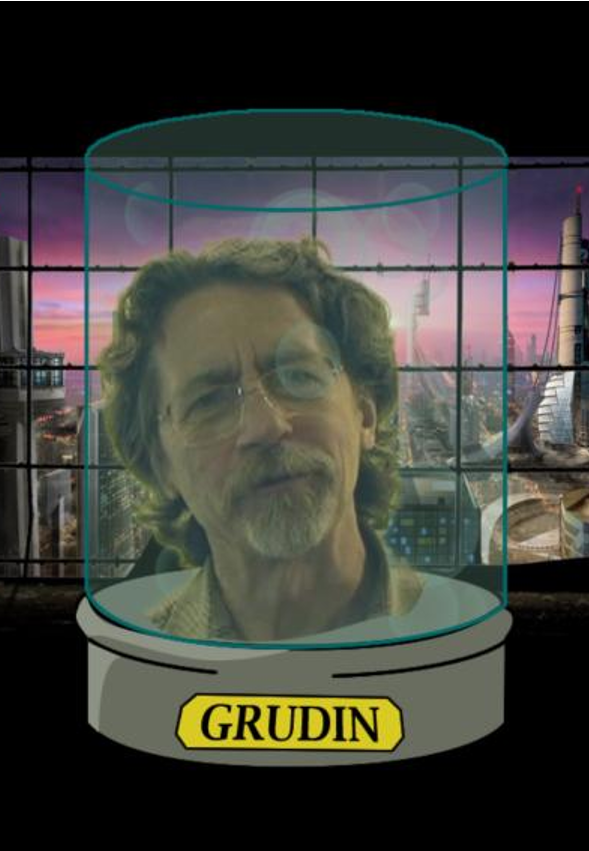 Figure 1: Jonathan Grudin, the intrepid historian, mediating between our present and a perplexed future.
A Timeline of HCI Milestones
The video serves as a "Greatest Hits" of HCI, referencing 23 seminal works. Some of the core systems discussed include:
- Sketchpad (1964): Sutherland’s foundational work on graphical communication.
- NLS (1962): Engelbart’s vision for augmenting human intellect.
- Modern HCI (1990s-2000s): Works on tangible interfaces, wearable systems, and collaborative virtual environments.
The "results" of this reconstruction are intentionally "perplexing." By stripped-away original intent, the video shows how easily the "why" of technology can be lost, even if the "how" (the footage) remains.
 Figure 2: The visual identity of CHIstory, blending archival aesthetic with futuristic mystery.
Critical Insight: The Value of Reflection
CHIstory is more than just a joke; it is an Ablation Study of Time. It asks us to remove the context of our current industry and see if our designs hold up.
Key Takeaways:
- Inductive Bias of Design: Our current designs are heavily influenced by the constraints of our time. Future observers might find our "innovations" (like the mouse or touchscreens) to be quaint or even counter-intuitive.
- Preservation: It highlights the fragility of our digital history. If the "Cataclysm" happened today, would our documentation be enough to rebuild?
Conclusion
As we move toward 2068, the year of the fictional cataclysm, CHIstory remains a hauntingly funny reminder that we are currently writing the "ancient history" of the next century. It challenges researchers to build systems that aren't just usable today, but are worth being remembered by the historians of tomorrow.