
Data Posting: Revolutionizing Big Data Search through Social Intelligence
1148_Discovering User Behavioral Features to Enhance Information Search on Big Data.
The paper introduces a comprehensive User Behavior-Oriented Search Framework designed for Big Data environments, specifically applied to tourist recommendations. It integrates a novel approach called "Data Posting" to enrich information sources with discovered social behavioral features and influence spread models, achieving efficient faceted navigation with response times under 1.5 seconds for complex queries.
Executive Summary
TL;DR: This research tackles the "Big Data search gap" by moving beyond simple keyword indexing. The authors introduce a framework that doesn't just store data but "posts" it—enriching raw records with social dimensions such as user influence and behavioral patterns. By combining NoSQL scalability (HBase/Solr) with a new formal theory of Data Posting, the system provides a faceted search experience that adapts to the social context of the user.
Academic Positioning: This work bridges the gap between Database Theory (Data Exchange) and Information Retrieval, transforming the passive role of a database into an active, intelligent provider of search guidance.
1. The Core Tension: Seeking vs. Finding in Big Data
The paper identifies a critical flaw in current Intelligent Information Systems (IIS). Most systems offer a binary choice: Searching (free-text keywords) or Browsing (fixed taxonomies). In a Big Data context, where "Velocity" and "Variety" dominate, fixed taxonomies are dead on arrival.
The researchers argue that search should be Faceted and Dynamic. If your friends are all raving about "fresh fish" in Milan, the system should dynamically create a "Fresh Fish" category (dimension) for your restaurant search, even if that category didn't exist in the original database schema.
2. Methodology: From Data Exchange to "Data Posting"
The technical heart of this paper is the transition from classical Data Exchange to Data Posting.
The Logic of Data Posting
In traditional Data Exchange, we move data from Source to Target while satisfying constraints. The problem? It often leaves "existential variables" (missing values) as null or arbitrary.
The authors propose Data Posting using Count Constraints. Instead of just saying "a restaurant has a category," they use logic to say: "A restaurant has category 'C' ONLY IF at least 10 distinct high-influence users have posted reviews supporting it." This turns the migration process into a knowledge-discovery process.
The DIM-DIFF Algorithm
To decide which dimensions (categories) are worth "posting," the authors developed the DIM-DIFF algorithm based on the Linear Threshold (LT) Model.
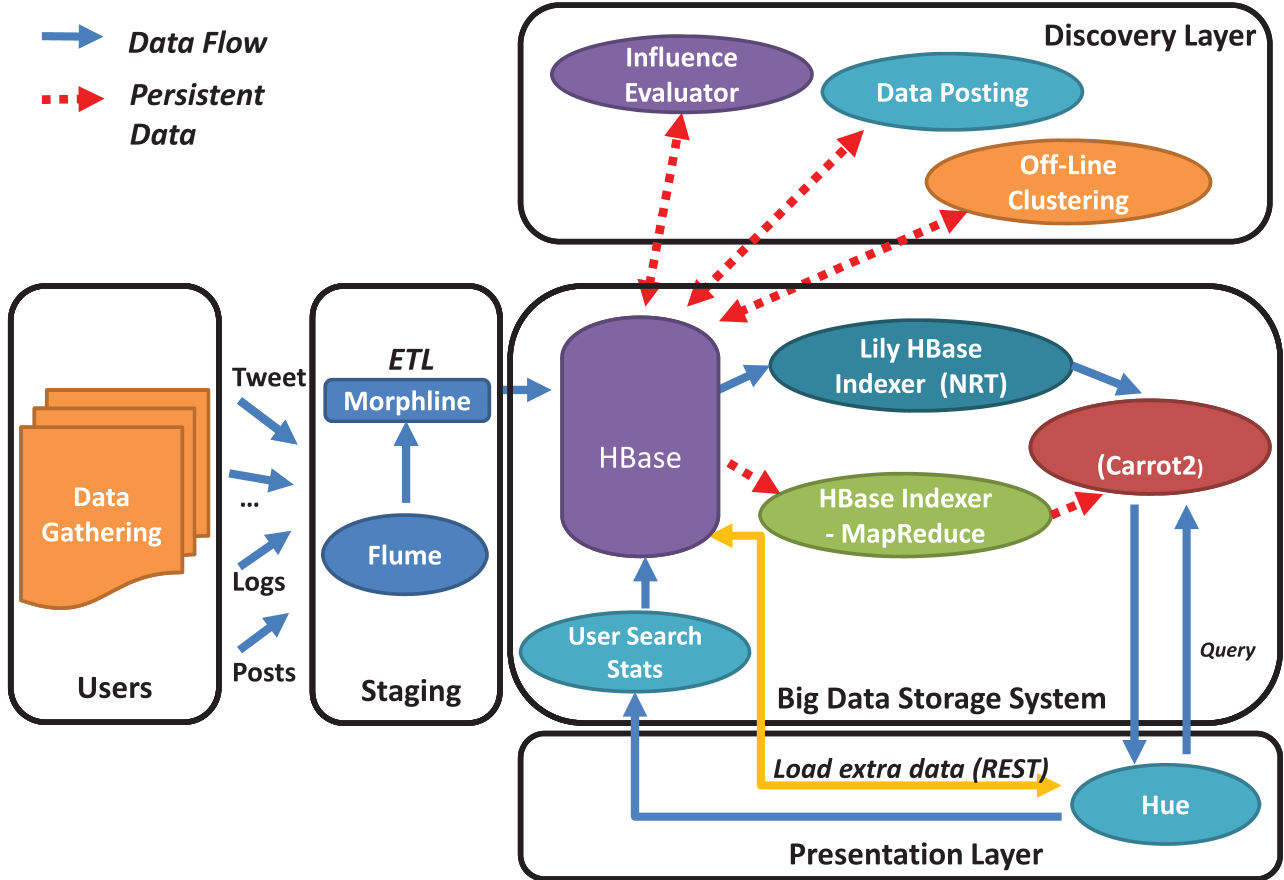 Figure 1: The Multi-layered System Architecture integrating HBase, Solr, and the Discovery Layer.
The algorithm calculates the probability of a "dimension cascade" through a social graph. If the influence weight between users is high, a search preference utilized by user is likely to be helpful for user .
3. Implementation and Performance
The authors didn't just write a theory; they built a beast of a system using the Cloudera stack (Hadoop, HBase, Solr, Flume).
SOTA Benchmarks
One of the most impressive feats is the system's ability to handle one billion tuples while maintaining near-constant latency.
- Read Latency: Stable at ~1ms.
- Write Latency: Stable at ~6ms.
- Query Performance:
| Keywords | Avg Response Time (s) |
|---|---|
| 1 | < 1.0 |
| 3 | 1.23 |
| 5 | 1.45 |
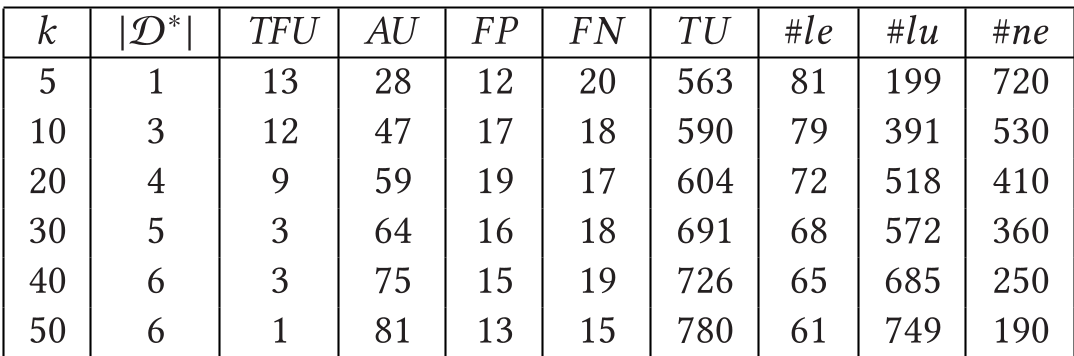 Figure 2: Performance analysis on Yelp data showing high user activation (AU) and dimension usage (TU).
4. Critical Insights: Leaders, Lurkers, and Neutrals
The study categorizes users based on their resonance with the "Data Posting" suggestions:
- Leaders: Originators of search dimensions that cascade.
- Lurkers: Users who follow suggested social facets.
- Neutrals: Users immune to social influence.
Extensive testing on Facebook, Twitter, and Yelp revealed that Yelp users exhibit the highest "Activation" (AU) because food and shopping reviews are structurally richer than ephemeral tweets, allowing the Data Posting logic more "Count Constraints" to latch onto.
5. Conclusion: The Future of Semantic Search
The paper concludes that the next generation of Search Engines will not just index what is there, but infer what should be there based on social dynamics.
Limitations & Future Work
While the system is robust, the current model assumes a degree of social homogeneity. Future iterations could benefit from Sentiment Analysis to ensure that "cascading dimensions" are based on positive sentiment rather than controversial or negative viral trends.
Takeaway for the Industry: For architects building recommendation engines, this paper provides a math-heavy yet practical blueprint for using NoSQL sidecars (like Solr) to perform real-time "Data Posting" that enriches your primary data store on the fly.