
Beyond Black-Boxes: Extracting Actionable Intelligence for Precision Agriculture
12306_Applying Machine Learning to Extract New Knowledge in Precision Agriculture Applications.
The paper proposes an iterative machine learning process model to automate "plant-driven" crop management in precision agriculture. By applying classification algorithms like J48 and DecisionStump to wireless sensor data, the authors extract human-readable decision rules for diagnosing plant health and stress states, achieving classification accuracies up to 100% for specific irrigation-related triggers.
TL;DR
This study moves Precision Agriculture (PA) from simple monitoring to proactive, "plant-driven" management. By utilizing an iterative machine learning workflow, researchers transformed raw sensor data (soil moisture, leaf temperature, photosynthetic rates) into a transparent library of IF-THEN decision rules. This approach not only provides high-accuracy stress detection (up to 100% for specific indicators) but also ensures the system remains functional even when individual sensors fail.
Background: The Shift to Plant-Driven Decisions
In the "doing the right thing at the right time" philosophy of Precision Agriculture, the bottleneck has long been the Decision Support System (DSS). Most existing solutions fall into two traps:
- Mechanistic Inflexibility: Rigid models that don't account for real-time biological variance.
- Black-Box Complexity: Neural networks that offer predictions without explanations, making them difficult for agronomists to trust or verify.
The authors argue that for a system to be truly "proactive," it must learn from the field while remaining human-interpretable.
Methodology: The Hybrid Learning Model
The core of this research is a collaborative process between a Domain Expert (Botanist) and a Machine Learning Expert. They utilized the WEKA workbench to process data from the PLANTS project, involving 96 strawberry plants equipped with a variety of sensors.
The Workflow
The process follows an expanded inductive loop:
- Data Acquisition: Monitoring ETR (Electron Transport Rate), PAR (Photosynthetic Active Radiation), and Soil Moisture (SM).
- Feature Engineering: Creation of derived attributes like (Ambient - Plant Temperature) to better capture physiological stress.
- Rule Induction: Using algorithms such as J48 (C4.5) and DecisionStump to generate symbolic rules.
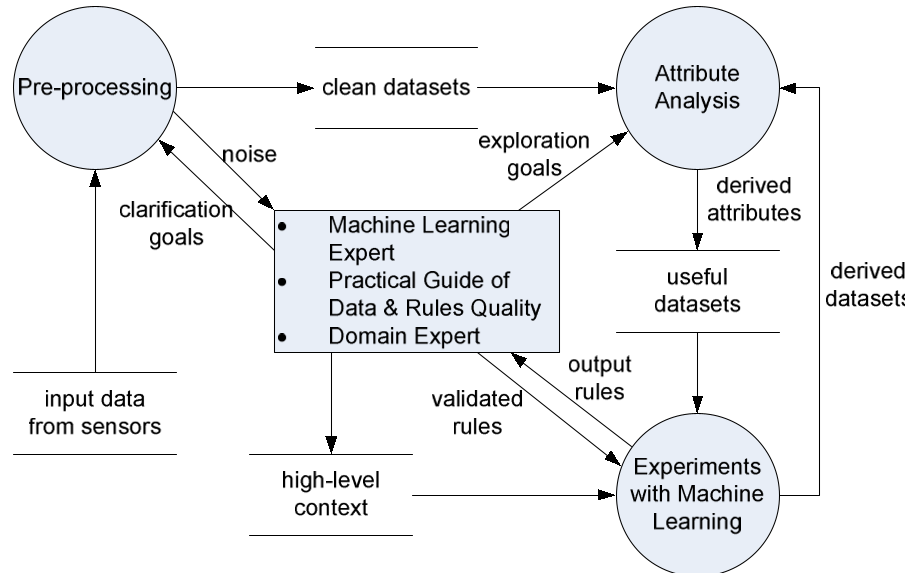 Figure 1: The iterative knowledge discovery cycle proposed by the authors.
Experiments and Key Results
The study analyzed two primary datasets: "ETR_Photosynthetic Activity" and "eMultiPlant." The goal was to classify states like HEALTHY, HEAT_STRESS, and DROUGHT_STRESS.
Expert-Validated Rules
Unlike deep learning weights, the output here is a set of rules that an agronomist can read and approve:
- Irrigation Trigger:
IF SM < 0.6 THEN DroughtStress is TRUE(98.2% Accuracy). - Heat Response:
IF Δtemp <= -1 THEN HeatStress is TRUE(100% Accuracy).
Performance Comparison
The authors compared several classifiers. Interestingly, while OneR provided high overall accuracy, DecisionStump was favored for its lower False Positive (FP) rate regarding healthy plants. In agriculture, treating a healthy plant as stressed (Type I error) is often safer than ignoring a stressed plant (Type II error).
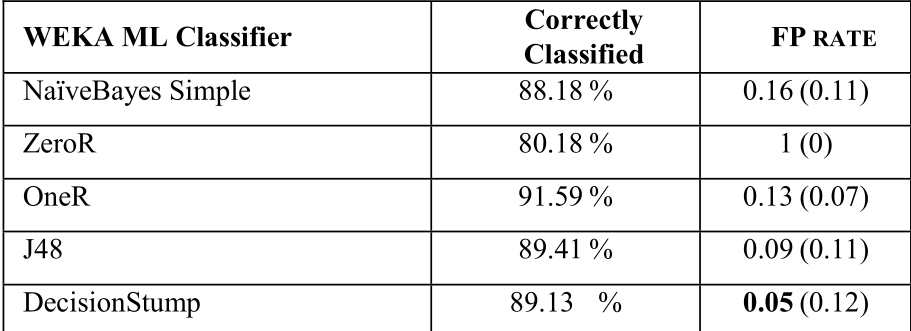 Table 1: Comparative metrics of various ML classifiers on agricultural datasets.
Deep Insight: Resilience through Redundancy
One of the most profound insights of this paper is the solution to sensor failure. In a typical greenhouse, sensors break. If a model only knows how to diagnose "Status" using Soil Moisture (SM), a broken probe renders the system useless.
However, the rule-induction methodology discovered multiple paths to the same diagnosis. As seen in the results:
Statuscan be predicted byInfPAR.Statuscan also be predicted byETR425orSM.
This creates a resilient knowledge base where the system can "fail over" to secondary parameters if the primary sensor data is missing.
Critical Analysis & Conclusion
Takeaways
The marriage of machine learning with symbolic logic (rules) is a powerful paradigm for Precision Agriculture. It bridges the gap between raw Big Data and actionable botanical knowledge.
Limitations
- Generalizability: The rules are currently tailored to strawberry plants in a controlled glasshouse. Applying these to open-field cereal crops would require a significantly different feature set.
- Static Nature: While the rules can be updated, the paper doesn't detail an "online learning" system where the model adapts autonomously without expert intervention.
Future Outlook
The next step for this technology is integrating these rule-based systems into edge devices (IoT gateways), allowing for decentralized, "smart" irrigation controllers that don't depend on constant cloud connectivity to make critical life-or-death decisions for the crop.