
COVIDSenti: Decoding Global Panic and Policy acceptance through 90,000 Tweets
13145_COVIDSenti A Large-Scale Benchmark Twitter Data Set for COVID-19 Sentiment Analysis.
This paper introduces COVIDSenti, a large-scale benchmark dataset of 90,000 manually labeled tweets from the early COVID-19 pandemic (Feb-March 2020). Using state-of-the-art NLP models, the authors achieve a baseline accuracy of 94.8% for sentiment classification using BERT.
TL;DR
COVIDSenti is a massive benchmark dataset designed to track how the world felt during the chaotic onset of the 2020 pandemic. By analyzing 90,000 tweets with architectures ranging from traditional SVMs to BERT, researchers established a high-accuracy baseline (94.8%) for sentiment detection. The study highlights a crucial "sentiment pivot" in mid-March 2020, where public hysteria began evolving into a structured acceptance of government interventions.
Background & Motivation: The Infodemic Challenge
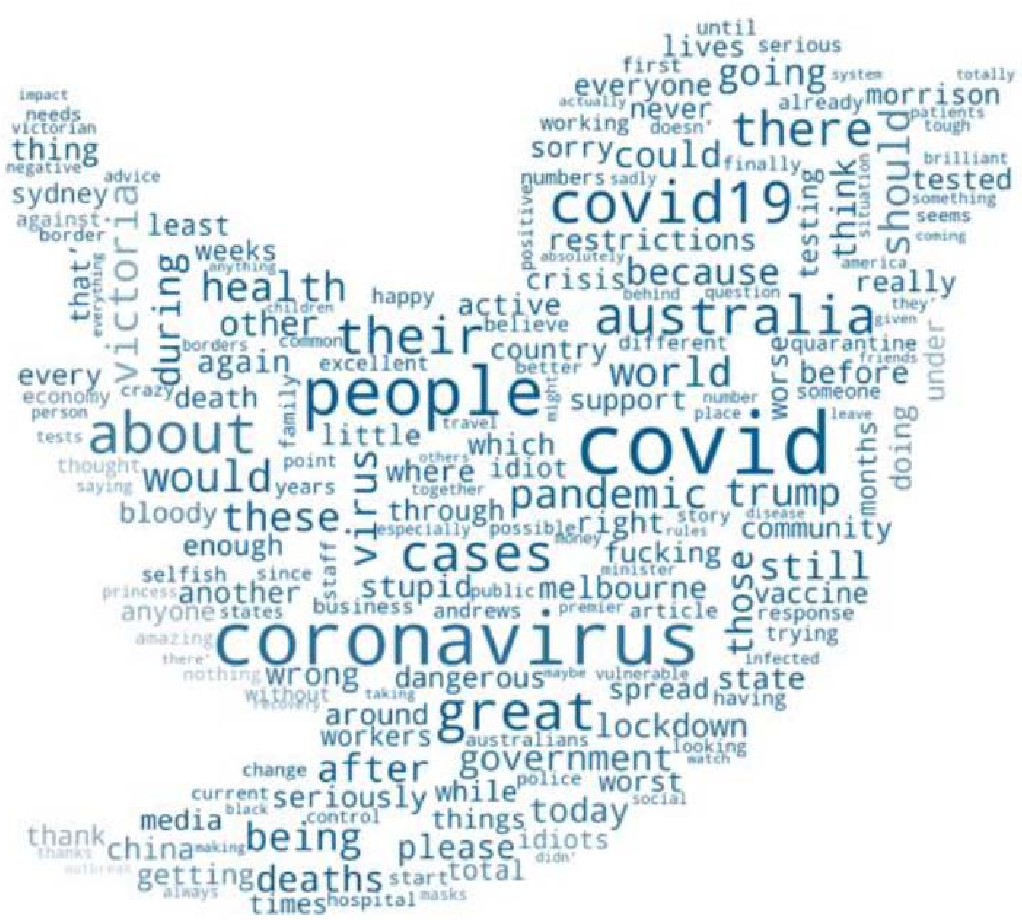
During the early stages of COVID-19, social media became a breeding ground for what the WHO called an "infodemic"—a surfeit of information, some accurate and some not, that makes it hard for people to find trustworthy sources. Traditional sentiment analysis tools often struggle with the "syntactically eccentric" nature of Twitter: slang, URLs, emoticons, and lack of context.
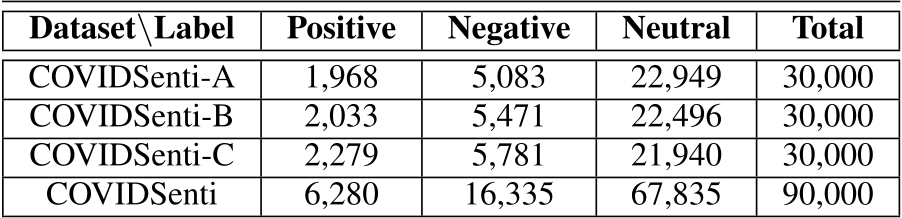
The authors recognized that to combat misinformation, we first need a ground-truth dataset that captures the evolution of public opinion. COVIDSenti was created to bridge this gap, providing a large-scale, 3-class (Positive, Negative, Neutral) benchmark for the research community.
Methodology: From Raw Noise to Structured Insights
The research follows a rigorous pipeline:
- Selection & Labeling: 2.1 million tweets were filtered down to 90,000 unique English tweets using keywords like #StayHome and #Lockdown.
- Sophisticated Preprocessing: Beyond basic cleaning, the authors used word segmentation to break down complex hashtags (e.g.,
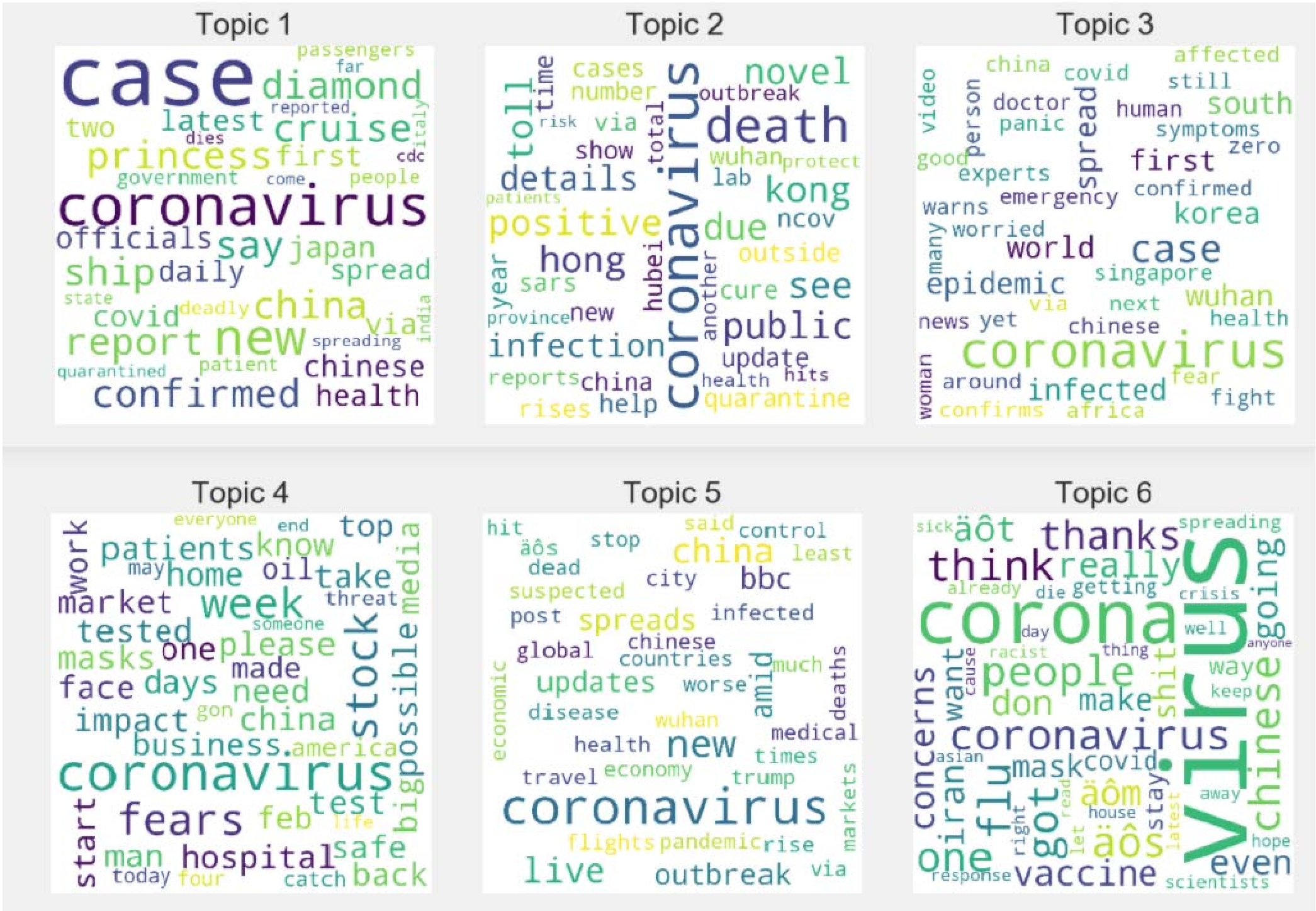
#stayathomestaysafestay home stay safe). - Topic Modeling (LDA): Using Latent Dirichlet Allocation, they identified 6 core discourse pillars, ranging from "Death Toll/Wuhan" to "Government Response/Impact."
Deep Learning vs. Traditional Classifiers
The study provides a comprehensive benchmark of the NLP landscape. The authors didn't just test one model; they compared:
- Classical ML: SVM, Random Forest, Naive Bayes (using TF-IDF).
- Static Embeddings: Word2Vec, GloVe, fastText.
- Deep Learning: CNN and Bi-LSTM.
- Transformers: BERT, DistilBERT, XLNet, ALBERT.
The results were clear: BERT is the king of context. By using bidirectional attention, BERT captured the subtle nuances of pandemic-related fear that traditional word vectors (like Word2Vec) missed entirely.
Key Insights: The Mid-March Shift
One of the most profound findings was the temporal analysis of sentiment.
- Pre-Mid-March: High frequency of "Negative" sentiment, driven by fear of the unknown, economic anxiety, and distrust in government.
- Post-Mid-March: A notable shift toward "Neutral" and "Positive" (relative) sentiment as populations began to favor lockdowns and social distancing as a means of collective protection.
Critical Analysis & Conclusion
While BERT achieved an impressive 94.8% accuracy, the study highlights that sentiment analysis on Twitter remains an uphill battle due to "adversarial texts" and evolving jargon.
The Takeaway: For public health officials, this research proves that social media isn't just "noise"—it is a real-time sensor for public mental health. By deploying BERT-based classifiers on datasets like COVIDSenti, governments can identify spikes in public panic or misinformation before they translate into non-compliance or social unrest.
Future Work: The authors suggest extending this to multi-modal data (images/videos) and multi-language support to capture a truly global perspective on future health crises.