
Digital Sentinels: Tracking Community Evolution and Leadership During the 2011 Japan Tsunami
1400_Evolution of communities on Twitter and the role of their leaders during emergencies.
This paper presents a hybrid methodology combining Natural Language Processing (NLP) and Social Network Analysis (SNA) to track community evolution and leadership roles on Twitter during the 2011 Japan Tsunami. By extracting "actionable events" and mapping communication structures across time slices, the authors demonstrate how traditional media outlets emerge as central "diffusers" and "gatekeepers" during natural disasters.
TL;DR
During a crisis, social media is a double-edged sword: a vital lifeline for information and a chaotic storm of data. This paper introduces an automated methodology that fuses Natural Language Processing (NLP) and Social Network Analysis (SNA) to extract actionable signals from Twitter. By analyzing the 2011 Japan Tsunami, the researchers identified how "actionable" communities form, how members synchronize their behaviors with leaders, and why traditional media remains the structural backbone of emergency communication.
Background: Beyond the Noise
When the Tsunami hit Japan in 2011, Twitter became a global "milling" ground—a place for people to seek confirmation and provide emotional support. However, for emergency managers, the "sheer volume of data" is a barrier. The core challenge isn't just seeing what people are saying, but understanding who is leading the conversation and whether their messages result in actual "prescribed actions" (like evacuation).
Methodology: The NLP-SNA Fusion
The researchers' approach is distinctive because it doesn't just treat tweets as text; it treats them as behavioral markers.
1. NLP Pipeline: Actionable Event Extraction
The authors used a bootstrapping framework to classify tweets into three "Actionable Events":
- Receive the Warning: Propagation of initial threat data.
- Seek Information/Confirmation: The "milling" process where users verify facts.
- Take Prescribed Action: Reporting on physical responses (e.g., evacuating).
Beyond keywords, they used Event Attributes:
- Modality: Is the event being spoken of as a real occurrence (asserted)?
- Polarity: Is the event definitively happening (positive)?
2. SNA Pipeline: Identifying the Core
The paper utilizes a Random Walk Algorithm to detect communities within time-sliced networks. This is crucial because social structures during disasters are not static; they evolve as the wave approaches and recedes.
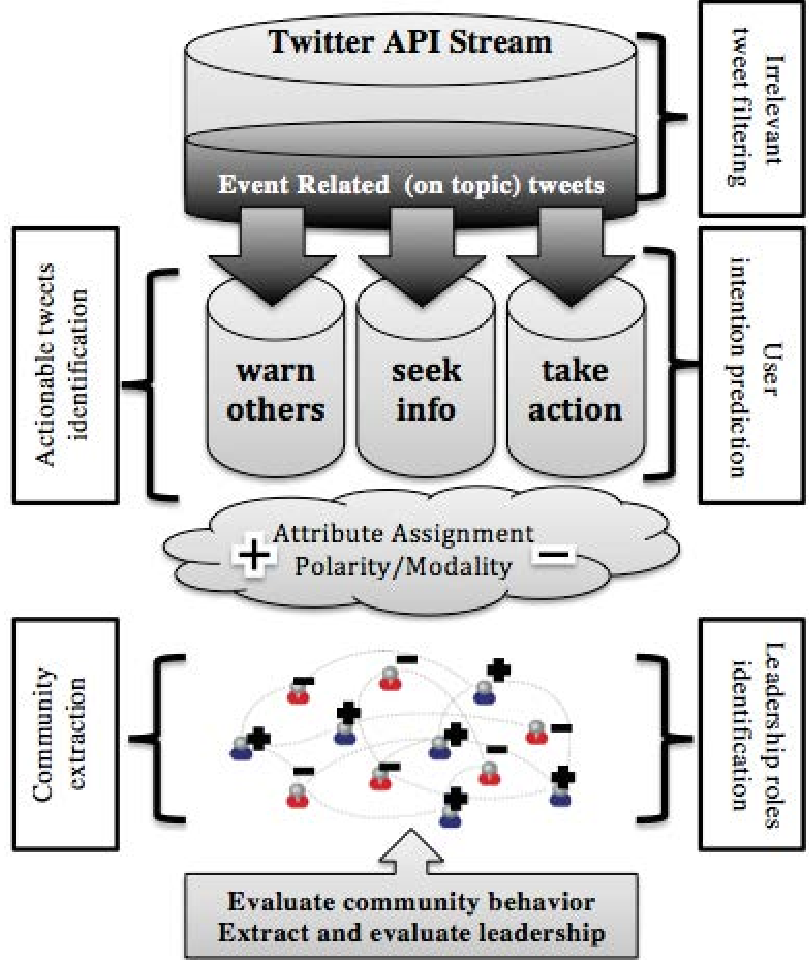 Figure 1: The hybrid methodology workflow, transitioning from raw data to behavioral insights.
Key Insights: Leaders vs. Members
The study’s findings provide a fascinating look at social hygiene during a disaster:
- Behavioral Cohesion: Once a community is formed (detected via SNA), over 80% of its members exhibit the exact same behavior (NLP-assigned attributes). If a leader urges evacuation with positive polarity, the community mirrors that intent.
- The Persistence of Leaders: A striking discovery was that while "normal" members appear in the network for specific time slices (e.g., only during the warning phase), leaders (traditional media accounts like @CNN, @BBCWorld, @FEMA) are persistent across the entire event.
- Leadership Roles: The study categorizes leaders into:
- Diffusers: Pushing information out (High outDegree).
- Gatekeepers: Controlling the flow between groups (High betweenness).
- Information Brokers: Responding to specific inquiries (High inDegree).
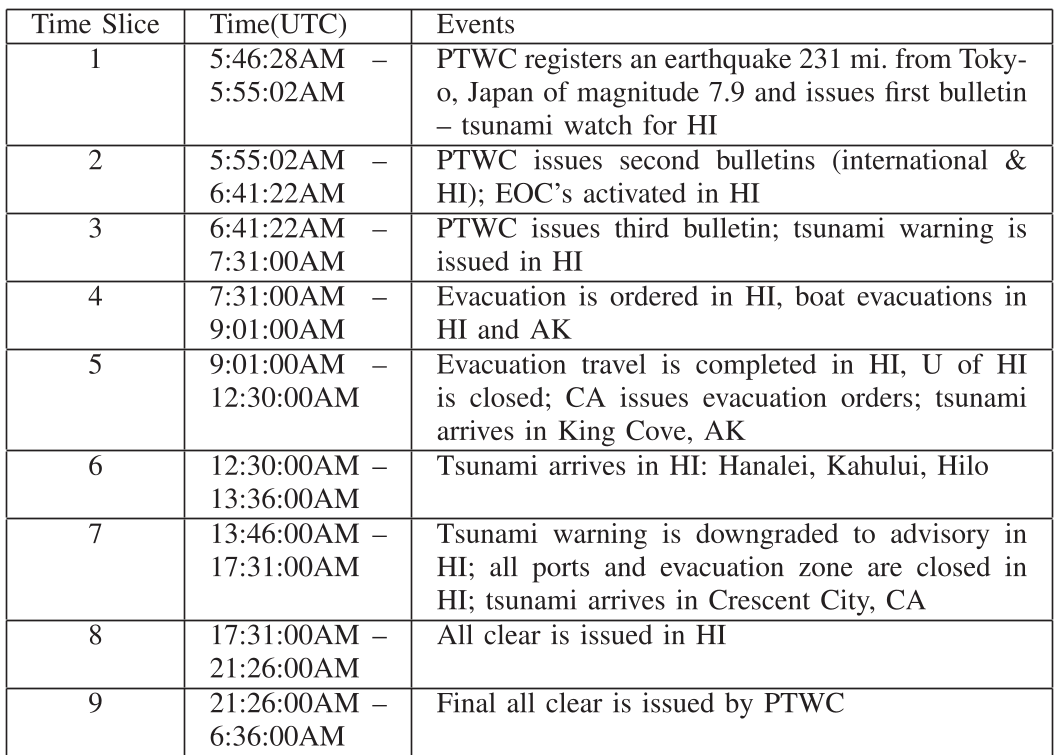 Table 1: The chronological progression of the tsunami alerts which anchored the time-slice analysis.
Experimental Results
The "Spike" of activity occurred during Time Slice 4, corresponding with official evacuation orders in Hawaii and Alaska. Interestingly, "confirmation" tweets (seeking info) peaked later in the timeline, as people began checking on the well-being of relatives after the initial danger passed.
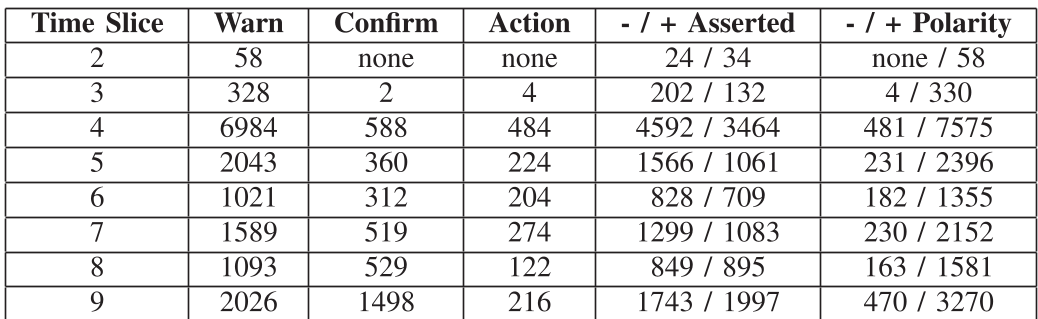 Table 2: Quantitative breakdown of tweet attributes, showing the massive surge in "Warning" and "Positive Polarity" messages during the peak crisis period.
Critical Analysis & Takeaway
This work underscores a vital truth: Authority matters in a crisis. While social media is decentralized, the structural "gravity" of the network still pulls toward verified entities (media and government).
Limitations: The study primarily focuses on English-language tweets and specific semantic attributes. It does not yet integrate geospatial data, which is the "missing link" for confirming if a user who tweets about "taking action" is actually in the danger zone.
Future Outlook: By combining real-time NLP with location-based SNA, future emergency systems could automatically identify "dead zones" where warnings aren't reaching or where community leaders are absent, allowing for targeted physical intervention.