
Social Innovation Labs: Beyond Ideation Toward Collaborative Knowledge Ecosystems
1422_Systematic mapping of the literature social innovation laboratories for the collaborative construction of knowledge from the perspective of open innov
This paper presents a Systematic Mapping of the Literature (SML) exploring Social Innovation Laboratories (SIL) as emerging educational ecosystems. It synthesizes 263 peer-reviewed studies to define the intersection between social labs, Collaborative Knowledge Construction (CCK), and Open Innovation (OI).
Executive Summary
TL;DR: This research provides a rigorous systematic mapping of Social Innovation Laboratories (SIL), positioning them as critical "experimental hubs" where diverse actors—citizens, academics, and government—co-create solutions to societal challenges. By analyzing a decade of literature, the authors establish a framework where Open Innovation meets Collaborative Learning, transforming social problems into prototypes for change.
Positioning: This work serves as a foundational "State of the Art" study (SML). It bridges the gap between business-centric innovation theories and socio-pedagogical frameworks.
Problem & Motivation: The Failure of Top-Down Innovation
The authors argue that traditional R&D and educational institutions are often too specialized to handle "wicked" social problems. Prior work identifies two main friction points:
- Isolation: Innovation often happens in a vacuum, lacking the "affected party's" perspective.
- Terminology Confusion: Concepts like "Living Labs" (ICT-focused) and "Citizen Labs" (urban-focused) are frequently used interchangeably without a clear understanding of their underlying knowledge-building mechanisms.
The researchers' insight is that these labs are not just "offices" but educational scenarios where the "error" (prototyping failure) is the primary engine of knowledge construction.
Methodology: Mapping the Ecosystem
The study followed a strict 10-stage protocol, filtering 548 documents down to 263 primary studies. The core of their analysis revolves around three constructs:
- SIL (Social Innovation Labs): The physical/virtual space.
- CCK (Collaborative Construction of Knowledge): The learning process.
- OI (Open Innovation): The strategic paradigm for sharing and externalizing ideas.
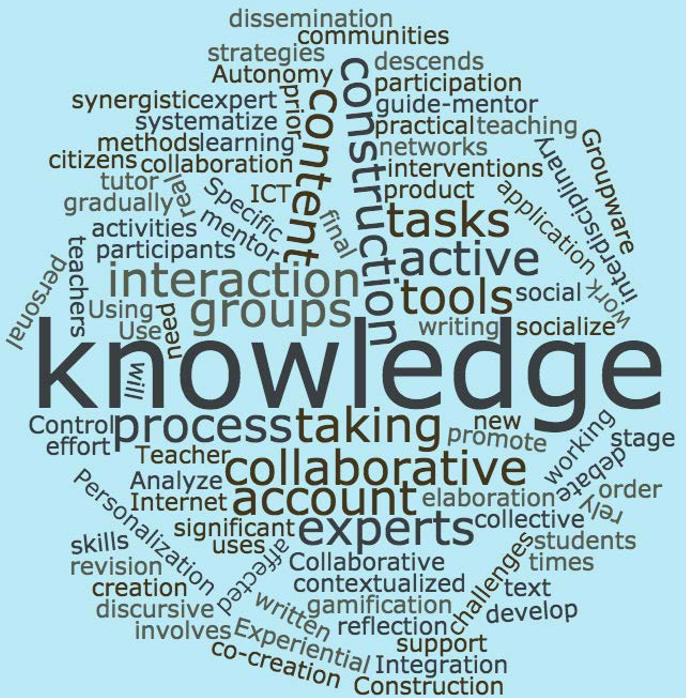 Figure: Tag cloud showing the dominance of "Communities," "Learning," and "Collaborative" in the analyzed literature.
Deep Dive: How Knowledge is Built in a Lab
The paper shifts from "What" to "How," detailing the phases of collaborative construction:
- Sharing and Comparing: Identifying the problem through diverse perspectives.
- Negotiation of Meaning: Reaching a common language between non-experts (citizens) and experts (mentors).
- Prototyping: The "Open Innovation" phase where solutions are co-constructed as objects, services, or new policies.
The authors highlight that the role of the Facilitator/Mentor is paramount. Unlike a traditional teacher, the SIL mentor manages "individualities to form real collaboration groups," gradually ceding control to the participants (Scaffolding).
Experimental Analysis & Global Trends
The mapping reveals a distinct geographic divergence in innovation strategies:
- Europe/North America: Strong institutional support through networks like ENoLL, focusing on ICT and "Smart Cities."
- Latin America: Driven by NGOs and activist groups, focusing on "social welfare" and local problem-solving for disenfranchised communities.
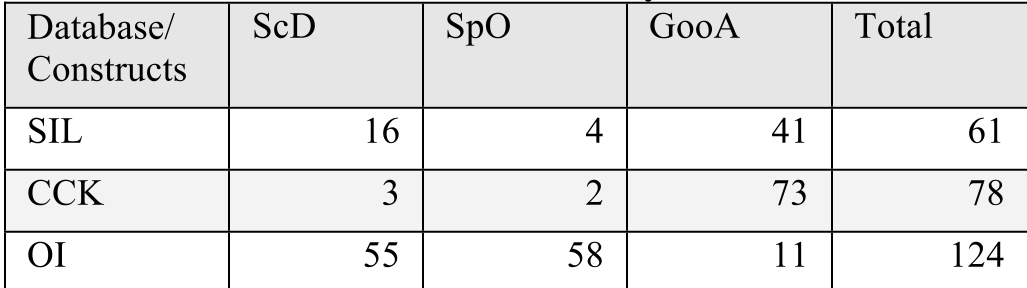 Table: Distribution of found articles by database and construct. Note the high volume of Open Innovation (OI) research in Science Direct and Springer compared to the more grassroots focus in Google Scholar.
Critical Analysis & Conclusion
Takeaway
Social Innovation Laboratories are the "boundary-spanning" institutions of the future. They prove that knowledge is more robust when it is built in the "listening mode"—incorporating the lived experiences of those affected by social issues.
Limitations & Future Work
The authors acknowledge a "positivity bias" in existing literature—researchers tend to publish success stories while burying failed lab experiments. Furthermore, the sustainability of these labs remains a question: many are treated as isolated programs without long-term budget guarantees.
Future research must develop evaluation models to measure the long-term impact of these prototypes on public policy and community resilience.