
PersonA: Bridging Self-Management and Social Support via Persuasive Technology
15719_PersonA Persuasive social network for physical Activity.
PersonA is a persuasive social network platform for physical activity (PA) that integrates smartphone sensor data with social networking systems (specifically Facebook). It automates the transition from individual self-management to community-based social support to encourage healthier lifestyles through real-time feedback and social reinforcement.
Executive Summary
TL;DR: PersonA is a persuasive system that transforms the solitary act of physical activity (PA) tracking into a social experience. By automating data collection via smartphone sensors and integrating directly with Facebook, it addresses the "onboarding friction" and "motivation decay" common in health apps. It achieves this through a dual-strategy of self-management tools and social-support mechanisms, underpinned by behavioral psychology.
Background Positioning: This work occupies a pivotal spot in the evolution of mHealth—moving away from "passive tracking" toward "persuasive interaction." It is a theoretical implementation of BJ Fogg’s behavior models within the context of the modern social web.
Problem & Motivation: The Manual Entry Trap
Despite the well-known benefits of physical activity, adult participation rates in the US remain alarmingly low (only ~30% in recent years). Prior works like PatientsLikeMe or Healia attempted to use social networks to drive change, but they suffered from a fatal flaw: Manual Data Entry.
The authors argue that the cognitive load of recording steps or calories manually is a primary barrier. Furthermore, most "apps" are built by developers, not behaviorists—they lack the "Inductive Bias" for long-term habit formation, such as goal setting, reinforcement, and situational triggers.
Methodology: The Architecture of Persuasion
PersonA’s architecture is designed to minimize friction while maximizing psychological impact. It operates on two distinct yet complementary levels:
1. The Core Infrastructure
The system uses the smartphone’s accelerometer and gyroscope to calculate steps and caloric expenditure automatically. This data is then synced to a secure server and reflected back to the user via the SocioPedometer interface.
2. Behavioral Triggers & "Glanceable Metaphors"
The methodology moves beyond raw numbers. To address different user cognitive styles, PersonA employs three visualization themes:
- Numeric: For quick data checks.
- Charts: For longitudinal self-comparison (identifying "dips" and "spikes").
- Metaphors (The Innovation): Using an "Aquarium" or "Garden" metaphor where the ecosystem flourishes as the user meets their goals.
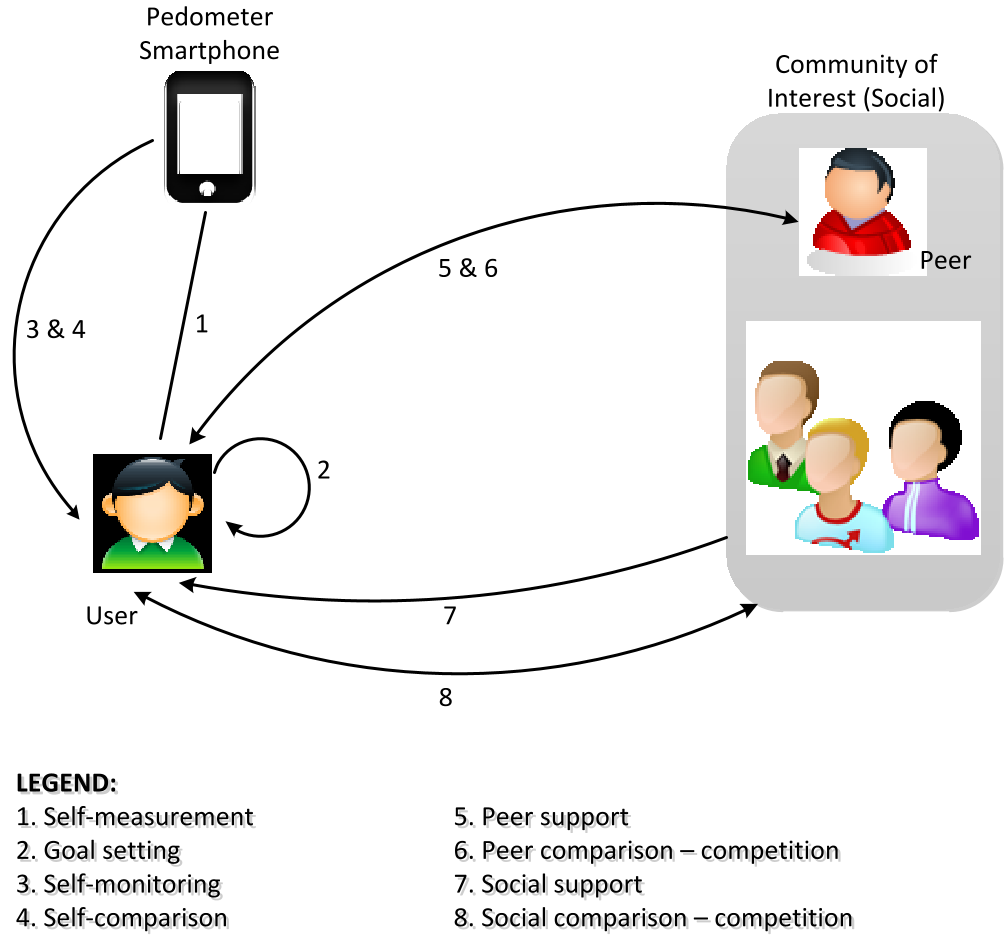 Figure 1: The functional requirement mapping, connecting sensor data to behavioral outcomes.
Social Support: Leveraging the Network Effect
A key insight of PersonA is the use of the Facebook Graph API. Instead of building a new social network from scratch (which usually fails due to lack of "critical mass"), PersonA pushes activity summaries to a user's existing social circle. This enables:
- Peer-Social Comparison: Comparing energy expenditure against the group average to spark healthy competition.
- Social Reinforcement: Allowing friends to "Like" or comment on milestones, providing the "atpportune moment" reinforcement suggested by the Health Belief Model.
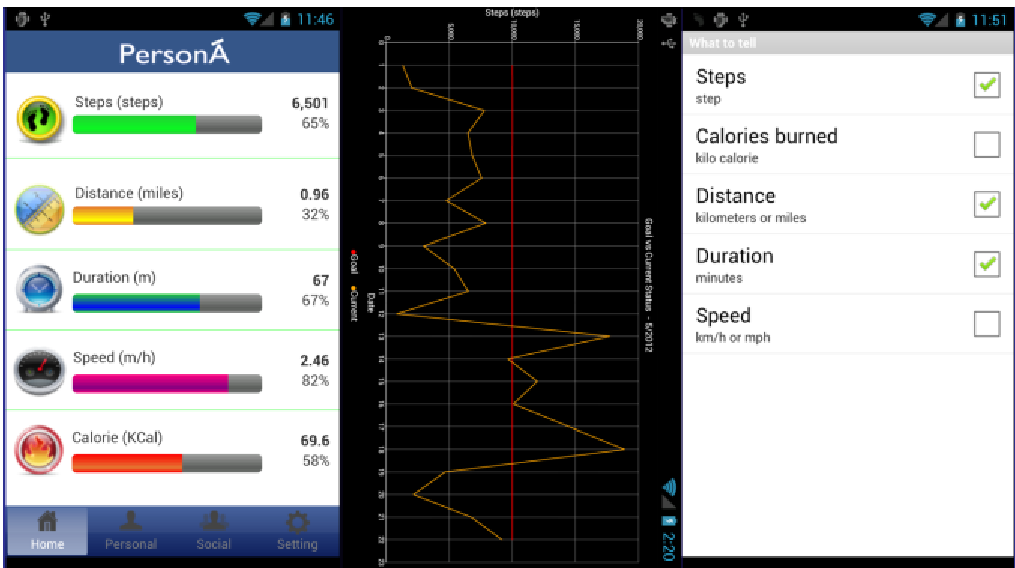 Figure 2: The self-monitoring interface displaying progress bars and longitudinal trends.
Experiments & Results
The platform was deployed in Pittsburgh, PA, to test user adherence. Key findings include:
- Metaphor Effectiveness: The "Aquarium" metaphor was highly effective as a positive reinforcement tool. Users specifically appreciated that the system was non-punitive; inactivity didn't "kill" the fish but simply slowed the aquarium's beautification.
- Security Integration: By combining IMEI with Facebook authentication, the authors addressed the "Privacy-Utility Trade-off," ensuring that while data was shared for motivation, it was protected from unauthorized access.
 Figure 3: The Aquarium metaphor where biological diversity serves as a proxy for physical activity.
Critical Analysis & Future Outlook
Takeaway
The success of PersonA confirms that automation + existing social context = higher adherence. By lowering the barrier to entry (automatic sensing) and increasing the reward for success (social "likes" and metaphor growth), the system creates a self-sustaining loop of motivation.
Limitations
- Hardware Constraints: The authors noted that keeping sensors active 24/7 limits smartphone battery life to roughly 6 hours—a significant bottleneck for "all-day" monitoring.
- Privacy Risks: Attaching health data to a public-facing SNS like Facebook poses inherent privacy risks that may deter users with sensitive conditions.
Future Work
The next frontier for PersonA lies in Predictive Triggers—using contextual data (location, time, weather) to deliver the "Persuasive Nugget" at the exact moment a user is most likely to act.