
BASA: Decentralizing Social Networks for the Mobile Ad-hoc Era
170_BASA- building mobile Ad-Hoc social networks on to
The paper introduces BASA (Building Ad-hoc Social networks on top of Android), a four-layer middleware architecture designed to facilitate the rapid development of Mobile Ad-hoc Social Networks (MASNs). It enables peer-to-peer socialization and resource sharing on Android devices using short-range communication like Wi-Fi and Bluetooth without relying on centralized Internet infrastructure.
TL;DR
BASA (Building Ad-hoc Social networks on top of Android) is a middleware solution that allows mobile users to form social communities "on the fly" without Internet access. By leveraging short-range wireless protocols and a layered architectural approach, it enables seamless local communication, file sharing, and community management directly between Android devices.
Background Positioning
In the landscape of social computing, we usually occupy two extremes: the Global Interaction of Facebook/X (dependent on massive data centers) and the Physical Proximity of face-to-face talk. BASA sits in the middle—a "Mobile Ad-hoc Social Network" (MASN) that provides the digital tools of a social network (profiles, threads, media sharing) but operates entirely on local, opportunistic connections.
The Pain Points: Why "Standard" Android Isn't Enough
Existing social networking services (SNs) suffer from three critical "infrastructure traps":
- Connectivity Dependency: They assume cellular or Wi-Fi backhaul is always available.
- Rigid Management: Communities are managed by central service providers, not the users physically present at an event.
- Heterogeneity Fatigue: Developers struggle to make P2P features work across thousands of different Android hardware configurations.
Methodology: The Four-Layer Solution
BASA's core innovation is its loosely-coupled distributed architecture, which abstracts the "messiness" of ad-hoc networking into clean APIs.
1. The Architectural Blueprint
The system is divided into four distinct layers:
- Device Layer: Ensures "Device Independence" through a runtime that handles screen scaling and hardware variations.
- Network Layer: Manages the discovery of neighbors and the establishment of MANETs (Mobile Ad-hoc Networks) using Wi-Fi or Bluetooth.
- Community Layer: The "brain" of the system, handling profile aggregation and self-orchestration of groups.
- Application Layer: Provides the UI and high-level logic for end-user services like chat or document editing.
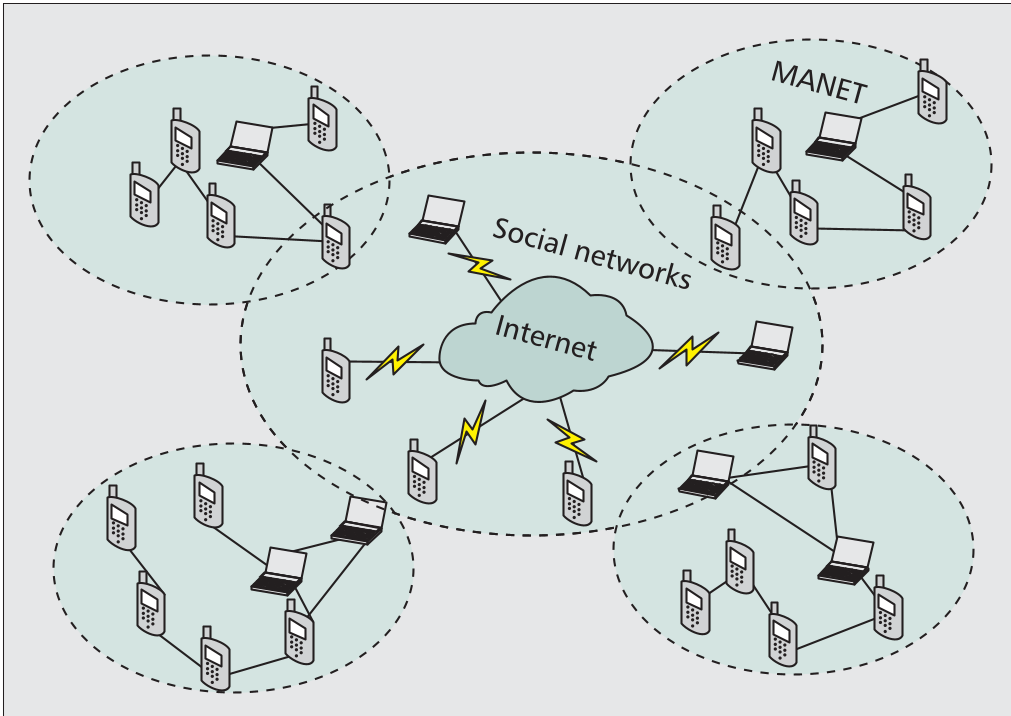 Figure 1: The hierarchical structure of BASA, showing the functional flow from physical device to social application.
2. Network Model: Bridging MANETs and SNs
BASA treats the network as an end-to-end integration. While traditional networks focus on global interaction via the Internet, BASA prioritizes the local interaction node. It organizes members in a tree structure for efficient data propagation, significantly reducing message delay compared to simple flooding techniques.
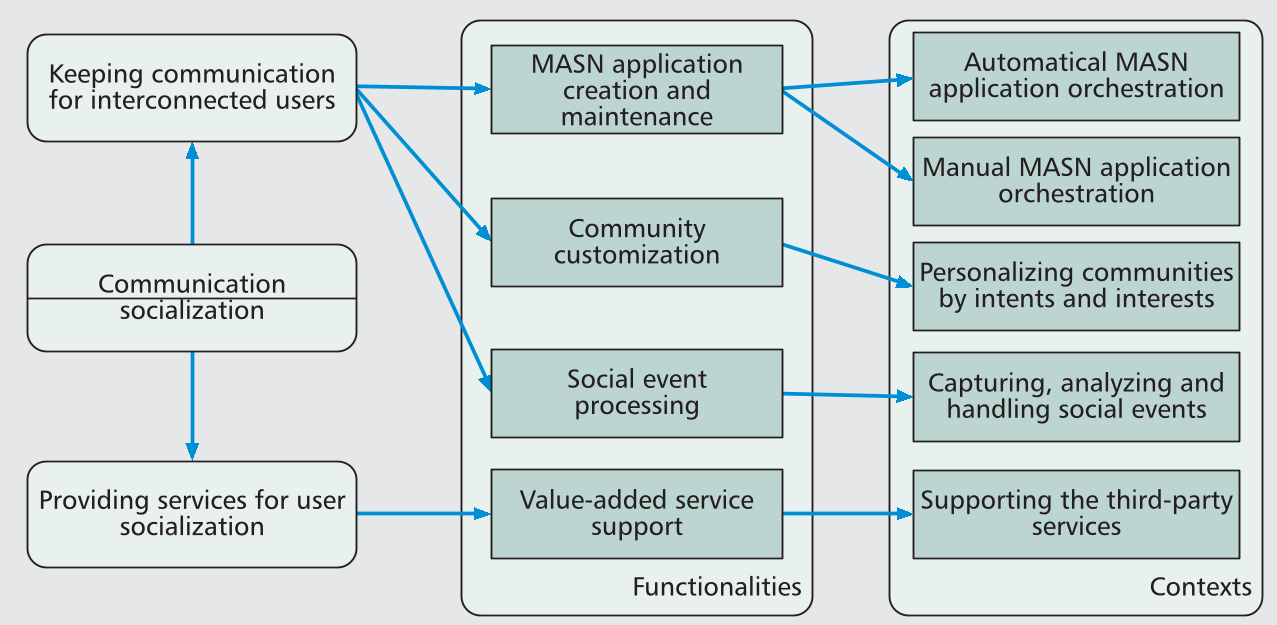 Figure 2: The integration of MANETs for local proximity and traditional SNs for global reach.
Experiments and Results
The researchers conducted a real-world feasibility study involving 30 Android devices.
Performance Comparison
Unlike earlier projects like MIT’s Serendipity (which stayed centralized) or MobiClique (which lacked community orchestration), BASA provides a fully distributed model with native community detection.
| Metric | BASA Approach | Advantage |
|---|---|---|
| Architecture | Distributed | No Single Point of Failure |
| Discovery | Dual-Stack (Wi-Fi/BT) | High Flexibility |
| Distribution | Tree-based | Reduced Network Congestion |
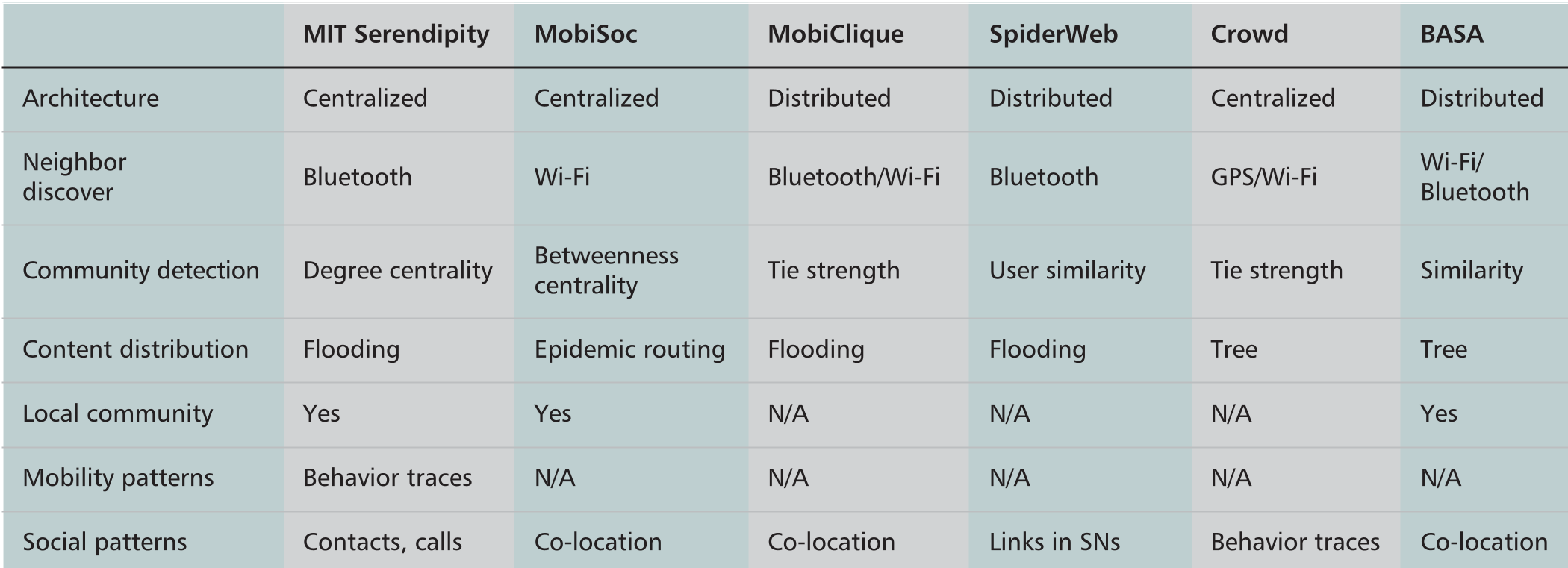 Table 1: Benchmarking BASA against other representative MASN projects.
Critical Insight & Conclusion
BASA successfully proves that Mobile Socializing does not have to be synonymous with Internet Access. By shifting the logic of community management from the cloud to the "edge" (the user's device), it opens doors for secure, high-bandwidth local interactions (like video streaming in crowds) that are currently impossible on congested cellular networks.
Takeaway: For tech leads and developers, the value of BASA lies in its middleware approach. It demonstrates that by standardizing how we handle "opportunistic encounters," we can build a more resilient and locally-aware social internet.
Limitations: While the prototype is robust on Android 2.0 (the era of the paper), the main challenge for modern implementation would be the strict background execution and privacy limitations of newer Android OS versions, requiring a pivot towards foreground services and localized "Nearby" APIs.