
mHEALTH-PHC: Bridging the "Last Mile" Healthcare Gap in Rural India via Mobile Cloud
18350_mHEALTHPHC An ICT Tool for Primary Healthcare in India.
The paper introduces mHEALTH-PHC, an innovative ICT tool designed to digitize and streamline primary healthcare in rural India. Leveraging the patented mKRISHI platform, it connects village health activists, midwives, and doctors through a mobile-based system that supports local languages, providing a scalable solution for Reproductive and Child Health (RCH) programs.
TL;DR
mHEALTH-PHC is a mobile-based information and communications technology (ICT) tool specifically engineered for the tribal and rural regions of India. By transforming the manual, paper-heavy process of Reproductive and Child Health (RCH) into a digitized, asynchronous communication loop, it empowers village health workers and midwives to consult city-based experts in real-time, bypassing the limitations of poor infrastructure and power shortages.
Background: The Structural Bottleneck
In the context of the Indian Public Health Standards, the Primary Healthcare Center (PHC) is the focal point for 20,000–30,000 citizens. However, the actual delivery of care rests on the shoulders of ASHA (Accredited Social Health Activists) and Midwives (ANMs) at remote Sub-centers.
The critical failure point identified by the authors is the Information Latency. Manual registers lead to delays in data transmission, meaning high-risk pregnancies or infant complications aren't flagged to doctors until it's too late. Coupled with the "brain drain" (doctors preferring urban centers), the rural population is often left without expert intervention.
Methodology: Designing for Constraints
The genius of mHEALTH-PHC lies not in "high-tech" complexity, but in Contextual Adaptation. The authors leveraged the mKRISHI platform to build a system that respects the physical and cognitive realities of rural India.
1. The Multi-Tiered Architecture
The platform breaks down the healthcare workflow into three distinct digital interfaces:
- Village Level (ASHA): Uses an IVR (Interactive Voice Response) system. Since literacy can be a barrier, selecting options from a voice menu is more efficient than typing.
- Sub-center Level (Midwife): A mobile app supporting Local Language Rendering (MLTR). It handles patient registration and pathology reports.
- Center Level (Doctor): A web-based console that integrates with an E-pen. This allows doctors to maintain the "human touch" of handwriting prescriptions while instantly digitizing the image for the midwife.
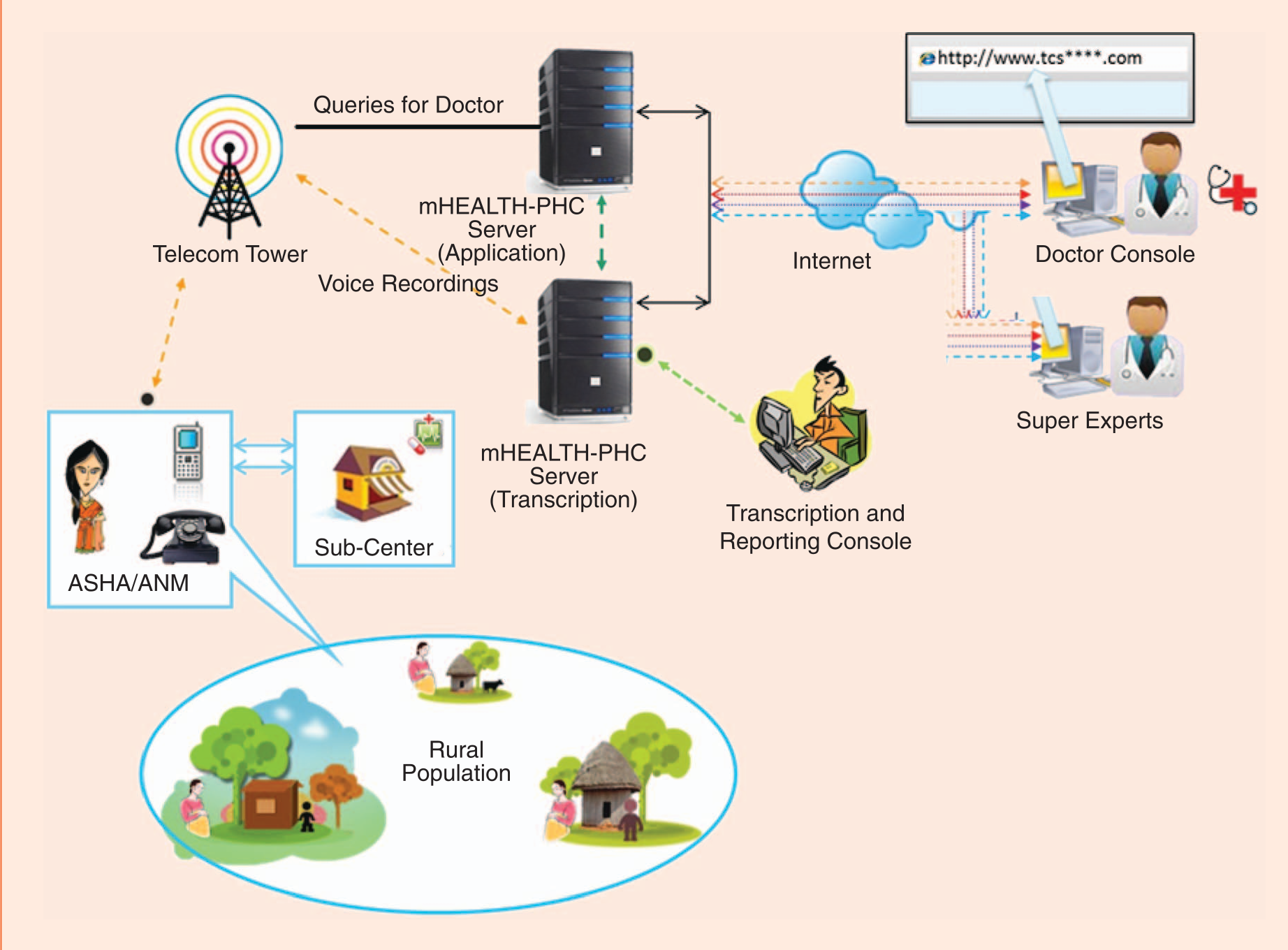 Fig 1: The architecture shows the flow from patient data at the village level to expert advice at the city level.
2. Solving the "Power & Connectivity" Paradox
Unlike PC-based systems that fail during India's frequent blackouts, mHEALTH-PHC uses battery-operated mobile devices. Data synchronization occurs over 2G networks, and the use of asynchronous queries (marking a query "Urgent" for later viewing) ensures that the system works even when the doctor isn't currently online.
Field Results and Implementation Insights
Trials at "Center-K" in Thane revealed that the system successfully digitized the traditional R-15 (Mother) and R-16 (Child) registers, creating a linked medical history that stays with the patient.
Key Metrics:
- Query Success: Over 50 complex medical queries were resolved during the pilot.
- Efficiency: Midwives reported reduced interaction time per visit because historical records were literally in their pockets.
- UI Optimization: The authors discovered that "Usability" is a moving target—initially, the app required 7 clicks to ask a question; through feedback, they reduced this to under 3 clicks, significantly increasing adoption.
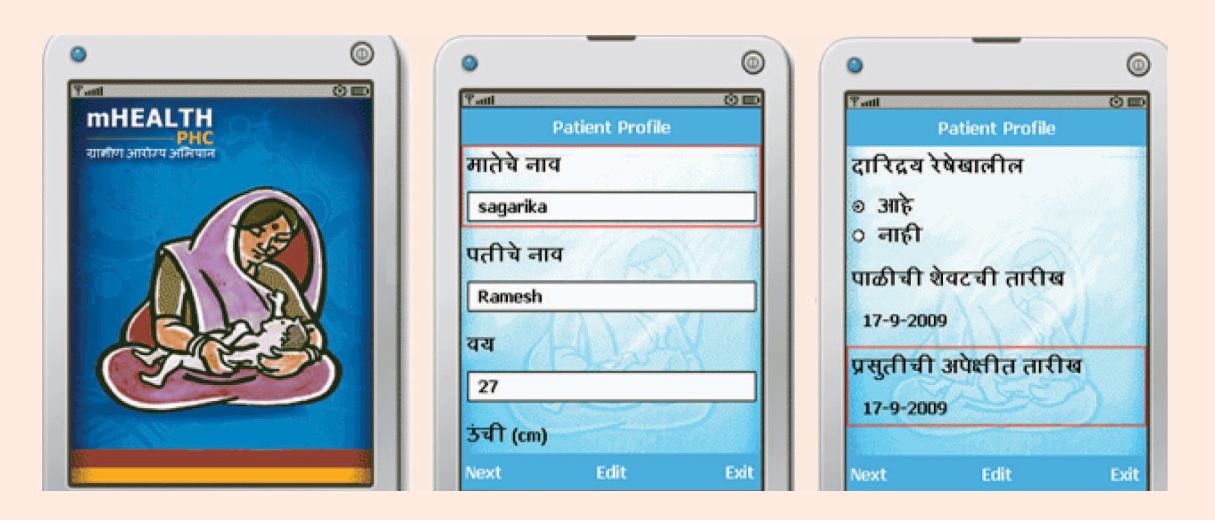 Fig 2: Screenshots of the mobile interface in local Marathi script alongside the doctor's web console.
Critical Analysis & Future Outlook
The authors highlight a vital lesson for the AI/SaaS community: Technology is only 20% of the solution. The remaining 80% is alignment with government policy and incentive structures for health workers.
Limitations
- Manual Transcription: Currently, some voice reports require manual transcription into the web console.
- Incentives: Without financial incentives, health workers view digital tools as "extra work" rather than a benefit.
Future Evolution
The roadmap includes integrating Automatic Speech Recognition (ASR) to eliminate manual transcription and Handwriting Recognition for E-pen inputs. More importantly, the authors envision an Expert System module—an early precursor to modern Medical AI—that suggests diagnoses based on the medical history of thousands of patients.
Conclusion
mHEALTH-PHC is a masterclass in "Appropriate Technology." It doesn't try to reinvent medicine; it simply removes the friction of distance and paper, proving that mobile cloud computing is the most potent weapon India has in the fight for universal primary healthcare.