
Unmasking the Spider: Using Social Network Analysis to Combat Organized State Fraud
2013 IEEE/ACM International Conference on Advances in Social Networks Analysis and Mining 813
This paper introduces a novel approach to detect social security fraud in Belgium by identifying "spider constructions"—complex networks where side companies are intentionally bankrupted to evade taxes while organized around a legitimate-looking key company. By transforming shared resource data into fine-grained egonets and applying machine learning (Random Forest, Naive Bayes), the authors achieved a 7.19% average increase in AUC score over traditional local-only models.
TL;DR
Social security fraud is often not an individual act but a coordinated "spider construction" involving multiple shell companies. By leveraging social network knowledge and egonet analysis, researchers at KU Leuven developed a model for the Belgian government that improves fraud detection accuracy by over 7%, identifying high-risk companies up to two years before they commit a crime.
The "Spider Construction" Problem
Traditional fraud detection treats companies as isolated islands. However, professional fraudsters use a Spider Construction: a central "key company" (the spider) that remains clean while orchestrating several "side companies" (the web) that accumulate massive tax debts and then go bankrupt.
The pain point? By the time a side company is flagged for non-payment, its assets have already been funneled into a new shell company. To stop this, we must look at the relational DNA—the shared resources (employees, addresses, or equipment) that link these entities.
Methodology: From Graphs to Egonets
The core innovation lies in how the authors mapped these relationships. Instead of a simple company-to-company link, they used a fine-grained network where companies are connected to specific "resources."
Defining the Egonet
An egonet focuses on a specific "ego" (the company) and its immediate "alters" (the resources). By analyzing the egonet, the model can identify if a company is surrounded by resources that have "fraudulent history."
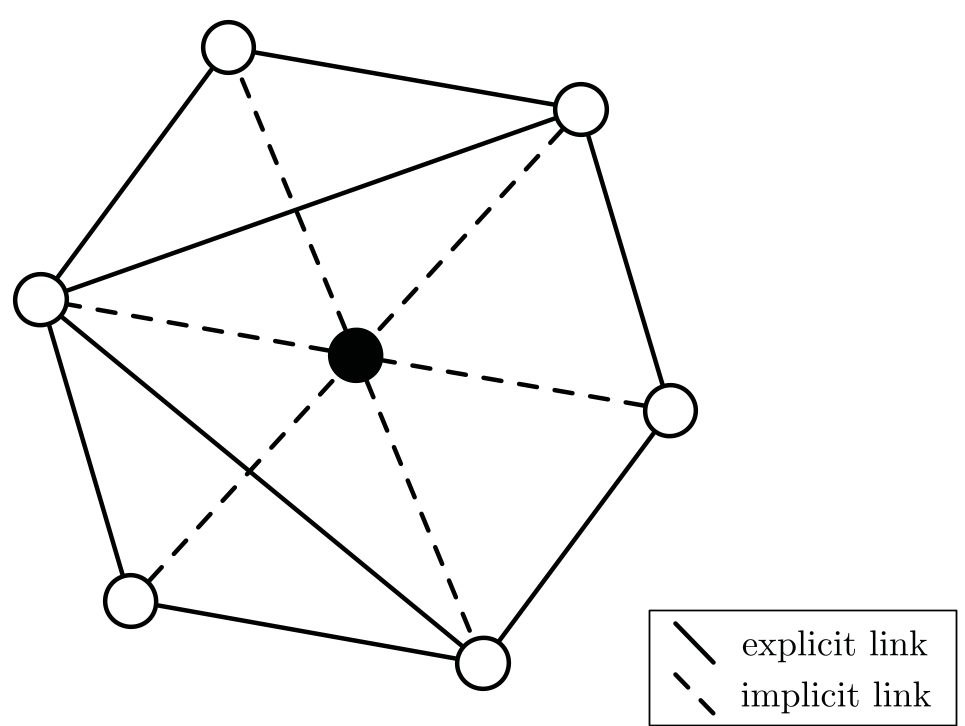
Key features extracted include:
- Normalized Degree: The percentage of a company’s resources associated with prior fraud.
- Triangle Weights: The intensity of interactions between shared resources.
- Alter-Specific Scores: Historical lifecycle data of individual resources.
Experimental Battleground: SOTA Comparison
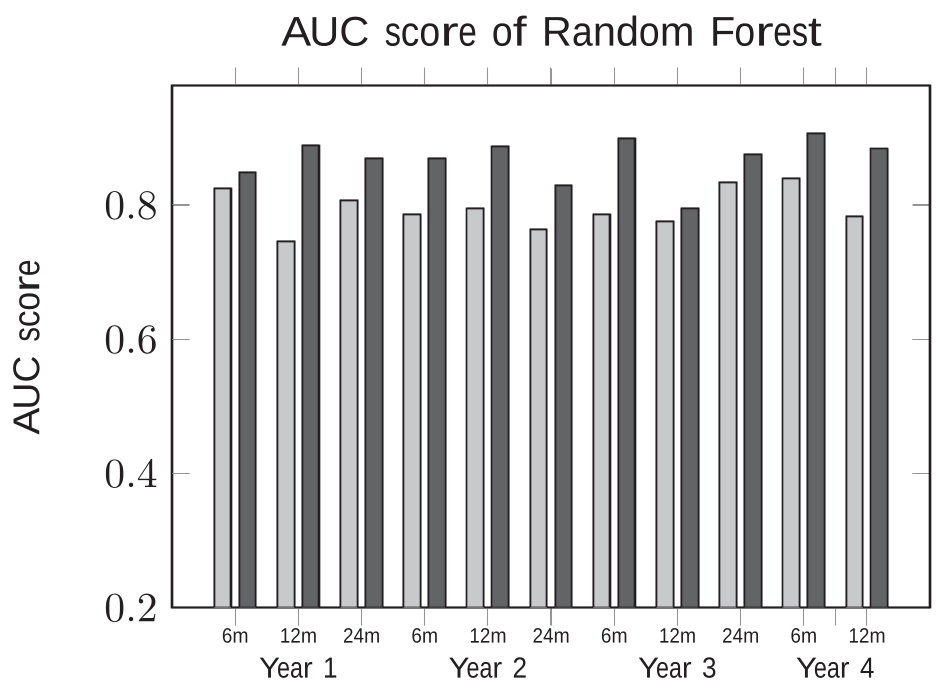
The researchers tested three major algorithms—Random Forest (RF), Naive Bayes, and Logistic Regression—against a "Base Scenario" that only looked at local data (e.g., sector, region, age).
Key Findings:
- Relational Superiority: The relational models outperformed base models in almost every metric.
- The Random Forest Edge: RF proved to be the most robust, particularly with a 6-month prediction window.
- Precision and Recall: The relational model didn't just find more fraud; it found better fraud instances, significantly reducing the "false alarm" rate for government auditors.
Deep Insights: The Ghost of Fraud Past
One of the most striking findings was the "Future Lifecycle" analysis. Many companies flagged by the model as "False Positives" (not currently fraudulent) ended up going bankrupt or being labeled fraudulent a year later. This proves the model has anticipatory power, capturing the "pupa" stage of a spider construction before the web is fully spun.
Critical Analysis & Conclusion
Takeaway
This work demonstrates that in high-stakes domains like social security, relational context is king. By focusing on the mobility of resources, the Belgian government can move from reactive auditing to proactive prevention.
Limitations
- Static vs. Dynamic: The current model uses a static snapshot. Real-world fraud is fluid; incorporating the temporal sequence of resource transfers (Time-evolving graphs) would potentially boost accuracy even further.
- Human-in-the-loop: The system is designed to guide experts, not replace them, which still requires significant manual labor for final verification.
Future Outlook
As fraudsters become more sophisticated (using "straw men" to hide resource links), future research should look into Graph Neural Networks (GNNs) that can learn higher-order relationships automatically, potentially uncovering even more hidden "spider" nodes.