
Detecting the Undetectable: Mining YouTube Metadata to Combat Online Harassment
2014 Twelfth Annual Conference on Privacy, Security and Trust (PST)
This paper presents a metadata-driven approach using one-class classification to detect privacy-invading harassment and misdemeanor videos on YouTube. By categorizing offensive content into vulgarity, public violence, and ragging, the researchers achieve detection accuracies ranging from 83% to 97% using non-visual contextual features.
TL;DR
With 100 hours of video uploaded every minute (at the time of the study), YouTube faces a monumental challenge in filtering privacy-invading and harassing content. This paper proposes a systematic framework using One-Class Classification to identify objectionable videos—ranging from school ragging to public violence—by mining purely contextual metadata like titles, descriptions, and engagement ratios.
Problem & Motivation: The Anonymity Shield
The "low publication barrier" of Web 2.0 is a double-edged sword. While it democratizes content creation, it enables anonymity that fuels privacy invasion: the unauthorized filming and dissemination of negative scenes (violence, vulgarity, or humiliation).
The authors argue that manual keyword searches are impractical due to:
- Noise: Grammatical errors, slang, and intentional misspellings to evade filters.
- Scale: The sheer volume of incoming data makes human moderation a bottleneck.
- Complexity: Harassment is often context-dependent, requiring more than just a list of "bad words."
Methodology: The Power of Context
Instead of analyzing heavy video pixels, the researchers focus on 13 Discriminatory Features. The core insight is that an offensive video's identity is often revealed by its "neighbors"—the Related Videos recommended by YouTube’s algorithm.
The Feature Matrix
- Linguistic Features: Percentage of "X-Terms" (e.g., MMS, fighting, ragging) and "People Types" (junior, senior, couple) in titles and descriptions.
- Temporal Features: Analysis showed that most harassment clips are short "snippets" (30 to 250 seconds).
- Popularity Ratios: Interestingly, harassment videos often have high view counts but very low Like-to-View (RLBV) or Comment-to-View (RCBV) ratios, likely due to the "bystander effect" where users watch but do not socially engage with the content.
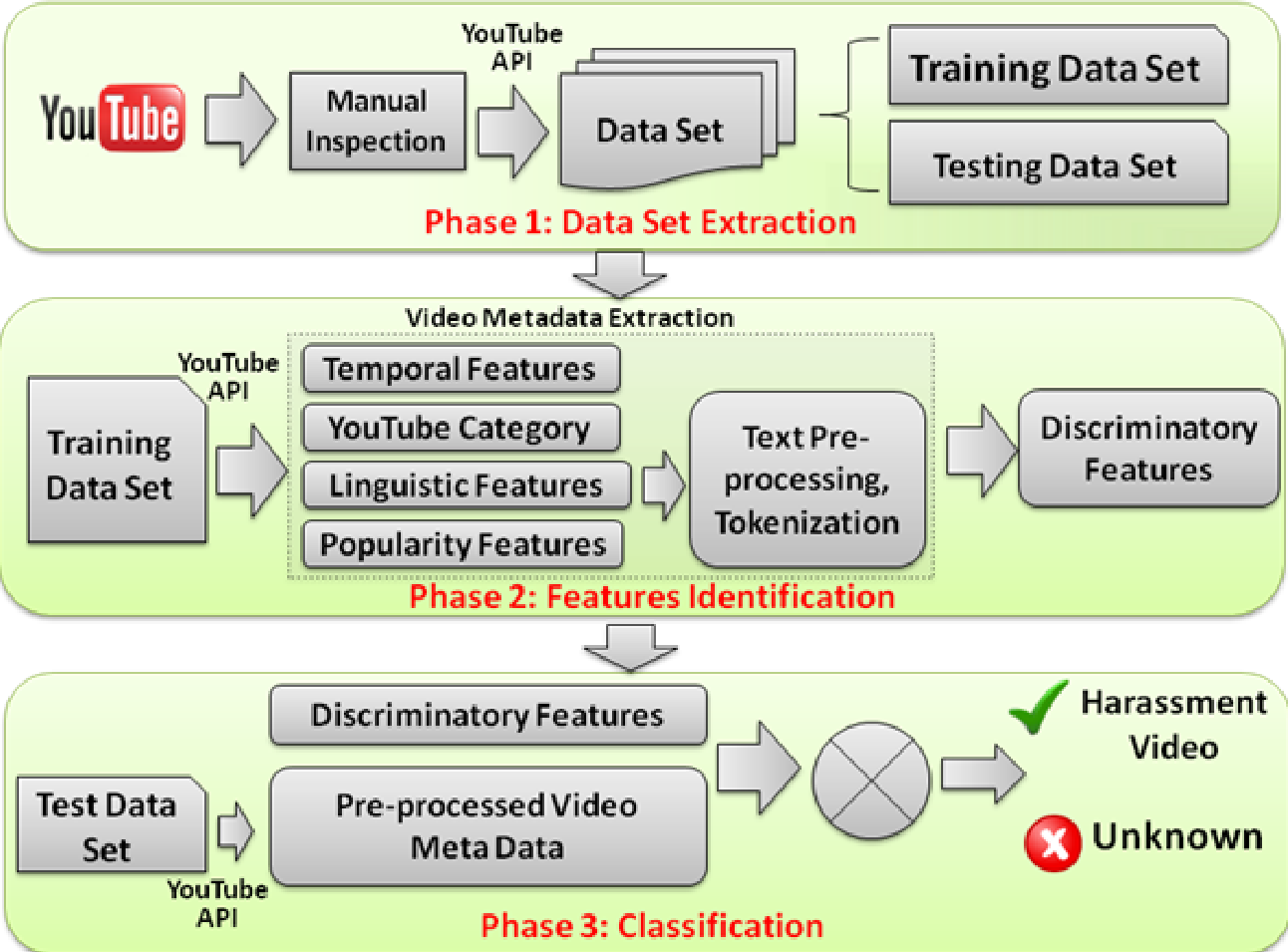 Fig 1: The Research Framework comprising Dataset Extraction, Feature Identification, and Classification phases.
The Innovation: One-Class Classification
Unlike standard binary classifiers that need both "good" and "bad" examples, this study frames the problem as a Recognition Task. By training only on known "positive" (offensive) classes, the model learns the distinct "shape" of harassment metadata, treating everything else as "unknown."
Experiments & Results: High Precision in Niche Crimes
The researchers tested their approach on several sub-problems: Vulgar Video Detection (VVD), Violence/Abuse in Public (VAVDP), and Ragging Video Detection (RVDC).
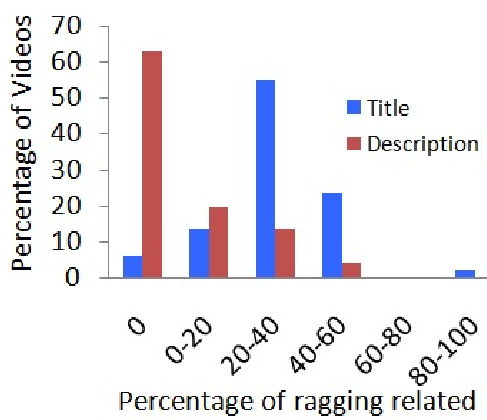 Fig 2: Distribution of X-Terms across different categories. Note the high density of specific terms in harassment titles.
Key Findings:
- Ragging Detection: Achieved a staggering 97% accuracy. The specific terminology used in school/college bullying (e.g., "seniors," "juniors," "freshers") provides a very strong linguistic signal.
- Violence in Public: Achieved 90% accuracy.
- The "News Channel" Filter: A vital step was creating a lexicon of official news IDs. Many violent videos on YouTube are legitimate news reports; by filtering out these uploader IDs, the system significantly reduced False Positives.
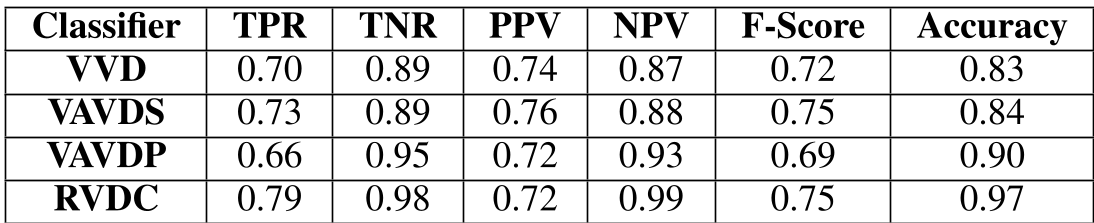 Table 1: Overall performance showing high True Negative Rates (TNR) across all classifiers.
Critical Insight & Conclusion
The study proves that metadata is often louder than pixels. While computer vision could identify a "fight," the metadata identifies the nature of the fight (e.g., "ragging" vs. "professional wrestling").
Limitations: The model is highly dependent on the quality of lexicons. As internet slang evolves, these lexicons require constant updates. Furthermore, the "Unknown" class remains a black box—future iterations could benefit from a semi-supervised approach to better categorize non-offensive content.
Future Outlook: Integrating these linguistic and engagement features into a real-time moderation dashboard could provide human moderators with a "prioritized queue," focusing their attention on the most likely instances of privacy invasion.