
SocialRank: Decoding Influence through Billions of Activities and GPS Traces
2017 IEEE 23rd International Conference on Parallel and Distributed Systems
This paper introduces a novel graph-based ranking framework for identifying influential users in massive social networks by integrating multi-dimensional data, including user activities, file sharing, and GPS records. It proposes tailored PageRank variants (SocialRank) to capture weighted interactions and geographic proximity, evaluated on a massive 3.56 TB real-world dataset.
TL;DR
Quantifying who truly "matters" in a social network is no longer just about counting followers. This research presents a massive-scale infrastructure and a new algorithm, SocialRank, which synthesizes 8.24 billion user activities and millions of GPS records to map influence. By weighting interactions through both behavioral frequency and geographic proximity, it uncovers "hidden influencers" that standard metrics overlook.
Background: Beyond the Follower Count
In the era of Big Data, influence is often latent. Someone might not have a million followers, but if every file they share is downloaded by key decision-makers, or if their physical movements correlate with high-density social groups, their true impact is significant. Most prior works fail because they treat social networks as static, unweighted graphs. This paper argues that influence is a product of activity intensity and spatial context.
The Challenge of Scale
The researchers faced a daunting data engineering task. The raw dataset spanned nearly 3 months and totaled 3.56 Terabytes, encompassing 854 million potential users.
| Dataset Metric | Value |
|---|---|
| Raw Size | 3.56 TB |
| Activity Records | 8.24 Billion |
| GPS Records | 4.19 Million |
To handle this, they deployed an 8-node distributed system, pruning the noise to focus on 24 million highly active users who generated meaningful interaction signals.
Methodology: The SocialRank Framework
The core innovation lies in how the "edges" between users are defined. Instead of a simple 0 or 1 (connected or not), the authors define weights based on two primary dimensions:
1. Interaction Weight ()
This measures the strength of the bond between user and based on shared activities (e.g., file sharing, commenting).
2. Geographic Weight ()
Using GPS records, the system calculates the cosine similarity between the location vectors of two users ( and ). If two users frequently visit the same coordinates, their "Geographic Influence" increases.

3. The Unified Model ()
The final "SocialRank" () combines these weights into a recursive power iteration formula, transitively distributing influence throughout the graph:
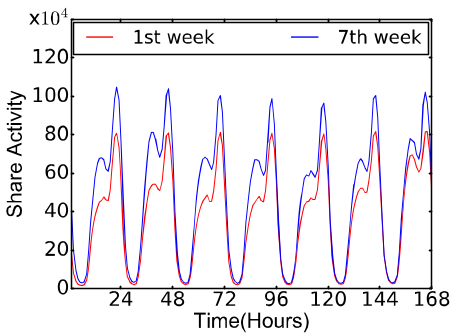 Figure 1: The architecture for processing multi-source logs into a unified influence graph.
Experimental Results
The experiments demonstrate that adding weights drastically changes the "Top 100" list of influencers.
- Vanilla PageRank tends to favor "hubs" with many low-quality connections.
- SocialRank () identifies users who may have fewer connections but possess "high-intensity" relationships and local geographic dominance.
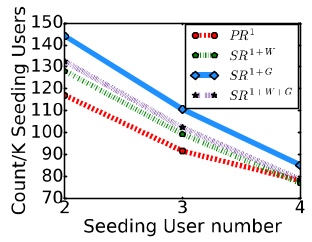 Figure 2: Distribution of influence scores across the user base, showing the refinement provided by weighted algorithms.
Critical Insight & Conclusion
The true value of this work is its multimodal integration. By treating GPS records and file activities as first-class citizens in the influence equation, the authors provide a more "human" view of social dynamics.
Limitations: The paper primarily focuses on historical log analysis. A real-time implementation would require significantly more optimized stream-processing (e.g., Flink) to update influence scores as GPS data flows in.
Future Outlook: This framework could be revolutionary for Location-Based Services (LBS) and Cyber-Physical Systems, allowing apps to identify community leaders not just by what they post, but where they are and what they do.